GST, HST, PST, and QST are Canadian consumption taxes with different rate structures, collection rules, and reverse-calculation effects. GST is federal, HST combines federal and provincial tax, PST is separate provincial tax, and QST is Québec sales tax. A reverse calculation uses the combined rate only when the receipt total contains one blended tax treatment; separate tax lines require separate taxable bases before extracting the included tax.
For reverse tax, the key question is which tax or taxes appear on the receipt and whether they apply to the same base.
What Is the Difference?
| Tax | Meaning | Practical reverse tax point |
|---|---|---|
| GST | Federal goods and services tax | Often 5% federal tax |
| HST | Harmonized sales tax | One combined tax in participating provinces |
| PST | Provincial sales tax | Separate provincial tax in some provinces |
| QST | Quebec sales tax | Separate Quebec tax with GST on Quebec invoices |
What Is GST?
GST is the federal layer in Canada's consumption tax system, so it is the first label to identify on a Canadian receipt. For reverse tax, the important question is whether GST is the only tax in the total or whether it appears beside PST, QST, or an HST label. Treating every Canadian total as GST-only can overstate the net price when another provincial tax is also included.
GST is Canada's federal goods and services tax. CRA guidance explains which rate to charge depending on province or territory. The federal GST rate is 5% in provinces and territories where HST does not replace it.
Reverse GST formula:
Pre-tax amount = GST-inclusive total / 1.05
Example:
Total: $105.00
GST rate: 5%
Pre-tax amount: $100.00
GST: $5.00
What Is HST?
HST is the harmonized sales tax label, and it changes the reverse calculation because the receipt usually contains one combined federal and provincial rate. A user searching "remove GST" may actually have an HST receipt. If the receipt says HST, use the full HST rate for that province and transaction date instead of using the 5% GST-only formula.
HST is the harmonized sales tax used in participating provinces. It combines the federal GST and provincial portion into one tax administered under the HST system.
For reverse tax, HST usually works as one combined rate.
Example:
Total: $113.00
HST rate: 13%
Pre-tax amount = $113.00 divided by 1.13 = $100.00
HST = $13.00
What Is PST?
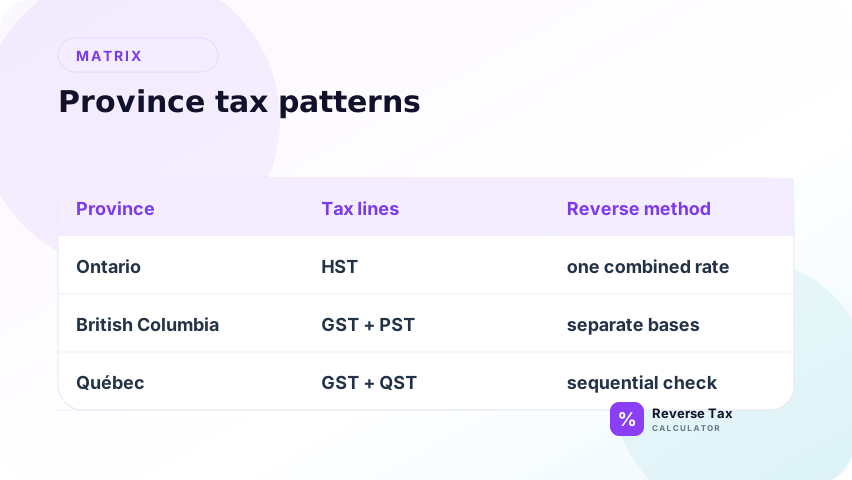
PST is a separate provincial sales tax label, so it should not be hidden inside a generic Canadian tax rate. If a receipt shows GST and PST separately, preserve both lines as evidence. If the receipt gives only one tax-inclusive total, combine GST and PST only when both taxes apply to the same taxable base. Mixed taxability needs group-level calculation.
PST is a provincial sales tax used in some provinces. It may appear separately from GST.
For reverse tax, GST and PST may need to be added if they apply to the same taxable base, or separated if the bases differ.
Example:
Base: $100.00
GST: 5%
PST: 7%
If both apply to the same base additively, total rate is 12% and total is $112.00.
Reverse formula:
=112/(1+12%)
What Is QST?
QST is Quebec sales tax, and it commonly appears with GST on Quebec invoices and receipts. For reverse tax, QST matters because the common Quebec combined rate is not a rounded 15%. It is usually 5% GST plus 9.975% QST when both apply to the same base. If the receipt shows separate GST and QST amounts, use those lines first.
QST is Quebec sales tax. Quebec invoices often show GST and QST. Revenu Québec guidance explains GST/HST and QST application rules.
For a common reverse calculation:
GST rate: 5%
QST rate: 9.975%
Combined additive rate: 14.975%
If total is $114.975, pre-tax amount is $100.00.
GST vs HST
GST is federal. HST is a combined federal and provincial tax used in HST provinces.
| Feature | GST | HST |
|---|---|---|
| Structure | Federal tax | Combined federal and provincial |
| Receipt line | May appear with PST/QST | Often one HST line |
| Reverse formula | Divide by 1.05 if GST only | Divide by 1 plus HST rate |
| Province context | Non-HST provinces and territories | HST participating provinces |
GST plus PST vs HST
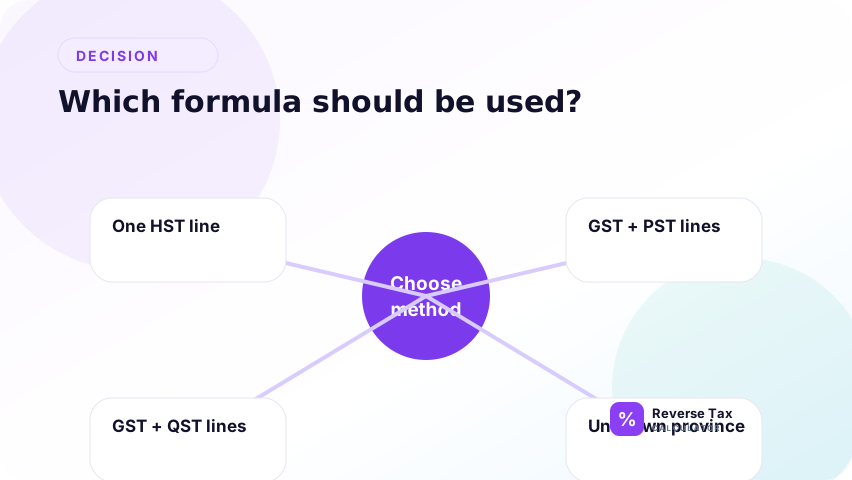
GST plus PST and HST can produce similar-looking totals, but they are not the same evidence structure. HST is usually one combined line. GST plus PST often appears as two lines, and those lines may need separate review. The reverse tax workflow should ask what label appears on the receipt before choosing the formula, because label resolution controls the calculation path.
GST plus PST can appear as two lines. HST usually appears as one combined line.
Reverse tax treatment:
- If GST and PST apply to same base, combine rates.
- If taxability differs, calculate separately.
- If receipt shows tax lines, use them as evidence.
GST plus QST
GST plus QST is the Quebec pattern, and it should be handled as its own query intent. A clean GST plus QST total can be reversed with a 1.14975 factor when both taxes apply to the same base. But if the tax invoice shows GST and QST separately, subtraction from the shown tax lines is stronger than reconstructing tax from the combined factor.
Quebec commonly uses GST and QST. If both apply to the same base additively, combine 5% and 9.975% for reverse math.
Formula:
Pre-tax amount = Total / 1.14975
Example:
Total: $114.98 approximately
Combined rate: 14.975%
Pre-tax amount: about $100.00, allowing for rounding.
How Do You Reverse HST?
To reverse HST, divide the HST-inclusive total by 1 plus the HST rate. This is the correct answer when the receipt uses one HST line and the full taxable amount is subject to that HST rate. If the receipt already shows HST separately, subtract the shown HST from the total and use the formula only to verify the implied rate.
For a full HST-specific walkthrough, use how to reverse HST from a total after confirming the province and rate.
Use:
Pre-tax amount = HST-inclusive total / (1 + HST rate)
Example:
HST-inclusive total: $226.00
HST rate: 13%
Pre-tax amount: $200.00
HST: $26.00
How Do You Reverse GST and PST?
To reverse GST and PST, first decide whether the same taxable base was subject to both taxes. If yes, add the GST and PST rates and divide the tax-inclusive total by 1 plus the combined rate. If no, separate the receipt into tax groups. This prevents the common error of applying one blended rate to exempt, taxable, and differently taxed lines.
For GST-only receipts, the narrower reverse GST from a total workflow is cleaner than using the broader comparison page.
If both taxes apply to the same base:
Pre-tax amount = Total / (1 + GST rate + PST rate)
If they apply to different bases, separate the tax groups first.
How Do You Reverse GST and QST?
To reverse GST and QST, use the combined Quebec factor only when both taxes apply to the same base. For a clean tax-inclusive total, divide by 1.14975. For a receipt with separate GST and QST lines, subtract both tax amounts from the total to get the net price. This keeps the workpaper aligned with the receipt evidence.
For Quebec-specific examples, use reverse GST and QST in Quebec because QST rounding and labels deserve their own calculation path.
If GST and QST apply additively to the same base:
Pre-tax amount = Total / (1 + 5% + 9.975%)
This is:
=Total/1.14975
Decision Matrix: Which Canadian Tax Formula?
| Receipt shows | Formula approach |
|---|---|
| GST only | Divide by 1.05 |
| HST one line | Divide by 1 plus HST rate |
| GST and PST same base | Divide by 1 plus both rates |
| GST and PST different bases | Separate groups |
| GST and QST | Divide by 1.14975 when same base |
| Tax amount shown | Use receipt tax lines first |
Example: British Columbia GST and PST
This example answers the common British Columbia query where GST and PST appear separately. It shows why a receipt with two tax lines should not be treated like one HST receipt. The math can use a combined 12% factor only when GST and PST apply to the same $100.00 base.
If a receipt has GST and PST on the same taxable base:
Base: $100.00
GST: $5.00
PST: $7.00
Total: $112.00
Reverse:
$112.00 divided by 1.12 = $100.00
Example: Ontario HST
Ontario is a common HST example because many receipts show one HST line. When the total is HST-inclusive and the full taxable base uses 13% HST, the reverse formula is a single division by 1.13. If the receipt shows subtotal and HST separately, use those shown values as the primary evidence.
Base: $100.00
HST rate: 13%
Total: $113.00
Reverse:
$113.00 divided by 1.13 = $100.00
Example: Quebec GST and QST
Quebec is a useful example because GST and QST may be shown as separate labels even though the reverse net price can be recovered with one combined factor. Keep GST and QST as separate evidence fields in the workpaper. The combined 14.975% rate is a calculation tool, not a reason to erase the labels.
Base: $100.00
GST: $5.00
QST: $9.975
Total: $114.975
Rounded receipt total may show $114.98.
Reverse:
$114.975 divided by 1.14975 = $100.00
Province Pattern Table
| Province or territory pattern | Common tax structure |
|---|---|
| HST province | One HST rate |
| GST plus PST province | GST and separate provincial tax |
| Quebec | GST plus QST |
| Alberta and territories | GST only for general sales tax |
| Mixed or special cases | Check official rules |
Spreadsheet Formula Table
| Scenario | Formula |
|---|---|
| GST only | =Total/1.05 |
| HST | =Total/(1+HSTRate) |
| GST plus PST same base | =Total/(1+GST+PST) |
| GST plus QST same base | =Total/1.14975 |
| Different bases | Separate rows |
| Tax shown separately | Use tax lines first |
What If the Receipt Shows Tax Lines Separately?
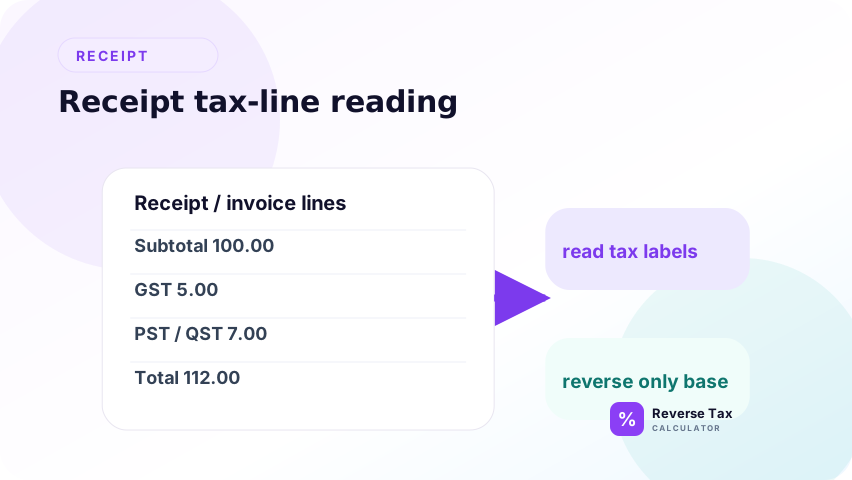
When a receipt shows tax lines separately, the strongest workflow is subtraction. The seller already disclosed the GST, PST, QST, or HST amount, including whatever rounding the system used. Use the rate formula as a verification check, not as a replacement for visible receipt evidence.
If the receipt shows GST, PST, QST, or HST separately, use those lines as evidence. You can subtract the tax amounts from the total to find the net price, then calculate implied rates if needed.
What If the Receipt Shows One Combined Total?
When the receipt shows one combined total, the calculator has to infer more facts. You need the province, tax label, rate, taxability, date, and whether all lines share the same base. If exempt items, deposits, gift cards, shipping, or service charges are mixed into the total, separate those entities before reversing tax.
Use the correct combined rate only when the taxes apply to the same base. If the receipt has exempt items, mixed rates, or special charges, separate the groups before reversing.
How Rounding Affects Canadian Taxes
Rounding affects Canadian reverse tax because a receipt may round GST, PST, QST, or HST by line, by tax component, or by final total. Quebec GST and QST can create fractional cents before display rounding. A one-cent mismatch should trigger a rounding review before you assume the rate or taxable base is wrong.
GST, PST, HST, and QST can create penny differences when tax lines are rounded separately. Quebec GST and QST calculations can also show fractions of a cent before rounding.
Keep extra precision in spreadsheets and round final display values.
Canadian Tax Comparison Matrix
| Feature | GST | HST | PST | QST |
|---|---|---|---|---|
| Federal or provincial | Federal | Combined | Provincial | Quebec |
| Often one receipt line | Sometimes | Yes | Separate | Separate |
| Common reverse method | 5% factor | HST factor | Add with GST if same base | Add with GST if same base |
| Official source | CRA | CRA | Province | Revenu Québec |
What This Means for Reverse Tax Content
A strong Canadian reverse tax page should answer the user's label-level intent, not only the generic formula intent. Someone searching GST, HST, PST, or QST may need a different calculation path. This page should naturally route readers to specific workflows like reverse HST, reverse GST, and reverse GST and QST in Quebec.
A Canadian reverse tax page should not only ask for rate. It should ask which tax labels appear on the receipt. GST only, HST, GST plus PST, and GST plus QST are different user intents.
How to Read a Canadian Receipt
Read a Canadian receipt by identifying tax labels before applying formulas. The label tells you whether the tax is federal GST, harmonized HST, separate PST, or Quebec QST. This label-first workflow is stronger than starting with a rate because it preserves the receipt's entity structure and reduces the risk of applying the wrong Canadian tax pattern.
Start with the labels.
GST Line
The GST line shows federal tax. If it is the only tax line, the receipt may be reversed with the GST-only factor. If GST appears beside PST or QST, keep reading before calculating because the final total may include another tax label that also needs to be removed.
Shows federal tax.
HST Line
The HST line shows a harmonized tax in a participating province. For reverse calculation, use the full HST rate instead of treating the line as GST only. This matters because HST contains a provincial component, and using only 5% GST would overstate the pre-tax amount.
Shows a harmonized tax in participating provinces.
PST Line
The PST line shows a separate provincial tax. It may apply beside GST, but the base can require its own review depending on item category and provincial rules. If the receipt shows PST separately, preserve that amount as a separate field rather than hiding it inside one generic tax number.
Shows a separate provincial sales tax.
QST Line
The QST line shows Quebec sales tax. It commonly appears with GST, so the reverse workflow needs both labels. If QST is shown separately, subtract it directly from the total with the GST line. If only a combined total is available, use the Quebec combined factor only after confirming both taxes apply to the same base.
Shows Quebec sales tax.
If the receipt has separate lines, use them before estimating from a combined rate.
Example: Tax Amounts Shown Separately
This example answers the query "should I use the tax lines or the rate?" Use the tax lines first. When GST and PST are already shown, the receipt gives a direct path to the net price. The reverse formula becomes a QA check instead of the primary calculation.
Receipt total: $112.00
GST: $5.00
PST: $7.00
Net price:
$112.00 minus $5.00 minus $7.00 = $100.00
No reverse rate formula is needed because the tax amounts are known.
Example: Combined HST Line
This example answers the query "how do I remove HST when it is one line?" If the receipt total is HST-inclusive and all taxable lines use the same HST rate, divide by 1 plus the HST rate. If the receipt has exempt items or non-tax charges, remove those before applying the HST formula.
Receipt total: $226.00
HST rate: 13%
Pre-tax amount:
$226.00 divided by 1.13 = $200.00
HST:
$26.00
Example: GST and QST Rounding
This example shows why Quebec receipts can differ by a cent. GST at 5% and QST at 9.975% may be rounded separately by the seller, while a spreadsheet may use one combined factor and round only once. Keep full precision during calculation and reconcile to shown receipt lines when available.
Base: $200.00
GST at 5%: $10.00
QST at 9.975%: $19.95
Total: $229.95
If a calculator rounds too early, the result may differ by one cent.
How Refunds Work in Canadian Reverse Tax
Refunds should follow the original tax labels, not the current province pattern guessed from memory. If the original sale had GST and PST, reverse those labels. If it had HST, use the original HST rate. If it had GST and QST, keep both Quebec tax labels visible in the refund workpaper.
Refunds should match the original tax labels. If a refund includes GST and PST, separate both. If a refund includes HST, reverse the HST-inclusive refund using the original HST rate.
Do not use a different province's rate for the refund.
How Spreadsheets Should Store Canadian Tax Fields
Use explicit columns:
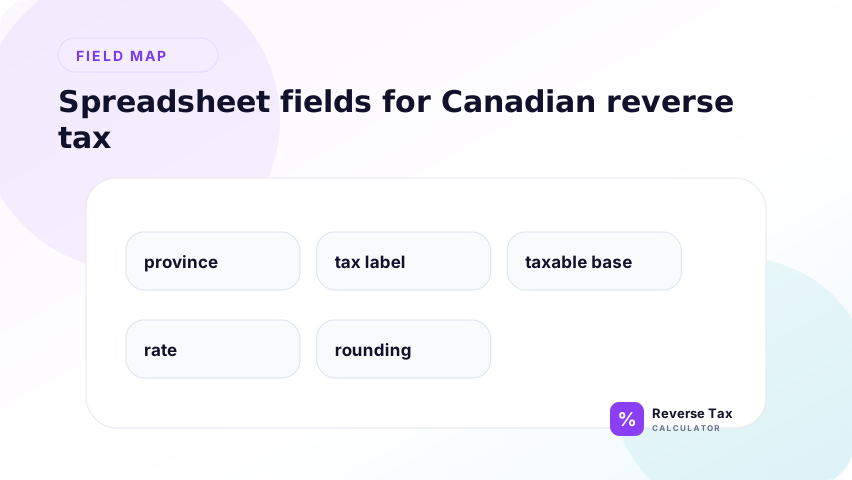
| Column | Purpose |
|---|---|
| gst_rate | Federal GST |
| hst_rate | HST where applicable |
| pst_rate | Provincial sales tax |
| qst_rate | Quebec sales tax |
| tax_system | GST, HST, GST_PST, or GST_QST |
| province | Rate context |
This prevents a generic tax_rate column from hiding Canadian tax structure.
When to Use Tax Lines Instead of Rates
Use tax lines instead of rates when the receipt already shows GST, PST, QST, or HST amounts. This approach captures source-system rounding, item-level tax decisions, and the seller's actual tax line. Use rates when tax amounts are missing, when you need to verify the receipt, or when the receipt only gives a tax-inclusive total.
If a receipt shows GST, PST, QST, or HST amounts, subtract those amounts directly from total to find net price. Then use implied rates only as a check.
This is often stronger than reconstructing from memory.
Canadian Reverse Tax Trust Checklist
The trust checklist protects the calculation from overconfidence. A Canadian reverse tax result should identify province, receipt date, tax label, rate, taxable base, rounding method, and source evidence. If any of those facts are missing, the page should call the result an estimate rather than presenting it as compliance support.
Confirm province, tax labels, rate, taxability, receipt date, and whether taxes apply to the same base. If any are unknown, mark the calculation as an estimate.
What If the Province Is Unknown?
If the province is unknown, do not guess the tax system from the total alone. Several tax patterns can create similar-looking totals. Use the store location, seller address, ship-to province, invoice place of supply, or tax labels to identify whether the receipt is GST-only, HST, GST plus PST, or GST plus QST.
Do not guess the tax system. Use the receipt location, seller address, ship-to province, or tax labels to identify whether the transaction uses GST only, HST, GST plus PST, or GST plus QST.
Common Canadian Reverse Tax Errors
| Error | Effect | Fix |
|---|---|---|
| Treating HST as GST only | Tax understated | Use HST rate |
| Ignoring PST | Pre-tax too high | Include PST if same base |
| Combining taxes with different bases | Wrong result | Separate groups |
| Using rounded QST too early | Penny mismatch | Keep precision |
| Using wrong province | Wrong tax system | Check province |
Tax Label Controls Formula Choice
The information gain is that Canadian reverse tax is an entity-resolution problem before it is a formula problem. GST, HST, PST, and QST are not interchangeable labels. Each label changes the formula, the evidence fields, the spreadsheet columns, and the internal links a user should follow next.
Canadian reverse tax is not only about rate. The tax label matters.
GST only, HST, GST plus PST, and GST plus QST can require different spreadsheet or calculator structures. A strong calculator should ask which tax system appears on the receipt.
Trust Boundary
This page can explain arithmetic, receipt interpretation, and formula choice. It cannot determine registration status, input tax credits, taxability classification, filing treatment, or whether a seller applied Canadian tax law correctly. For compliance-sensitive decisions, use official CRA, Revenu Quebec, and provincial authority guidance.
this page explains reverse calculation concepts for Canadian consumption taxes. It does not provide filing advice, registration advice, input tax credit advice, or province-specific legal classification.
Use CRA, Revenu Québec, and provincial tax authority guidance for compliance-sensitive decisions.
Frequently Asked Questions
Is GST the same as HST?
No. GST is the federal goods and services tax, while HST combines GST with a provincial component in participating provinces. For reverse tax, GST-only totals usually use a 1.05 factor, while HST totals use the full HST rate. The receipt label tells you which formula path is safer.
No. GST is federal. HST combines GST with a provincial component in participating provinces.
Is PST separate from GST?
Yes. PST is separate from GST in provinces that use a provincial sales tax system. A receipt may show GST and PST as two lines, and those lines should be preserved as separate evidence. Combine rates only when both taxes apply to the same taxable base and no better line-level tax evidence is available.
Yes, in provinces that use PST separately.
What is QST?
QST is Quebec sales tax. It commonly appears with GST on Quebec receipts and invoices. For a clean reverse calculation where both taxes apply to the same base, the common combined rate is 14.975%. If the receipt shows GST and QST separately, subtract both shown tax lines from the total.
QST is Quebec sales tax.
Can I combine GST and PST?
You can combine GST and PST only when they apply to the same taxable base. If the receipt has exempt items, differently taxed items, or separate tax bases, combining rates can produce the wrong net price. When the receipt shows GST and PST lines separately, use those shown amounts first.
Only when they apply to the same taxable base.
What is the Quebec combined rate for reverse tax?
For common GST plus QST calculations, the combined additive rate is 14.975% when both apply to the same taxable base. The reverse factor is 1.14975. Keep precision before rounding, because the QST rate can create fractional cents and receipt-level rounding may differ from spreadsheet rounding.
For common GST plus QST calculations, use 14.975% when both apply to the same base.
Sources and Notes
- CRA GST/HST rates and rules
- Revenu Québec GST/HST and QST rules
- Formula source: arithmetic relationship between tax-inclusive total, Canadian tax rates, and pre-tax base.