
A wrong tax rate changes every reverse tax output because the calculator divides the tax-inclusive total by the multiplier created from that rate. Using 8 percent instead of 8.25 percent returns a different pre-tax price and included tax even when the receipt total is entered correctly. The correct rate depends on jurisdiction, transaction date, product taxability, local surtaxes, reduced rates, exemptions, and whether the receipt combines several taxes.
This page explains how wrong rates distort reverse tax, why state-only rates and outdated rates are common causes, how to diagnose the error, and how to prevent bad numbers from entering bookkeeping, refunds, spreadsheets, or invoice checks.
What Happens When the Tax Rate Is Wrong?
When the tax rate is wrong, the reverse tax divisor is wrong. A tax-inclusive total divided by 1.08 gives a different before-tax amount than the same total divided by 1.0825, 1.13, or 1.20.

The error affects the whole split. If the before-tax amount is too high, the tax amount is too low. If the before-tax amount is too low, the tax amount is too high. The total still rebuilds mathematically, but it rebuilds around the wrong assumption.
Why the Wrong Rate Can Look Correct
The reverse formula always produces a clean result because it is arithmetic. That does not mean the chosen rate matched the receipt, invoice, jurisdiction, product type, or transaction date.
For example, $108.00 divided by 1.08 equals $100.00. But if the real rate was 8.25%, the correct before-tax amount would be about $99.77. Both answers look reasonable until they are compared with the actual receipt or tax authority rate.
How Much Can a Wrong Rate Change the Result?
The higher the total, the more a small rate difference matters. A 0.25 percentage point mistake may look minor on one receipt, but it can create visible differences across hundreds of transactions.

| Tax-inclusive total | Rate used | Before-tax amount |
|---|---|---|
| $108.25 | 8.00% | $100.23 |
| $108.25 | 8.25% | $100.00 |
| $108.25 | 9.00% | $99.31 |
This table shows why rate evidence matters before batch calculations.
Why State-Only Rates Cause Errors
In many U.S. sales tax contexts, the total rate can include state, county, city, district, or special local rates. If you use only the state rate, the reverse result can overstate the before-tax price.
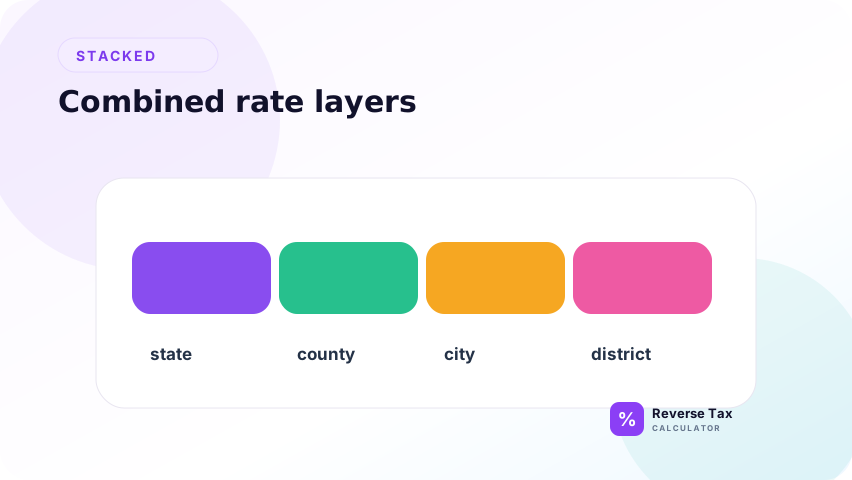
This is why the state tax rate vs local combined rate page is a better next step when a receipt total does not match a state-only calculation. The rate on the receipt may be a combined local rate, not the headline state rate.
Why Outdated Rates Cause Errors
Tax rates can change over time. If you reverse an old receipt with today's rate, the formula may return the wrong historical before-tax amount. This matters for refunds, audits, bookkeeping cleanup, and old invoice reconciliation.
The transaction date should be part of the rate evidence. The article on outdated tax rates explains this problem more deeply for historical receipts and exports.
Why Product Taxability Can Look Like a Rate Error
Sometimes the rate is not the real problem. The receipt may include items taxed at different rates, exempt items, food, clothing, shipping, or services. When one formula is applied to the whole receipt, the result may appear to show a wrong rate.
Before changing the rate, check whether the receipt contains multiple tax groups. Mixed-item receipts should be split by taxable base before reverse tax is applied.
How Wrong Rates Affect Bookkeeping
Wrong rates can misclassify revenue and tax payable. If the tax amount is understated, revenue may be overstated. If the tax amount is overstated, revenue may be understated.
For business records, keep the source receipt, invoice, or POS export with the calculation. IRS Publication 583 explains the importance of records that support business income, expenses, and tax-related amounts.
This is especially important when gross receipts include collected tax. A wrong reverse split can move dollars between revenue and liability accounts. The bookkeeping page on separating revenue from collected tax explains how that split should be reviewed operationally.
How Wrong Rates Affect Refunds
Refund calculations should usually use the original transaction rate, not a current rate or an average rate. If the original sale used 8.25%, reversing the refund at 8% can return the wrong tax portion.
If the refund document shows tax separately, use the shown tax amount first. If it does not, match the refund to the original sale and use the original rate and taxable base.
How to Diagnose a Wrong Tax Rate
Start by rebuilding the receipt. Calculate the before-tax amount, calculate the tax amount from that base, and add both values together. If the rebuilt total is wrong, review the rate, rounding method, and item grouping.
Then compare the implied rate from subtotal and total, if both are known. If the implied rate differs from your assumed rate, the issue may be local tax, outdated rate data, or mixed taxable items.
Wrong Rate Decision Table
| Symptom | Likely cause | Fix |
|---|---|---|
| Result differs by one cent | Rounding level | Check line vs total rounding |
| Result differs by more than one cent | Wrong rate or mixed items | Verify rate and split groups |
| State rate almost works | Local rate missing | Use combined local rate |
| Old receipt does not match current rate | Rate changed | Use transaction-date rate |
| Tax shown separately | Rate reconstruction unnecessary | Use shown tax amount |
This table helps diagnose calculation errors, not legal taxability.
How to Prevent Wrong-Rate Errors in Spreadsheets
Use separate columns for transaction_date, jurisdiction, source_rate, tax_inclusive_total, before_tax_amount, tax_amount, and rebuilt_total. Do not store only a generic tax_rate with no source.
For batch calculations, add a variance column. Rows with unexplained differences should be reviewed before the results are used for reports, refunds, or accounting entries.
The best prevention method is to make the assumption visible. A row should show whether the rate came from the receipt, an official table, an internal rate file, or a manual entry. Hidden assumptions are where spreadsheet tax errors usually survive.
What This Page Does Not Prove
This page explains how a wrong rate affects reverse tax arithmetic. It does not determine the correct legal rate, product taxability, exemption status, filing treatment, or whether a seller should have collected tax.
Those questions require official tax authority sources and the original transaction record. A calculator can reveal inconsistency, but it cannot replace source evidence.
The page also does not resolve marketplace collection rules, nexus, tax registration, or product-specific exemptions. Those topics require jurisdiction-specific research. This page only explains what happens when the rate input does not match the transaction.
Trust Boundary
Wrong-rate analysis is a diagnostic method. It can show that a calculation does not match the source total, but it cannot prove which rate is legally correct without authoritative rate data and transaction context.
Use official tax authority guidance, source receipts, invoices, and accounting records before making compliance-sensitive decisions.
Treat the calculation as a signal, not a conclusion. If the numbers do not match, the next step is evidence review: receipt labels, location, transaction date, item taxability, rate source, and shown tax lines.
Frequently Asked Questions
Can a small rate error matter?
Yes. A small rate error can be minor on one receipt but meaningful across many transactions. It also affects both the before-tax amount and the tax amount, so the error can flow into revenue, tax payable, refunds, and reports.
Why does the state tax rate not match my receipt?
The receipt may include county, city, district, or special local tax. It may also contain mixed taxable items. Use the combined rate that actually applied to the transaction, not only the state headline rate.
Should I use the current rate for an old receipt?
No. Use the rate that applied on the transaction date whenever the calculation depends on historical accuracy. Current rates may not match older receipts.
Sources and Notes
- IRS Publication 583 recordkeeping guidance
- Formula source: arithmetic relationship between tax-inclusive total, selected tax rate, before-tax amount, and tax amount.