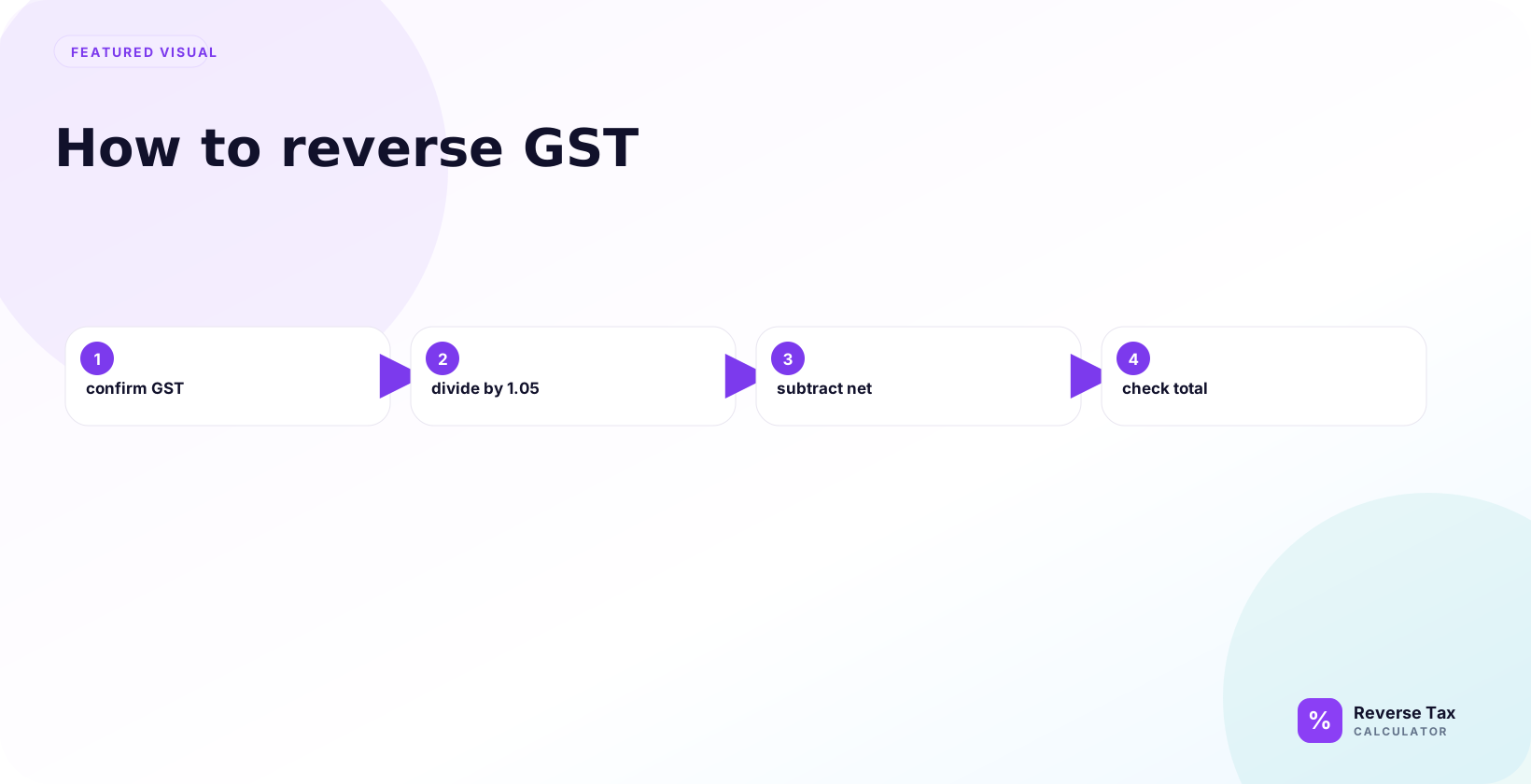
Reverse GST calculation removes GST from a GST-inclusive total by dividing the gross amount by 1 plus the GST rate as a decimal. The output gives the price before GST and the GST amount included in the total. The formula works for one taxable GST rate; GST/PST combinations, exempt items, zero-rated supplies, discounts, shipping, and rounded invoice lines need separate treatment. The receipt label must confirm GST inclusion.
Formula:
Pre-tax amount = GST-inclusive total / 1.05
Then:
GST included = GST-inclusive total - pre-tax amount
What Does Reverse GST Mean?
Reverse GST means calculating backward from a total that already includes Goods and Services Tax. It separates:
| Output | Meaning |
|---|---|
| Pre-tax amount | Amount before GST |
| GST included | GST inside the total |
| GST-inclusive total | Final amount including GST |
This is useful for Canadian receipts, invoices, refunds, and recordkeeping when GST is included in the displayed total.
Reverse GST Formula
The reverse GST formula depends on which GST system the receipt uses. For a GST-only Canadian total at 5%, divide by 1.05. For New Zealand GST, divide by 1.15. For Australian GST, divide by 1.10. This page focuses on GST-only reverse logic, so confirm the country, rate, and tax label before calculating.
For 5 percent GST:
Pre-tax amount = Total / 1.05
GST included = Total - pre-tax amount
The same formula works for any percentage rate if you change the multiplier:
Pre-tax amount = Total / (1 + rate / 100)
How to Reverse GST Step by Step
A step-by-step GST workflow prevents using a GST-only formula on HST, GST plus PST, GST plus QST, or mixed receipts. Confirm the total includes GST, confirm GST is the tax you need to remove, divide by the correct multiplier, and subtract to find GST. If the receipt already shows GST separately, use that line as evidence.
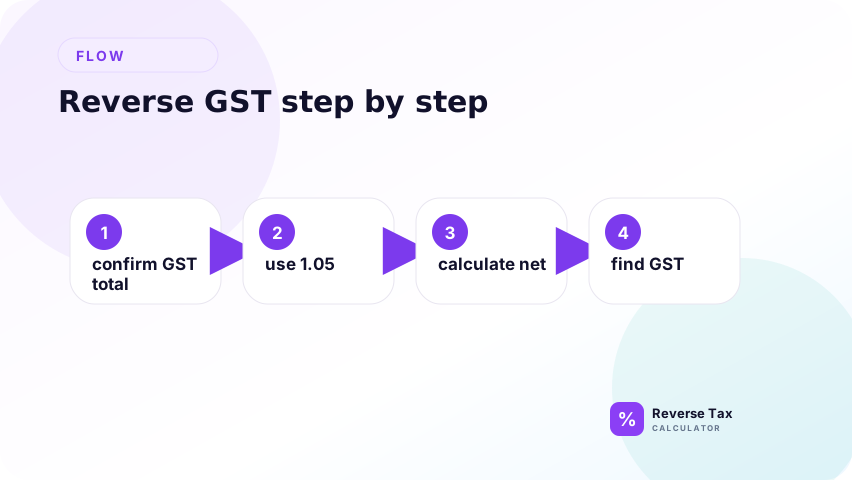
Use the steps as a decision tree. First identify the jurisdiction and tax label. Then confirm whether the total is GST-inclusive. Then decide whether the total is GST-only or mixed with PST, QST, HST, zero-rated items, or exempt lines. Only after those checks should you divide by the GST multiplier and round the result.
Step 1: Confirm the Total Includes GST
Confirm that the amount is GST-inclusive before dividing by a GST multiplier. If the receipt already shows a GST-exclusive subtotal, do not reverse that subtotal. If the amount includes tips, payments, exempt items, or another tax label such as HST, PST, or QST, clean or reroute the calculation first.
Only reverse GST if GST is included in the total. If GST is already shown as a separate line, you can verify it instead.
Step 2: Confirm GST Is the Tax You Need to Remove
Confirm that GST is the correct tax label for the transaction. In Canada, an HST receipt should use the HST rate, not a GST-only formula. In Australia or New Zealand, GST uses different rates. The word GST is not enough by itself. The jurisdiction and receipt label control the formula.
Some Canadian totals include HST, GST plus PST, or GST plus QST. Do not use the GST-only formula on a total that includes more than GST.
Step 3: Divide by 1.05
Divide by 1.05 only for a clean 5 percent GST-inclusive total. The factor 1.05 represents 100 percent of the pre-tax amount plus 5 percent GST. This step recovers the amount before GST was included.
The result is the GST-exclusive base. If you need to prove the result, multiply that base by 5 percent and add it back to confirm the original total.
For a 5 percent GST-inclusive total:
Total / 1.05 = pre-tax amount
Step 4: Subtract to Find GST
Subtract the pre-tax amount from the GST-inclusive total to find the GST portion. This keeps the displayed tax tied to the original total and makes the result easy to verify. If the result does not reconcile after rounding, review the tax label, mixed lines, or rounding method.
Use the GST amount as a separate output from the pre-tax amount. Mixing the two can overstate revenue or understate the tax portion.
Total - pre-tax amount = GST included
Reverse GST Example
Suppose a GST-inclusive total is 210.00.
Pre-tax amount:
210.00 / 1.05 = 200.00
GST included:
210.00 - 200.00 = 10.00
| Component | Amount |
|---|---|
| GST-inclusive total | 210.00 |
| GST rate | 5 percent |
| Pre-tax amount | 200.00 |
| GST included | 10.00 |
Reverse GST on a Smaller Receipt
Small GST receipts often reveal rounding issues. A total may divide into more than two decimal places, while the receipt shows only cents. Calculate with precision, round display values carefully, and compare pre-tax amount plus GST back to the original receipt total. A one-cent mismatch may be rounding rather than a wrong GST rate.
Suppose a receipt total is 42.00 and GST at 5 percent is included.
42.00 / 1.05 = 40.00
42.00 - 40.00 = 2.00
The pre-tax amount is 40.00 and the GST included is 2.00.
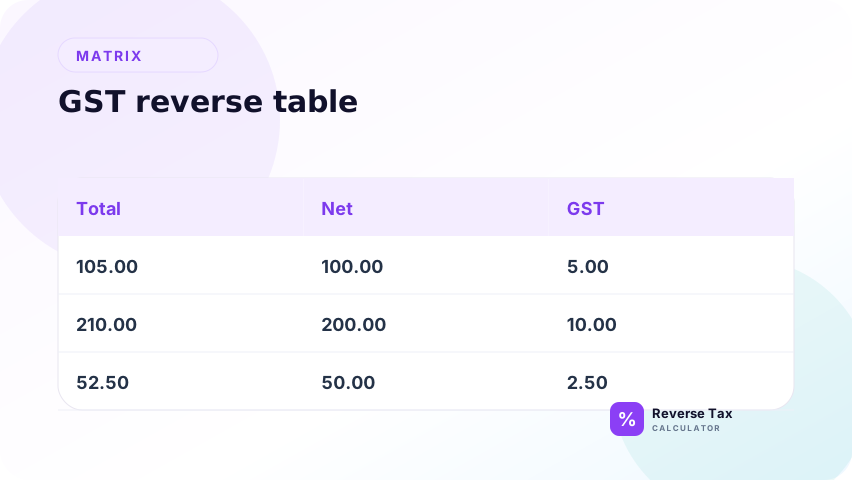
GST Reverse Table
| GST-inclusive total | Divide by | Pre-tax amount | GST included |
|---|---|---|---|
| 10.50 | 1.05 | 10.00 | 0.50 |
| 42.00 | 1.05 | 40.00 | 2.00 |
| 105.00 | 1.05 | 100.00 | 5.00 |
| 210.00 | 1.05 | 200.00 | 10.00 |
| 1,050.00 | 1.05 | 1,000.00 | 50.00 |
The table also shows why multiplying the final total by 5 percent is wrong. In a 105.00 total, GST is 5.00, not 5.25.
GST Only vs GST Plus PST or QST
GST-only reverse tax is not the same as reversing a total that includes provincial taxes.
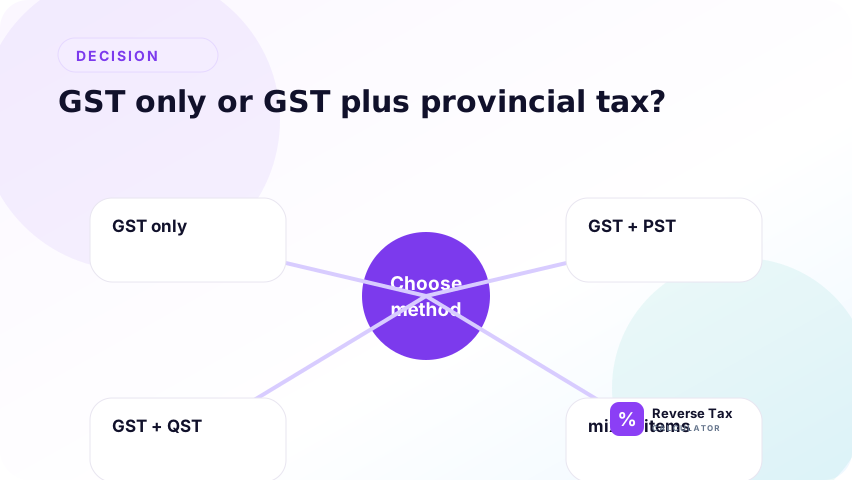
| Tax setup | Use GST-only formula? | Better method |
|---|---|---|
| GST only | Yes | Divide by 1.05 |
| HST | No | Use total HST rate |
| GST plus PST | Not alone | Check whether both taxes apply |
| GST plus QST | Not alone | Use Québec GST/QST method |
| Zero-rated supply | No | Use 0 percent |
CRA guidance notes that if PST is charged in the place of supply, GST is calculated on the price without the PST. That means tax bases matter.
Example: GST Plus PST on the Same Base
Suppose a receipt total is 112.00, made from GST at 5 percent and PST at 7 percent on the same 100.00 base.
| Component | Amount |
|---|---|
| Pre-tax amount | 100.00 |
| GST | 5.00 |
| PST | 7.00 |
| Total | 112.00 |
If both taxes are calculated on the same base, an additive 12 percent rate can reconstruct the base:
112.00 / 1.12 = 100.00
Do not use GST-only:
112.00 / 1.05 = 106.67
That result is wrong because PST was also included.
Zero-Rated Supplies
Zero-rated supplies do not contain GST to remove for reverse calculation, even though they may still matter for tax reporting. If a receipt includes zero-rated and taxable lines, separate them first. Applying the GST divisor to the full receipt total will remove GST from amounts that did not include GST.
CRA guidance states that zero-rated supplies have a 0 percent GST/HST rate throughout Canada and gives basic groceries as an example.
If a supply is zero-rated:
Total / 1.00 = Total
Included GST is 0.00.
Do not remove 5 percent GST from a zero-rated amount.
GST vs Zero-Rated vs Exempt
For a consumer-facing reverse calculation, zero-rated and exempt amounts can both show no GST charged. For tax reporting, they are different concepts.
| Supply type | GST charged to customer | Reverse-tax action |
|---|---|---|
| Taxable at 5 percent | Yes | Divide by 1.05 |
| Zero-rated | 0 percent | Do not remove GST |
| Exempt | No GST charged | Do not remove GST |
The calculator does not decide legal classification. It only applies the rate you enter.
Receipt and Invoice Clues
CRA guidance says customers must be told if GST/HST is being applied and whether it is included in the price or added separately.
| Clue | Action |
|---|---|
| GST shown separately | Verify by subtraction |
| Total includes GST | Reverse from total |
| HST shown | Do not use GST-only formula |
| PST or QST also shown | Use multi-tax method |
| Zero-rated label | Use 0 percent |
Reverse GST Decision Matrix
| Situation | Best action |
|---|---|
| One GST-inclusive total | Divide by 1.05 |
| GST line shown separately | Verify or subtract |
| Total includes HST | Use HST page |
| Total includes GST and QST | Use Québec page |
| Total includes GST and PST | Check tax bases |
| Mixed zero-rated and taxable items | Separate first |
| Refund | Use original sale evidence |
Reverse GST with Mixed Items
Suppose a receipt total is 157.50:
| Line | Amount |
|---|---|
| GST-taxable item after GST | 105.00 |
| Zero-rated groceries | 52.50 |
| Total | 157.50 |
Reverse only the GST-taxable item:
105.00 / 1.05 = 100.00
105.00 - 100.00 = 5.00
The zero-rated groceries stay 52.50 with 0.00 GST included.
Reverse GST for an Invoice
For an invoice, use shown GST lines first if available. If the invoice provides only a GST-inclusive total and a GST rate, divide by the correct multiplier and subtract to find GST. Review line items, shipping, discounts, and exempt or zero-rated supplies before applying one formula to the invoice total.
Suppose an invoice shows a GST-inclusive gross amount of 525.00 but does not show the net amount.
525.00 / 1.05 = 500.00
525.00 - 500.00 = 25.00
The invoice contains 500.00 before GST and 25.00 GST, assuming GST is the only included tax.
Reverse GST for a Refund
For a refund, use the GST rate and taxability from the original sale. A refund may include item price, GST, shipping, restocking fees, or goodwill credits. Reverse GST only from the part of the refund that actually includes GST. If the refund report already shows GST separately, use that line as source evidence.
Suppose a GST-inclusive refund is 52.50 and GST at 5 percent was included in the original sale.
52.50 / 1.05 = 50.00
52.50 - 50.00 = 2.50
The refund contains 50.00 of pre-tax value and 2.50 of GST.
Reverse GST Operational Checklist
| Check | Why it matters |
|---|---|
| Total includes GST | Confirms reverse calculation is needed |
| GST is the only tax included | Prevents undercounting PST, QST, or HST |
| Supply is taxable at 5 percent | Prevents removing GST from zero-rated items |
| Receipt date is known | Supports historical verification |
| Exempt items are separated | Avoids false tax split |
| Tax line is checked | Confirms implied rate |
| Rounding is considered | Explains cent differences |
What Reverse GST Can and Cannot Prove
| Can prove | Cannot prove |
|---|---|
| GST amount inside a GST-inclusive total | Legal taxability of the supply |
| Pre-tax amount from a 5 percent total | Whether seller should have charged GST |
| Arithmetic consistency of an invoice | Whether documentation is sufficient |
| GST split on a refund | Whether refund rules were followed |
Use the calculation for arithmetic and records, then use official guidance for taxability.
Common Mistakes
Common GST reverse mistakes include multiplying the total by the GST rate, using a GST-only formula on HST, ignoring PST or QST, removing GST from zero-rated supplies, and using current rules without checking the transaction date. The fix is to identify jurisdiction, tax label, taxable base, and rate before calculating.
Most GST mistakes happen because "GST" is used as a broad search term across different countries and Canadian tax systems. A Canadian GST-only receipt, an HST receipt, a Quebec GST and QST receipt, an Australian GST invoice, and a New Zealand GST invoice can all require different multipliers. Confirm the label and rate before applying a formula.
Multiplying the Total by 5 Percent
Do not calculate GST as 5 percent of the GST-inclusive total. GST applies to the pre-tax amount.
Using GST Formula on HST
HST is a combined tax. Use the HST rate, not only 5 percent GST.
Ignoring PST or QST
If another tax is included, GST-only reverse math will understate the total included tax.
Removing GST from Zero-Rated Supplies
Zero-rated supplies have a 0 percent GST/HST rate.
Using Current Rules Without Checking Transaction Date
For old receipts, verify the rules and rate that applied at the time.
What This Page Does Not Cover
| Topic | Better page |
|---|---|
| HST | How to Reverse HST from a Total |
| GST and QST | How to Reverse GST and QST in Québec |
| Canadian overview | GST, HST, PST, and QST Explained |
| Multiple taxes formula | Reverse Formula for Multiple and Stacked Taxes |
Frequently Asked Questions
How do I remove 5 percent GST from a total?
Divide the GST-inclusive total by 1.05, then subtract the result from the total.
What is the GST in 105.00?
If 105.00 includes 5 percent GST, the pre-tax amount is 100.00 and GST is 5.00.
Can I use the GST formula for HST?
No. HST uses a total harmonized rate, such as 13, 14, or 15 percent depending on the place of supply and date.
What if GST and PST are both included?
Check whether both taxes apply to the same base. You may need a multi-tax calculation.
What if the item is zero-rated?
Use 0 percent. There is no GST to remove.
Sources
These sources support the official GST context and rate selection. The formulas on this page come from the arithmetic relationship between GST-exclusive price, GST rate, GST amount, and GST-inclusive total. Use official tax authority guidance for taxability, zero-rating, registration, filing, and documentation decisions. Use this page for reverse calculation and receipt interpretation.
- Canada Revenue Agency, Charge and collect the GST/HST