
Reverse tax bookkeeping records tax-inclusive receipts by separating business revenue from tax collected on behalf of a tax authority. The calculation removes included tax from gross sales, posts net revenue separately, and assigns the tax amount to a payable or liability account. Bookkeeping accuracy depends on tax codes, jurisdiction, invoice wording, exemptions, discounts, refunds, shipping, marketplace collection, and whether accounting records use cash or accrual timing.
Reverse tax is useful when a deposit, receipt, or point-of-sale export shows only the tax-inclusive total.
How Do You Separate Sales Tax from a Total?
Separate sales tax from a total by identifying whether the total includes tax, confirming the rate or shown tax amount, calculating the pre-tax revenue, and recording the tax portion separately from revenue. The goal is to avoid treating collected tax as ordinary income.
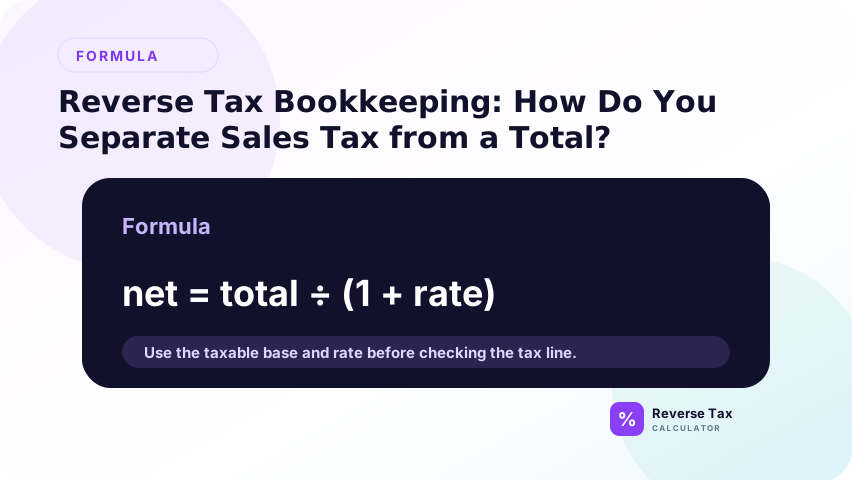
Use the reverse tax formula:
Net sales = Tax-inclusive total divided by (1 plus tax rate)
Sales tax = Tax-inclusive total minus net sales
Example:
Tax-inclusive total: $108.00
Tax rate: 8%
Net sales = $108.00 divided by 1.08 = $100.00
Sales tax = $8.00
Book $100.00 as revenue and $8.00 as Sales Tax Payable.
Why Does Sales Tax Need to Be Separated?
Sales tax collected from customers is usually money held for a tax authority. It is not the same as income earned from selling products or services.
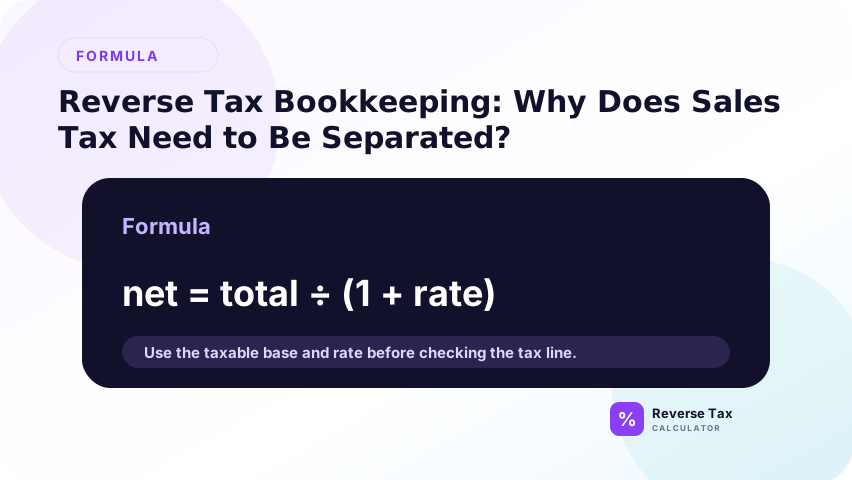
If you record the full customer payment as revenue, your sales may look inflated and your tax liability may be hidden. If you record no payable, the later tax payment can look like an ordinary expense instead of a liability settlement.
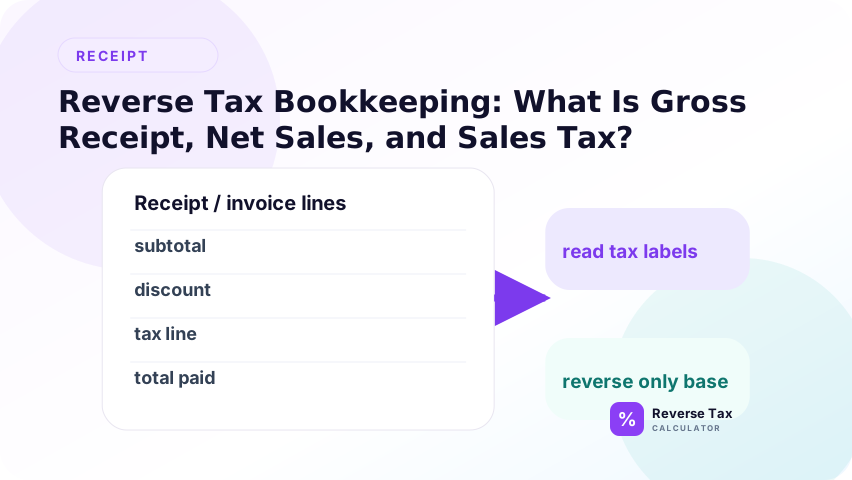
What Is Gross Receipt, Net Sales, and Sales Tax?
These terms are often mixed together in exports.
| Term | Meaning | Bookkeeping treatment |
|---|---|---|
| Tax-inclusive total | Customer amount including tax | Split before posting |
| Net sales | Sale amount before collected tax | Revenue |
| Sales tax collected | Tax charged to customer | Liability |
| Deposit | Bank amount received | Reconcile to receipts |
| Sales Tax Payable | Amount owed to authority | Liability account |
IRS Publication 583 includes recordkeeping examples where daily receipts are separated into cash sales, sales tax, and total receipts, which supports the idea that sales tax should be tracked distinctly in records.
How Do You Back Sales Tax Out of a Total?
When the total includes tax and the rate is known, divide the total by 1 plus the rate. The result is the before-tax amount. The tax amount is the total minus the before-tax amount. If the receipt shows tax separately, use the shown tax amount first.
Use:
Sales tax = Total minus Total divided by (1 plus rate)
Example:
Total: $215.00
Rate: 7.5%
Net sales = $215.00 divided by 1.075 = $200.00
Sales tax = $15.00
The rate must be written as a decimal in the formula. 7.5% becomes 0.075.
What Journal Entry Separates Sales Tax?
For a cash sale:
| Account | Debit | Credit |
|---|---|---|
| Cash or bank | $108.00 | |
| Sales revenue | $100.00 | |
| Sales Tax Payable | $8.00 |
This entry records the full cash received, the revenue earned, and the liability owed.
What Happens When You Remit the Sales Tax?
When the tax is paid:
| Account | Debit | Credit |
|---|---|---|
| Sales Tax Payable | $8.00 | |
| Cash or bank | $8.00 |
The remittance reduces the liability. It should not reduce current-period revenue if revenue was already recorded net of collected tax.
How Do You Separate Sales Tax from Daily Sales?
Daily sales should be separated by tax group, not only by grand total. Taxable sales, exempt sales, tax collected, refunds, tips, gift cards, and marketplace tax should each be identified before posting bookkeeping entries. A single reverse formula can be wrong when daily sales contain mixed activity.
Daily sales summaries can be easier than individual receipts when all sales share one rate and taxability profile.
Example:
Daily tax-inclusive receipts: $2,700.00
Rate: 8%
Net sales = $2,700.00 divided by 1.08 = $2,500.00
Sales tax = $200.00
If the day includes exempt sales, multiple rates, tips, delivery fees, or marketplace transactions, group the sales first.
How Do You Separate Sales Tax with Multiple Rates?
Do not reverse the full deposit at one average rate. Group transactions by rate.
| Group | Tax-inclusive amount | Rate | Net sales | Tax |
|---|---|---|---|---|
| Local rate A | $1,080.00 | 8% | $1,000.00 | $80.00 |
| Local rate B | $537.50 | 7.5% | $500.00 | $37.50 |
| Exempt sales | $300.00 | 0% | $300.00 | $0.00 |
| Total | $1,917.50 | Mixed | $1,800.00 | $117.50 |
This produces cleaner books and a better audit trail.
How Do Marketplace Sales Affect Bookkeeping?
Marketplace deposits can include customer payments, marketplace-collected tax, fees, refunds, reserves, advertising charges, and payouts. The bank deposit is often not the same as gross sales.
For bookkeeping, separate these layers:
- Customer sale
- Collected tax
- Marketplace facilitator tax if applicable
- Platform fees
- Refunds and adjustments
- Net payout
Reverse tax can help split sale totals, but it cannot replace the marketplace settlement report.
Customer Order Total
This is the amount the buyer paid or was charged. It may include tax.
Marketplace-Collected Tax
This may be collected and remitted by the marketplace rather than the seller. Do not automatically post it to your own payable account.
Seller Payout
This is the amount deposited after fees, refunds, reserves, and adjustments. It is not the same as revenue.
Example: Marketplace Payout Reconciliation
Marketplace payouts can include item sales, collected tax, marketplace-collected tax, shipping, refunds, fees, reserves, and adjustments. The payout deposit is usually not the same as taxable sales. Reconcile the payout back to the order report before separating tax for bookkeeping.
A marketplace order shows:
Customer paid: $108.00
Marketplace-collected tax: $8.00
Platform fee: $12.00
Seller payout: $88.00
The revenue may be $100.00, the marketplace tax may not go to your Sales Tax Payable account, and the fee may be a selling expense. If you only record the $88.00 bank deposit as revenue, you understate sales and hide the fee.
How Do Discounts Affect Sales Tax Separation?
Discounts affect the taxable base and therefore the tax portion that should be separated. A seller discount before tax may reduce collected tax, while a post-tax credit or third-party reimbursement may not. Bookkeeping should follow the tax shown or implied by the source transaction.
Discounts affect the taxable base. If a discount reduces taxable sales before tax, reverse tax from the discounted amount. If a coupon is third-party funded, the taxable base may be higher than customer cash paid.
For bookkeeping, record the discount consistently with the point-of-sale report and jurisdiction rule.
Retailer Discount
This usually lowers revenue because the seller accepted a lower selling price.
Manufacturer Coupon
This may create a receivable or other consideration from a third party. The customer payment is not always the full taxable value.
Gift Card
Gift card redemption is usually a payment flow or deferred revenue release, not a sales tax discount by itself.
How Do Refunds Affect Sales Tax Separation?
Refunds can reverse revenue and tax payable. If the refund includes tax, separate the refund into pre-tax refund and tax refunded. If the refund is partial, match it to the original sale rate and taxable base rather than using a current or average rate.
A refund may reverse both revenue and sales tax payable if the tax was refunded to the customer. If only part of the sale was refunded, allocate the refund between net sale and tax.
Example:
Refund total: $54.00
Rate: 8%
Net refund = $54.00 divided by 1.08 = $50.00
Tax refund = $4.00
Should Tips Be Included in Sales Tax Separation?
Optional tips should usually be separated from taxable sales before reverse tax is applied. Mandatory service charges may need different treatment depending on the receipt and jurisdiction. The bookkeeping split should follow the taxable base, not the final card payment.
Optional tips should not be treated as product sales. Remove optional tips before backing out sales tax from restaurant or delivery totals.
Mandatory service charges need separate classification because they may be taxable depending on jurisdiction.
Example: Restaurant End-of-Day Report
A restaurant end-of-day report may include food sales, taxable service charges, optional tips, discounts, gift cards, and tax collected. Reverse tax should be applied only to the taxable sales amount, not to tip income or payment totals that include non-tax charges.
End-of-day card batches can combine meals, tax, and tips.
Card deposits: $3,240.00
Optional tips: $400.00
Tax rate: 8%
Tax-inclusive meal receipts = $3,240.00 minus $400.00 = $2,840.00
Meal revenue = $2,840.00 divided by 1.08 = $2,629.63
Sales tax = $210.37
Without removing tips first, revenue and payable would both be overstated.
Example: Refund Allocation
Refund allocation should separate the returned sale amount from tax refunded. If a $108.00 tax-inclusive sale at 8% is fully refunded, $100.00 reduces revenue and $8.00 reduces sales tax payable. Partial refunds require matching the refunded item or group.
A customer returns a taxable item and receives $86.40 back.
Rate: 8%
Revenue reversal = $86.40 divided by 1.08 = $80.00
Sales tax reversal = $6.40
This creates a cleaner refund entry than posting the whole amount to refunds expense.
Decision Matrix: What Should Go Where?
| Amount | Revenue | Sales Tax Payable | Other account |
|---|---|---|---|
| Product sale before tax | Yes | No | No |
| Collected sales tax | No | Yes | No |
| Optional tip | No | No | Tip liability or wage clearing |
| Shipping charge | Depends on setup | Maybe | Shipping income or reimbursement |
| Platform fee | No | No | Expense |
| Gift card redemption | No new revenue if already deferred | No | Deferred revenue reduction |
Reconciliation Workflow
| Step | Action | Output |
|---|---|---|
| 1 | Export sales by transaction | Source data |
| 2 | Group by tax rate and taxability | Correct buckets |
| 3 | Remove tips, gift cards, and non-sale payments | Clean sales base |
| 4 | Reverse tax from tax-inclusive totals | Net sales and tax |
| 5 | Post journal entry | Revenue and payable |
| 6 | Compare payable to filing report | Reconciliation |
| 7 | Save reports | Audit trail |
Common Bookkeeping Errors
| Error | Effect | Fix |
|---|---|---|
| Recording total receipts as revenue | Overstates sales | Split tax first |
| Posting tax remittance as expense | Distorts profit | Debit payable |
| Reversing one deposit at one rate | Wrong rate mix | Group transactions |
| Ignoring refunds | Payable too high | Reverse refunded tax |
| Ignoring marketplace reports | Deposit mismatch | Reconcile payout layers |
Information Gain: Bank Deposits Are Not Sales
The key information gain is that bank deposits are cash movement, not a clean sales-tax base. Deposits may be net of fees, refunds, chargebacks, tips, or marketplace adjustments. Bookkeeping separation should start from sales records, not only the amount deposited.
A bank deposit is a cash movement. It may include tax, tips, fees, gift cards, prior-day settlements, loan deposits, or marketplace adjustments.
Strong bookkeeping starts from transaction records, not only the bank feed. Reverse tax is a calculation layer inside reconciliation, not a substitute for clean source data.
How Often Should You Reconcile Sales Tax?
Sales tax should be reconciled at least monthly for active businesses and more often when transaction volume is high. Frequent reconciliation catches rate, payout, refund, and posting problems before they become large payable-balance issues.
Reconcile at least as often as your filing cycle. Monthly sellers should reconcile monthly. High-volume sellers may benefit from weekly checks so rate mapping, marketplace treatment, and refund handling do not pile up.
Daily Check
Confirm deposits roughly match point-of-sale batches and obvious tax totals.
Monthly Close
Post revenue, payable, refunds, and adjustments by jurisdiction.
Filing Review
Compare your Sales Tax Payable balance with the tax return or filing report before payment.
What Records Should You Save?
Save receipts, invoices, POS reports, marketplace reports, refund records, rate evidence, journal entries, and reconciliation notes. The records should show both the source amount and the reason for the tax split. Without records, the calculation is difficult to defend later.
Save point-of-sale summaries, transaction exports, tax reports, marketplace settlement reports, refund logs, and any rate lookup notes. IRS Publication 583 emphasizes keeping records that support income, deductions, and credits. For sales tax, state and local agencies may require additional records, so the bookkeeping file should preserve the calculation trail.
Trust Boundary for Bookkeeping Use
This page explains bookkeeping separation, not tax filing advice. Reverse tax can support a revenue and tax split, but it cannot decide taxability, marketplace facilitator treatment, exemption status, or return reporting. Use official guidance and accounting review for compliance-sensitive work.
this page explains arithmetic and bookkeeping structure. It is not legal, accounting, or filing advice.
Sales tax rules, gross receipts definitions, filing lines, and marketplace facilitator treatment vary by jurisdiction. Verify with the relevant tax authority and your accountant before using reconstructed sales tax for returns.
For revenue classification, use separating revenue from collected tax.
For liability review, connect the split to sales tax payable account.
If the source is an invoice, verify the tax line with invoice tax verification.
Frequently Asked Questions
Is sales tax recorded as revenue?
Usually no. Sales tax collected is commonly recorded as a liability until remitted.
How do I separate tax from a total for bookkeeping?
Divide the tax-inclusive total by 1 plus the rate to find net sales, then subtract net sales from total.
Can I reverse tax from a bank deposit?
Only if the deposit represents clean tax-inclusive sales at known rates. Otherwise reconcile the deposit first.
What account holds collected sales tax?
Many businesses use Sales Tax Payable or a similar liability account.
What source supports separating sales tax in records?
IRS Publication 583 includes business recordkeeping examples that separately show sales tax and total receipts.
Sources and Notes
- Formula source: arithmetic relationship between tax-inclusive receipts, net sales, sales tax, and rate.
- IRS Publication 583, Starting a Business and Keeping Records
- Accuracy note: verify state or local sales tax filing rules before using reconstructed figures for returns.