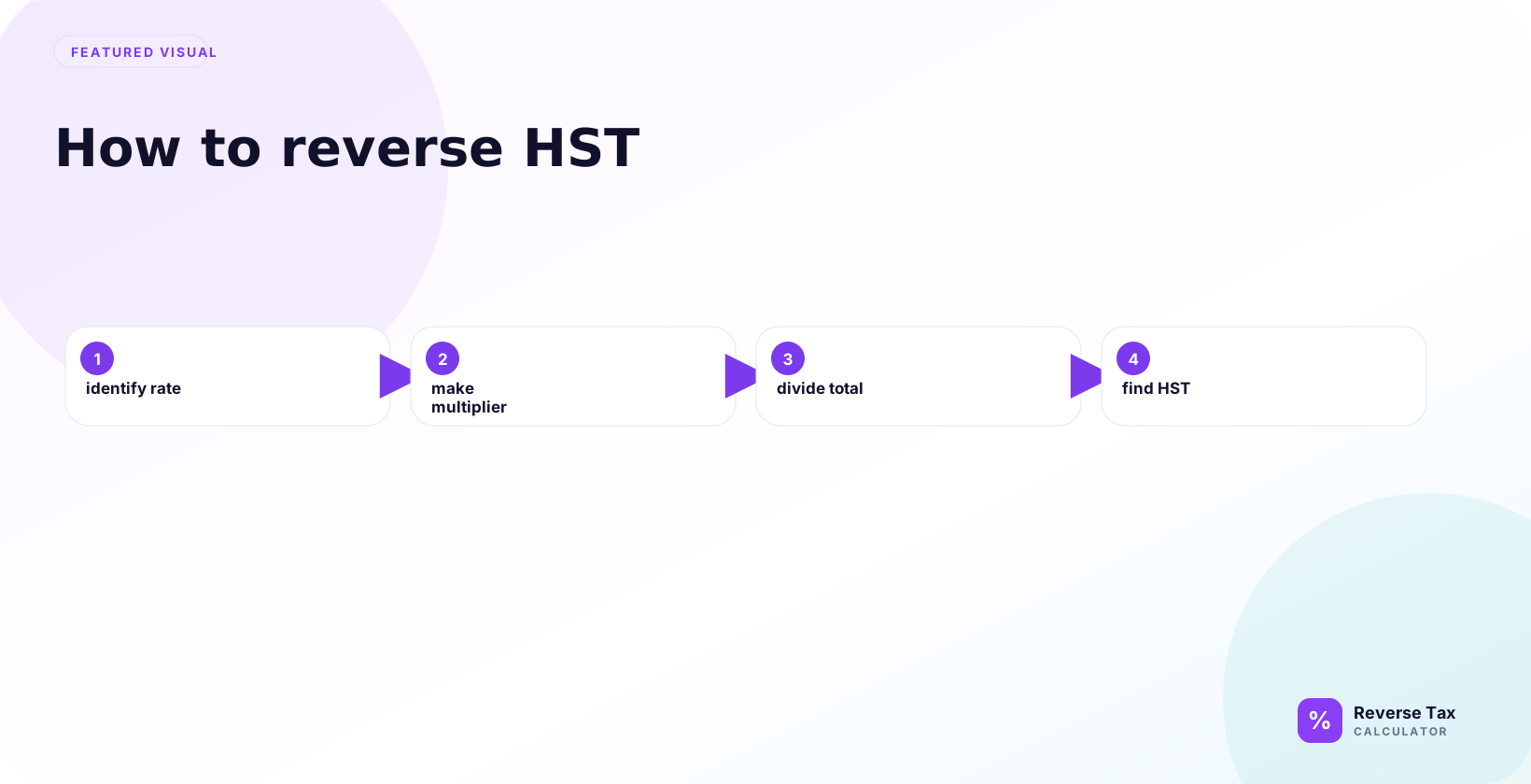
Reverse HST calculation removes Harmonized Sales Tax from an HST-inclusive total by dividing the gross amount by 1 plus the HST rate as a decimal. The result gives the before-tax price and the HST already included in the receipt or invoice total. The correct HST rate depends on province and date; exempt items, zero-rated supplies, discounts, shipping, and mixed tax lines require grouped calculations. The invoice label confirms whether HST is included.
Formula:
Pre-tax amount = HST-inclusive total / (1 + HST rate / 100)
Then:
HST included = HST-inclusive total - pre-tax amount
What Does Reverse HST Mean?
Reverse HST means working backward from a total that already includes Harmonized Sales Tax. It separates the total into:
| Output | Meaning |
|---|---|
| Pre-tax amount | Amount before HST |
| HST included | Tax inside the total |
| HST-inclusive total | Final amount after HST |
This is useful for receipts, invoices, refunds, bookkeeping, and checking whether a total is consistent with the stated HST rate.
Reverse HST Formula
The reverse HST formula removes harmonized sales tax from a tax-inclusive total. Divide the HST-inclusive total by 1 plus the HST rate to find the pre-tax amount, then subtract that amount from the total to find HST. Use the HST rate for the province and transaction date. Do not use the 5% GST-only formula on an HST receipt.
Use:
Pre-tax amount = Total / (1 + HST rate / 100)
For 13 percent HST:
Pre-tax amount = Total / 1.13
For 14 percent HST:
Pre-tax amount = Total / 1.14
For 15 percent HST:
Pre-tax amount = Total / 1.15
The correct multiplier depends on the province, place of supply, transaction date, and supply type.
How to Reverse HST Step by Step
A step-by-step HST workflow prevents rate and base mistakes. Confirm the total includes HST, identify the province's HST rate, convert the rate to a multiplier, divide the total, and subtract to find HST. If the receipt contains zero-rated items, tips, fees, or non-taxable lines, separate those before using one HST formula.
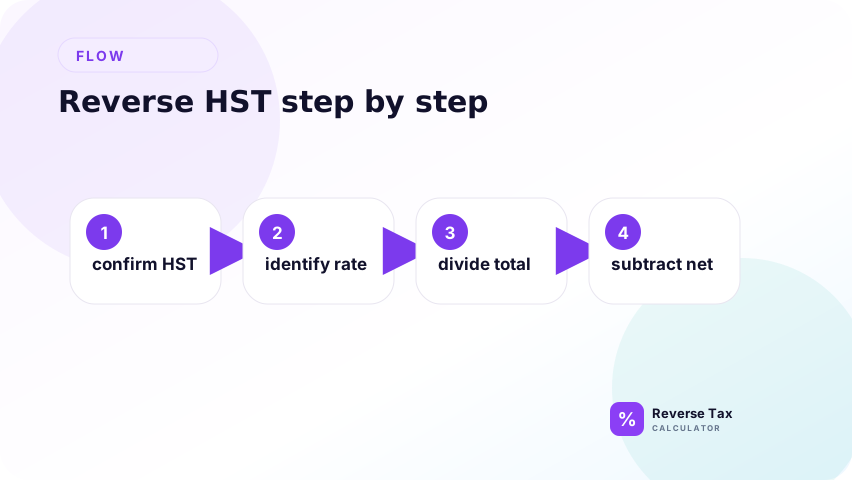
Use the steps as a checklist before trusting the number. The province determines the rate, the receipt label confirms the tax type, the taxable base confirms what should be divided, and the subtraction confirms the HST amount. If any step is uncertain, the result should be treated as an estimate or checked against the receipt's shown HST line.
Step 1: Confirm the Total Includes HST
Confirm that the amount is HST-inclusive before applying the reverse formula. If the receipt already shows subtotal and HST separately, use those fields as evidence. If the total includes tips, deposits, exempt items, or payments, remove those non-tax amounts before reversing HST.
Only reverse HST if the total is HST-inclusive. If HST is already shown separately, you may only need to verify the math.
Step 2: Identify the HST Rate
Identify the HST rate for the province and transaction date. HST rates can differ by province, and an old receipt should use the historical rate that applied at the time. Do not use a GST-only rate or a different province's HST rate.
Use the HST rate that applied to the transaction. CRA guidance says the rate to charge depends on the place of supply.
Step 3: Convert the Rate to a Multiplier
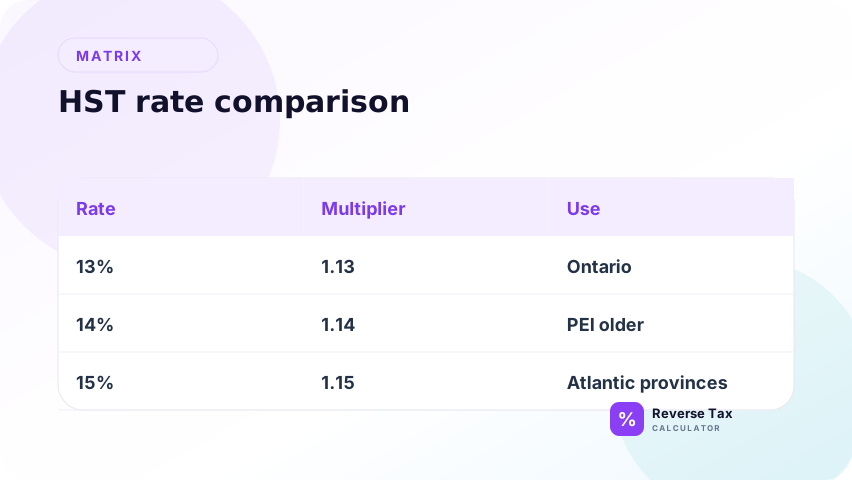
Convert the HST rate to a multiplier by adding 1 to the decimal rate. A 13 percent HST rate becomes 1.13, a 14 percent rate becomes 1.14, and a 15 percent rate becomes 1.15. The multiplier represents the pre-tax amount plus HST.
This multiplier is the number that reverses the original forward calculation. If the rate is wrong, every later step will be wrong even if the arithmetic is clean.
Example at 13 percent:
1 + 13 / 100 = 1.13
Step 4: Divide the Total
Divide the HST-inclusive total by the multiplier to recover the pre-tax amount. This step reverses the original HST calculation. If the receipt has zero-rated or exempt lines, divide only the clean HST-inclusive taxable group.
The result should represent the sale amount before HST. If it does not match the visible receipt subtotal or expected taxable base, inspect the receipt for non-tax lines or mixed taxability.
HST-inclusive total / multiplier = pre-tax amount
Step 5: Subtract to Find HST
Subtract the pre-tax amount from the HST-inclusive total to find the HST portion. Then add pre-tax amount and HST back together to verify the receipt total. If the result differs by one cent, check line-level rounding before changing the rate.
This final subtraction also creates the amount that may be recorded as collected HST or used to verify the receipt. Keep it separate from the pre-tax sale amount.
Total - pre-tax amount = HST included
Reverse HST Example
Suppose the HST-inclusive total is 226.00 and the HST rate is 13 percent.
Pre-tax amount:
226.00 / 1.13 = 200.00
HST included:
226.00 - 200.00 = 26.00
| Component | Amount |
|---|---|
| HST-inclusive total | 226.00 |
| HST rate | 13 percent |
| Pre-tax amount | 200.00 |
| HST included | 26.00 |
Reverse HST at 14 Percent
At 14% HST, divide the tax-inclusive total by 1.14. This example matters because HST rates are not identical across all participating provinces. A calculator should not assume 13% for every HST receipt. Use the rate that applied to the province, date, and transaction facts.
CRA guidance notes that Nova Scotia’s HST rate became 14 percent after the provincial portion decreased effective April 1, 2025.
Example:
114.00 / 1.14 = 100.00
114.00 - 100.00 = 14.00
This example shows why the transaction date matters. A current rate may not be the right rate for an older receipt.
Reverse HST at 15 Percent
At 15% HST, divide the HST-inclusive total by 1.15. The HST amount is the total minus the pre-tax amount. This example is useful for provinces where 15% HST applies, but it should not be copied to receipts from a 13% or 14% HST province. Rate selection comes before arithmetic.
Suppose an HST-inclusive total is 230.00 and the applicable HST rate is 15 percent.
230.00 / 1.15 = 200.00
230.00 - 200.00 = 30.00
The pre-tax amount is 200.00 and the HST included is 30.00.
HST Rate Comparison Table
The same HST-inclusive total produces different outputs at different HST rates.
| HST-inclusive total | HST rate | Multiplier | Pre-tax amount | HST included |
|---|---|---|---|---|
| 115.00 | 13 percent | 1.13 | 101.77 | 13.23 |
| 115.00 | 14 percent | 1.14 | 100.88 | 14.12 |
| 115.00 | 15 percent | 1.15 | 100.00 | 15.00 |
This table shows why choosing the correct rate matters. A one or two percentage point difference changes both the pre-tax amount and the HST amount.
How to Choose the HST Rate
CRA guidance says the rate depends on the place of supply. Place of supply means the province or territory where the taxable sale, lease, or other supply is considered to be made.
| Factor | Why it matters |
|---|---|
| Province | HST rates differ |
| Transaction date | Rates can change |
| Delivery or pickup | Place of supply can change |
| Supply type | Some supplies are zero-rated or exempt |
| Receipt label | May show HST rate or amount |
Place of Supply Example
CRA guidance gives examples where the delivery or pickup location changes the rate. For reverse HST, the practical lesson is this:
| Transaction pattern | Rate clue |
|---|---|
| Goods delivered to HST province | Destination may control rate |
| Customer picks up in another province | Pickup location may control |
| Service supplied in one province | Place-of-supply rule matters |
| Zero-rated supply | 0 percent applies |
Do not choose an HST rate only from the seller’s address. The supply facts can matter.
Receipt and Invoice Clues
CRA guidance says customers must be told whether GST/HST is applied and whether it is included in the price or added separately. Receipts or invoices may show the rate, tax amount, or a statement that the total includes HST.
| Receipt clue | Action |
|---|---|
| HST rate shown | Use that rate if it matches the taxable amount |
| HST amount shown | Verify by subtraction |
| Total includes HST | Reverse from total |
| Multiple items | Check whether all items are taxable |
| Zero-rated item | Do not remove HST |
How to Verify HST from a Receipt
To verify HST from a receipt, identify the HST-inclusive total, the HST rate or HST line, and the taxable base. If HST is shown separately, subtract it from the total and calculate the implied rate. If only the total is shown, reverse using the correct HST rate and compare the reconstructed tax with receipt evidence.
If the receipt shows a pre-tax subtotal and HST amount, calculate the implied rate:
HST rate = HST amount / pre-tax subtotal x 100
Example:
26.00 / 200.00 x 100 = 13 percent
If the implied rate differs from the expected HST rate, check for mixed taxable and zero-rated supplies, discounts, shipping, or rounding.
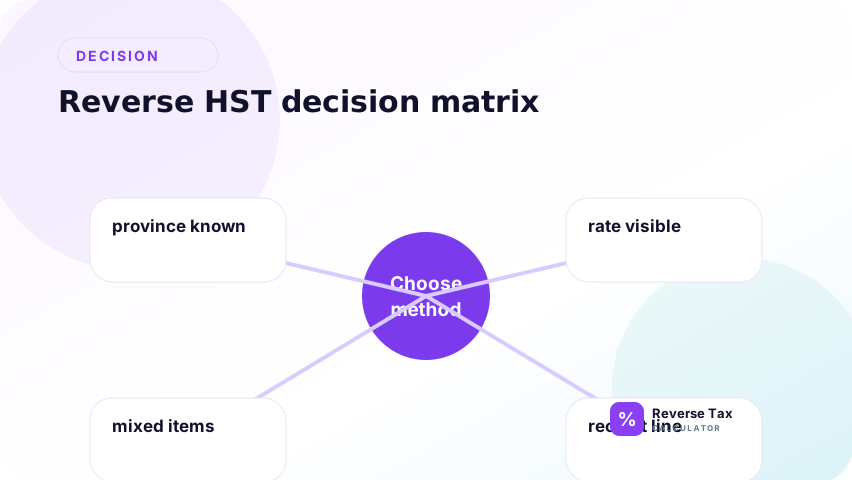
Reverse HST Decision Matrix
| Situation | Best action |
|---|---|
| One HST-inclusive total and one rate | Divide by HST multiplier |
| HST shown separately | Verify rather than reverse |
| Mixed taxable and zero-rated items | Separate first |
| Old receipt | Use historical rate |
| Delivered order | Check place of supply |
| Refund | Use original sale evidence |
| Rounding mismatch | Check line-level rounding |
Reverse HST with Mixed Items
Suppose a receipt total is 170.00:
| Line | Amount |
|---|---|
| HST-taxable item after HST at 13 percent | 113.00 |
| Zero-rated item | 57.00 |
| Total | 170.00 |
Reverse only the taxable amount:
113.00 / 1.13 = 100.00
113.00 - 100.00 = 13.00
Do not divide 170.00 by 1.13 because the zero-rated item did not include HST.
Reverse HST for Refunds
For a refund, use the HST rate and taxable amount from the original sale if the refund reverses that sale.
Example:
| Refund detail | Amount |
|---|---|
| HST-inclusive refund | 56.50 |
| Original HST rate | 13 percent |
56.50 / 1.13 = 50.00
56.50 - 50.00 = 6.50
The refund contains 50.00 of pre-tax value and 6.50 of HST.
Reverse HST Operational Checklist
Before entering an HST-inclusive total into a calculator, check:
| Check | Why it matters |
|---|---|
| HST is included in the total | Prevents reversing a pre-tax amount |
| Correct province identified | HST rate depends on place of supply |
| Transaction date known | Rates can change |
| Zero-rated items separated | Prevents removing HST from 0 percent supplies |
| Exempt items separated | Prevents false tax amounts |
| Tips and fees classified | Final paid total may not be taxable total |
| Rounding expected | One-cent differences can be normal |
What Reverse HST Can and Cannot Prove
| Can prove | Cannot prove |
|---|---|
| Arithmetic split from a known rate | Legal place-of-supply conclusion |
| HST inside a simple total | Whether a supply should be taxable |
| Difference between 13, 14, and 15 percent | Whether the seller charged correctly |
| Refund split from original rate | Whether refund policy is compliant |
This is an EEAT safeguard: reverse HST is a calculation method, not a legal ruling.
Common Mistakes
Common HST mistakes include multiplying the total by the HST rate, using the wrong province rate, ignoring zero-rated supplies, using the current rate for an old receipt, and reversing totals that include tips or fees. The fix is to confirm province, date, HST label, taxable base, and rounding before calculating.
The most common pattern is using a correct formula with the wrong rate or wrong base. A 13% HST receipt, 14% HST receipt, and 15% HST receipt all need different multipliers. A receipt with tips, exempt items, or fees may need those amounts removed before the HST formula is applied. Good HST reverse tax is label-first and province-aware.
Multiplying the Total by the HST Rate
Do not calculate HST by multiplying the final total by the rate. The rate applies to the pre-tax amount.
Using the Wrong Province Rate
HST depends on place of supply. Delivery and pickup facts can matter.
Ignoring Zero-Rated Supplies
Zero-rated supplies use a 0 percent GST/HST rate. There is no HST amount to remove.
Using Current Rate for an Old Receipt
Use the rate effective on the transaction date.
Reversing a Total That Includes Tips or Fees
Separate optional tips, non-taxable fees, and exempt amounts before reversing HST.
What This Page Does Not Cover
| Topic | Better page |
|---|---|
| GST only | How to Reverse GST from a Total |
| GST and QST | How to Reverse GST and QST in Québec |
| Canadian tax overview | GST, HST, PST, and QST Explained |
| Multiple taxes formula | Reverse Formula for Multiple and Stacked Taxes |
Frequently Asked Questions
How do I remove 13 percent HST from a total?
Divide the HST-inclusive total by 1.13, then subtract the result from the total.
How do I remove 14 percent HST from a total?
Divide the HST-inclusive total by 1.14, then subtract the result from the total.
Is HST calculated on the total or pre-tax amount?
HST is calculated on the pre-tax amount. That is why reverse HST uses division, not multiplication of the final total.
Can I use one HST rate for all provinces?
No. Use the rate that applies to the place of supply and transaction date.
What if the receipt includes zero-rated items?
Separate zero-rated items before reversing HST from the taxable amount.
Sources
These sources support HST rate context and official tax labels. The formulas on this page come from the arithmetic relationship between HST-exclusive amount, HST rate, HST amount, and HST-inclusive total. Use CRA guidance for compliance-sensitive rate, place-of-supply, filing, and registration questions. Use this page for reverse calculation and receipt interpretation.