Québec GST and QST reversal separates federal GST and Québec Sales Tax from a tax-inclusive receipt or invoice total. The calculation uses the printed GST and QST structure to decide whether taxes are reversed as separate lines or from a combined taxable amount. Accurate results require the correct Québec rates, taxable base, invoice label, exemptions, zero-rated items, discounts, shipping, and rounding treatment. Separate receipt lines give the safest split.
Formula:
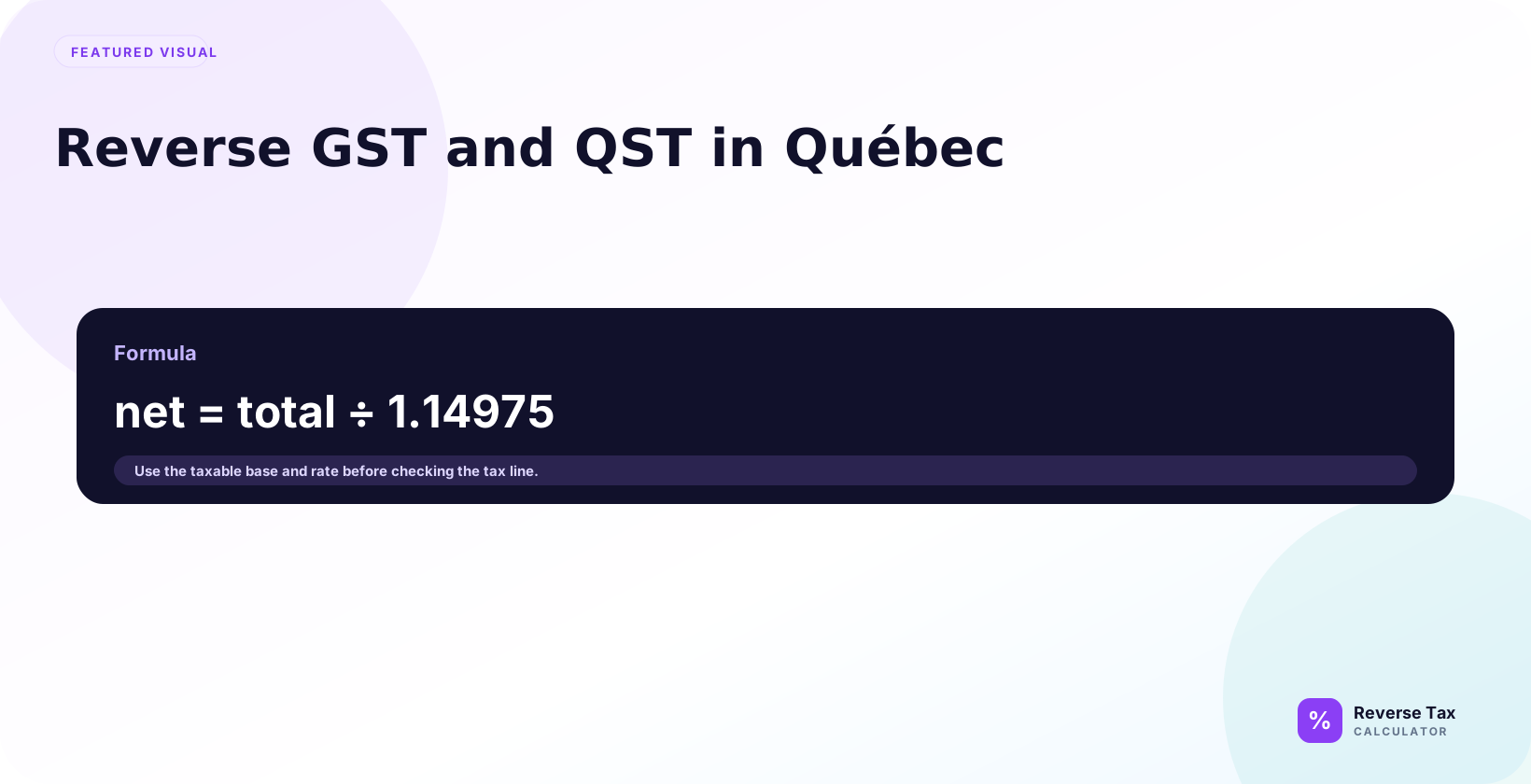
Pre-tax amount = GST/QST-inclusive total / 1.14975
Then:
Included GST and QST = Total - pre-tax amount
What GST and QST Mean in Québec
Revenu Québec states that the most common consumption taxes for Québec residents are:
| Tax | Rate | Basic calculation base |
|---|---|---|
| GST | 5 percent | Selling price |
| QST | 9.975 percent | Selling price excluding GST |
GST is the federal goods and services tax. QST is Québec sales tax. Revenu Québec administers GST/HST in Québec under an agreement with the federal government.
Reverse GST and QST Formula
The reverse GST and QST formula removes both Quebec tax labels from a tax-inclusive total when both taxes apply to the same base. Divide the total by 1.14975 to estimate the pre-tax amount, then subtract the pre-tax amount from the total to find combined tax. If the receipt shows GST and QST separately, use those shown lines first.
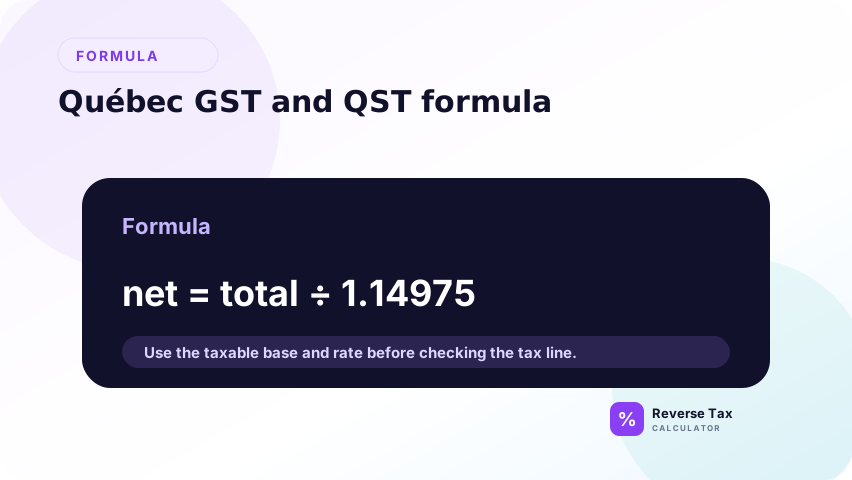
For a basic Québec total where both taxes apply to the same selling price:
Combined rate = 5 percent + 9.975 percent
Combined rate = 14.975 percent
Multiplier:
1 + 14.975 / 100 = 1.14975
Formula:
Pre-tax price = total / 1.14975
Included tax:
Included tax = total - pre-tax price
Step-by-Step Calculation
The step-by-step calculation protects against using 14.975% on every Quebec receipt without checking the base. Confirm both GST and QST apply, confirm the total includes both taxes, divide by 1.14975, then split the tax only if needed. If the receipt has exempt lines, zero-rated lines, tips, or discounts, separate them first.
Use the steps as an evidence workflow. GST and QST must both be present, the total must include both taxes, and the taxable base must be the same before the 1.14975 divisor is reliable. If the receipt already shows GST and QST separately, subtraction is stronger than reconstruction. If the receipt mixes tax treatments, reverse by line group.
Step 1: Confirm Both GST and QST Apply
Confirm that the Quebec receipt or invoice includes both GST and QST before using the combined formula. Some lines may be exempt, zero-rated, or subject to only one tax treatment. If the receipt already shows GST and QST separately, keep those labels as source evidence and use the formula only to verify the implied base.
Do not use the 14.975 percent method if the item is exempt, zero-rated, or subject to a different rule.
Step 2: Confirm the Total Includes Both Taxes
Confirm that the total you are reversing is already inclusive of both GST and QST. A balance due, card payment, tip-inclusive total, or adjusted amount may not be the clean taxable base. Use the amount that actually contains both tax layers for the taxable item or group.
The total should be GST/QST-inclusive. If GST and QST are shown separately, you may only need to verify the math.
Step 3: Divide by 1.14975
Divide the clean tax-inclusive amount by 1.14975 to recover the pre-tax amount. The factor 1.14975 represents 100 percent of the base plus 5 percent GST plus 9.975 percent QST when both taxes apply to the same base. If the receipt has mixed taxability or separate tax lines, use line-level evidence first.
This pre-tax amount is the shared base for the GST and QST split. If the receipt's shown GST or QST does not reconcile, check rounding before changing the rate.
Use:
Total / 1.14975
Step 4: Split the Tax if Needed
Split the combined tax only after the pre-tax base is known. Calculate GST as 5 percent of the base and QST as 9.975 percent of the same base, unless the receipt shows different source amounts. Keeping the labels separate helps with audit trails and rounding checks.
Once the pre-tax amount is known:
GST = pre-tax amount x 5 percent
QST = pre-tax amount x 9.975 percent
Québec Example
Suppose the tax-inclusive total is 229.95.
Pre-tax amount:
229.95 / 1.14975 = 200.00
GST:
200.00 x 5 percent = 10.00
QST:
200.00 x 9.975 percent = 19.95
Total tax:
10.00 + 19.95 = 29.95
| Component | Amount |
|---|---|
| Pre-tax amount | 200.00 |
| GST at 5 percent | 10.00 |
| QST at 9.975 percent | 19.95 |
| Total | 229.95 |
Québec Reverse Tax Table
| GST/QST-inclusive total | Divide by | Pre-tax amount | GST | QST | Total tax |
|---|---|---|---|---|---|
| 114.975 | 1.14975 | 100.00 | 5.00 | 9.975 | 14.975 |
| 229.95 | 1.14975 | 200.00 | 10.00 | 19.95 | 29.95 |
| 574.875 | 1.14975 | 500.00 | 25.00 | 49.875 | 74.875 |
Receipt totals are usually rounded to cents, so the displayed total may not show three decimal places.
Why the Combined Rate Is 14.975 Percent
The combined rate is 14.975% because common Quebec reverse tax combines 5% GST and 9.975% QST additively when both apply to the same taxable base. The factor is 1.14975. This is not the same as using a rounded 15% estimate, and it is not a reason to ignore separate GST and QST labels on the receipt.
The combined rate is 14.975 percent because the cited Revenu Québec rule calculates QST on the selling price excluding GST.
That makes the basic combined tax:
5 percent + 9.975 percent = 14.975 percent
Do not compound QST on top of GST unless an official rule for the transaction says to do so.
How to Split the Combined Tax
To split combined GST and QST, first recover the pre-tax base. Then calculate GST at 5% of that base and QST at 9.975% of that base, unless the source document shows different treatment. This keeps the tax labels visible for records. If the receipt already shows GST and QST separately, use the receipt lines rather than re-splitting.
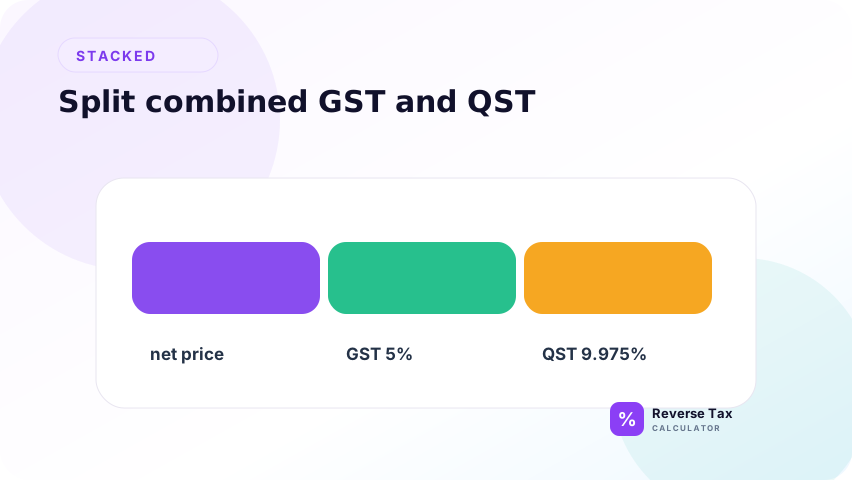
After finding the pre-tax amount, calculate GST and QST separately.
Example with a 300.00 pre-tax amount:
GST = 300.00 x 0.05 = 15.00
QST = 300.00 x 0.09975 = 29.925
Before rounding:
Total tax = 44.925
Tax-inclusive total before rounding:
300.00 + 44.925 = 344.925
This is why rounded receipts can show slight cent differences.
Receipt and Invoice Clues
Québec receipts and invoices may show GST and QST separately.
| Receipt clue | Action |
|---|---|
| GST and QST shown separately | Verify each tax |
| Total says taxes included | Reverse from total |
| One combined tax-inclusive price | Use 1.14975 if both taxes apply |
| Exempt or zero-rated item | Do not remove both taxes |
| Mixed items | Separate taxable and non-taxable lines |
How to Verify a Québec Receipt
If a Québec receipt shows pre-tax subtotal, GST, and QST, verify each line:
GST / subtotal x 100 = 5 percent
QST / subtotal x 100 = 9.975 percent
Example:
10.00 / 200.00 x 100 = 5 percent
19.95 / 200.00 x 100 = 9.975 percent
If the rates do not match, check rounding, exempt items, discounts, or whether the receipt groups multiple supplies.
Rounding in Québec GST and QST
Raw QST amounts can have three or more decimal places before rounding. Receipts usually round to cents.
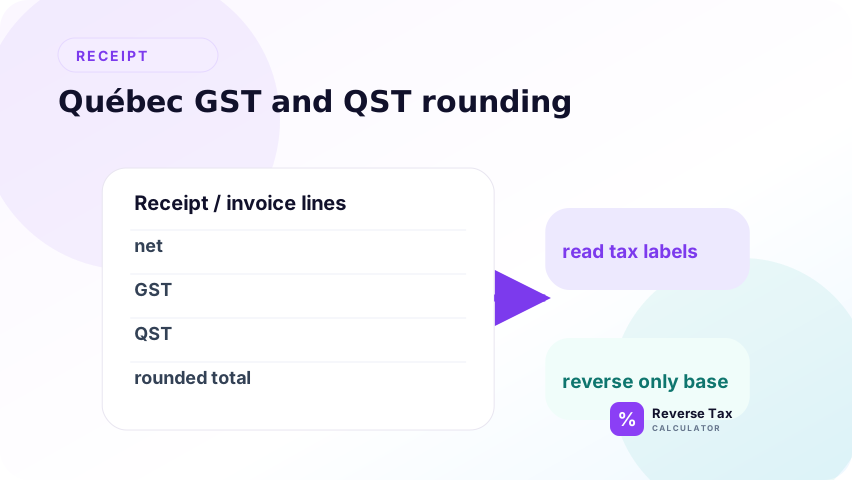
Example:
| Component | Raw amount |
|---|---|
| Pre-tax price | 100.00 |
| GST | 5.00 |
| QST | 9.975 |
| Raw total | 114.975 |
Rounded receipt total may appear as 114.98 depending on rounding method.
If a result differs by one cent, check whether the system rounded by line, by tax, or by total.
Reverse GST and QST from a Rounded Total
A rounded total can create one-cent differences because GST and QST may be rounded separately or after the combined total is calculated. Keep precision when dividing by 1.14975, then reconcile to the receipt's displayed amounts. If your answer differs by one cent, inspect rounding before changing the rate or formula.
Suppose the rounded total is 114.98.
114.98 / 1.14975 = 100.004...
Rounded pre-tax amount:
100.00
This small difference comes from rounding. It does not automatically mean the rate is wrong.
Example: Québec Invoice with Taxes Included
Suppose an invoice says “taxes included” and shows a total of 459.90. The sale is taxable for both GST and QST.
Pre-tax amount:
459.90 / 1.14975 = 400.00
GST:
400.00 x 5 percent = 20.00
QST:
400.00 x 9.975 percent = 39.90
| Component | Amount |
|---|---|
| Pre-tax invoice amount | 400.00 |
| GST | 20.00 |
| QST | 39.90 |
| Tax-inclusive invoice total | 459.90 |
This is the cleanest case because one taxable base is known and both taxes apply to it.
Reverse GST and QST with Mixed Items
Suppose a Québec receipt total is 164.98:
| Line | Amount |
|---|---|
| GST/QST-taxable item after taxes | 114.98 |
| Zero-rated item | 50.00 |
| Total | 164.98 |
Reverse only the taxable amount:
114.98 / 1.14975 = 100.00 after rounding
The zero-rated item stays 50.00 with no GST/QST to remove.
Example: Québec Receipt with Optional Tip
Suppose a restaurant receipt shows:
| Line | Amount |
|---|---|
| Meal including GST and QST | 114.98 |
| Optional tip | 20.00 |
| Total paid | 134.98 |
Do not divide 134.98 by 1.14975 if the optional tip is not part of the taxable base. Reverse only the meal amount:
114.98 / 1.14975 = 100.00 after rounding
The optional tip remains separate.
Example: Québec Discount Before Tax
Suppose an item is 120.00 before discount, a 20.00 discount applies before tax, and both GST and QST apply to the discounted price.
Taxable base:
120.00 - 20.00 = 100.00
GST:
100.00 x 5 percent = 5.00
QST:
100.00 x 9.975 percent = 9.975
Raw total:
114.975
Reverse tax from the rounded total may return approximately 100.00, not the original 120.00. Reverse tax reconstructs the taxable discounted base, not the pre-discount price.
Reverse GST and QST for Refunds
If a refund reverses a Québec taxable sale, use the original taxable refund amount and the same GST/QST method.
Example:
| Refund detail | Amount |
|---|---|
| Tax-inclusive refund | 57.49 |
| Combined rate | 14.975 percent |
57.49 / 1.14975 = 50.00 after rounding
The refund reverses about 50.00 of pre-tax value and about 7.49 of combined GST and QST.
Reverse GST and QST Operational Checklist
| Check | Why it matters |
|---|---|
| Total includes both GST and QST | Confirms 14.975 percent method may apply |
| Item is taxable | Prevents removing tax from exempt or zero-rated supplies |
| Québec rule applies | Confirms QST calculation basis |
| Receipt date known | Supports rate verification |
| Mixed items separated | Prevents wrong base |
| Rounding expected | Explains cent differences |
| GST and QST lines checked | Confirms implied rates |
What This Calculation Can and Cannot Prove
| Can prove | Cannot prove |
|---|---|
| Pre-tax amount from a Québec tax-inclusive total | Whether the item is legally taxable |
| GST and QST split from a known base | Whether exemption documents are valid |
| Arithmetic consistency of 14.975 percent | Whether every Québec transaction uses this method |
| Rounding impact | Whether a seller rounded correctly under every rule |
The formula is strong when the inputs are correct. It does not replace Revenu Québec guidance for classification questions.
Decision Matrix
| Situation | Best action |
|---|---|
| Total includes GST and QST on same base | Divide by 1.14975 |
| GST and QST shown separately | Verify with pre-tax amount |
| Item is zero-rated | Use 0 percent for that supply |
| Item is exempt | Do not remove GST/QST |
| Receipt has mixed taxable and exempt lines | Separate first |
| Total includes tip or fee | Classify before reversing |
| One-cent mismatch | Check rounding method |
Entity Relationships in a Québec Reverse Tax Calculation
| Entity | Role |
|---|---|
| Selling price | Base amount before GST and QST |
| GST | 5 percent of selling price |
| QST | 9.975 percent of selling price excluding GST |
| Tax-inclusive total | Selling price plus GST plus QST |
| Rounded receipt total | Displayed customer amount |
| Mixed item receipt | Requires separation before reverse tax |
This relationship table is the heart of the calculation. If one entity is misread, the formula may still calculate correctly but answer the wrong question.
Common Mistakes
Common Quebec reverse tax mistakes include applying 14.975% to every receipt, compounding GST and QST incorrectly, ignoring rounding, reversing exempt or zero-rated items, and using only the 5% GST rate. The fix is to identify tax labels, taxable base, rate, and source lines before calculating.
The biggest mistake is treating Quebec as a generic 15% tax calculation. The common combined rate is 14.975%, and GST and QST should remain separate labels for evidence even when one divisor recovers the net amount. Rounding can also differ because QST at 9.975% may create fractional cents. Preserve source tax lines whenever they exist.
Using 14.975 Percent on Every Québec Receipt
Use 14.975 percent only when both GST and QST apply to the taxable amount.
Compounding GST and QST Incorrectly
Revenu Québec states QST is calculated on the selling price excluding GST.
Ignoring Rounding
QST can create raw totals with fractions of a cent.
Reversing Exempt or Zero-Rated Items
No GST/QST should be removed if the amount did not include those taxes.
Using Only 5 Percent GST
If QST is included too, using 5 percent understates tax and overstates the pre-tax amount.
What This Page Does Not Cover
| Topic | Better page |
|---|---|
| GST only | How to Reverse GST from a Total |
| HST | How to Reverse HST from a Total |
| Canadian tax overview | GST, HST, PST, and QST Explained |
| Multiple tax formulas | Reverse Formula for Multiple and Stacked Taxes |
Frequently Asked Questions
What rate do I use to reverse GST and QST in Québec?
Use 14.975 percent when GST at 5 percent and QST at 9.975 percent both apply to the same selling price under the basic Québec rule.
How do I remove Québec taxes from a total?
Divide the tax-inclusive total by 1.14975, then subtract the result from the total.
Why is the Québec combined rate 14.975 percent?
It is 5 percent GST plus 9.975 percent QST, with QST calculated on the selling price excluding GST under the cited Revenu Québec rule.
Why does my Québec result differ by one cent?
Rounding can differ by line, tax type, or total.
Can I use this formula for every Québec purchase?
No. Separate exempt, zero-rated, mixed, or specially treated items first.
Sources
These sources support the Quebec GST and QST context. The formulas on this page come from the arithmetic relationship between pre-tax base, GST, QST, and tax-inclusive total. Use Revenu Quebec and CRA guidance for compliance-sensitive taxability, registration, invoicing, and filing decisions. Use this page for reverse calculation and receipt interpretation.