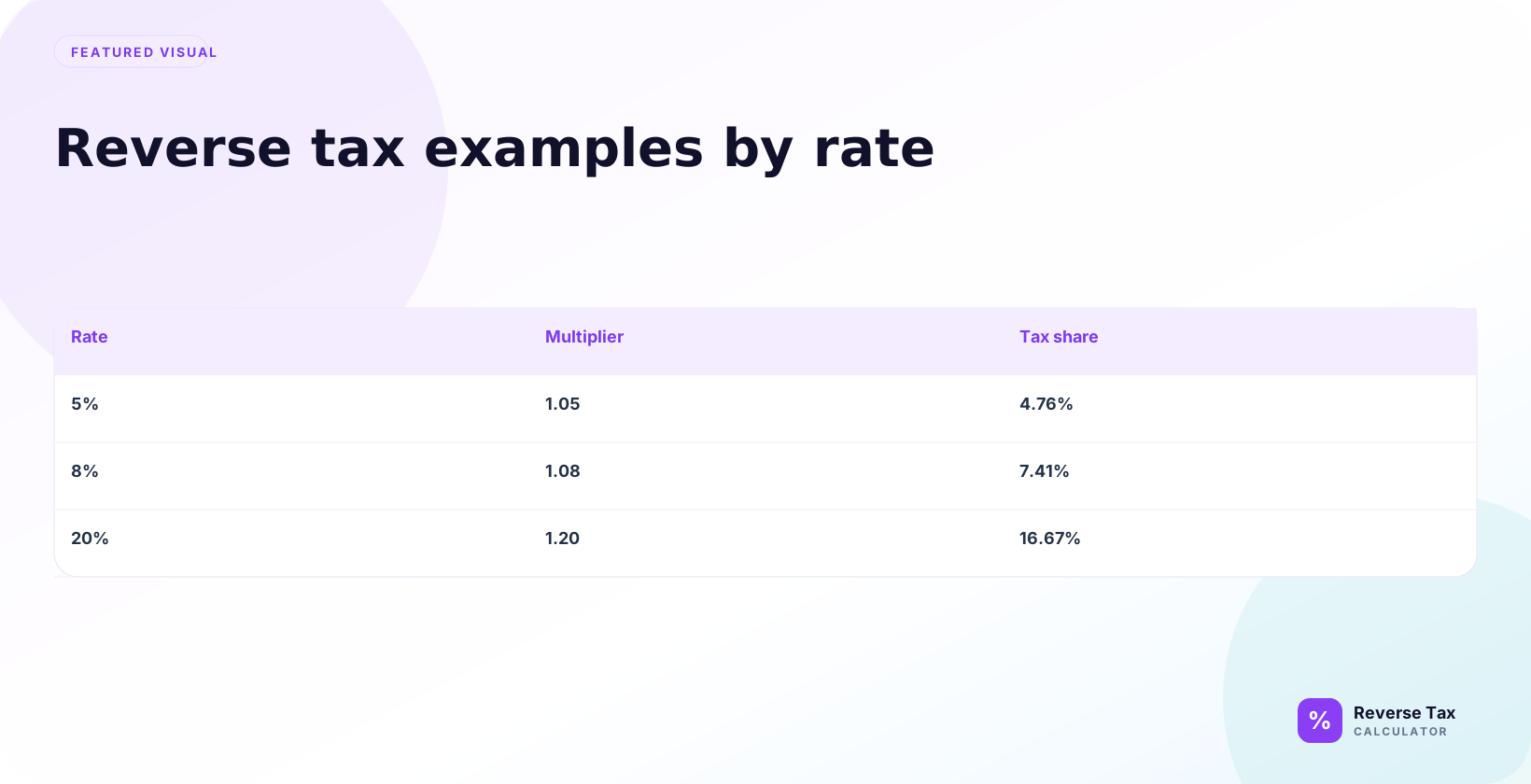
Reverse tax examples by tax rate show how the same tax-inclusive total changes when the multiplier changes from one rate to another. The calculation divides the gross amount by one plus the rate as a decimal, then subtracts the net price to find tax included. Comparing rates makes the relationship visible: higher rates make the pre-tax price lower and the included tax larger, as long as the same amount is fully taxable.
The formula is:
Pre-tax price = Total / (1 + Rate / 100)
Then:
Included tax = Total - Pre-tax price
Why Rate Examples Matter
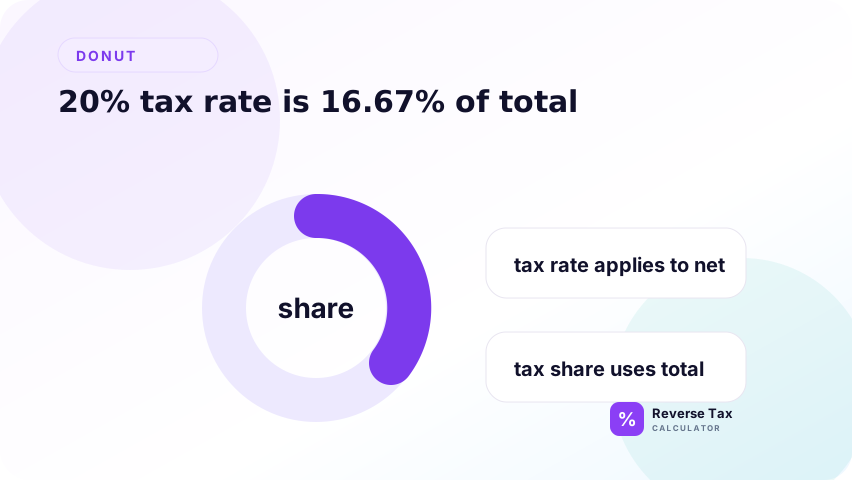
Rate examples matter because many people read a tax-inclusive total incorrectly. If a receipt total is 100.00 and the rate is 20 percent, the included tax is not 20.00. The tax is 16.67 because the 20 percent is applied to the pre-tax price of 83.33.
This is the main information gain of rate-based examples: they show the difference between a tax rate and a tax share of the final total.
| Term | Meaning | Example at 20 percent |
|---|---|---|
| Tax rate | Percentage applied to the pre-tax base | 20 percent |
| Tax multiplier | 1 plus the decimal rate | 1.20 |
| Tax-inclusive total | Final amount after tax | 100.00 |
| Pre-tax price | Total divided by multiplier | 83.33 |
| Tax share of total | Included tax divided by total | 16.67 percent |
How to Use These Rate Examples
Each example uses a tax-inclusive total of 100.00.
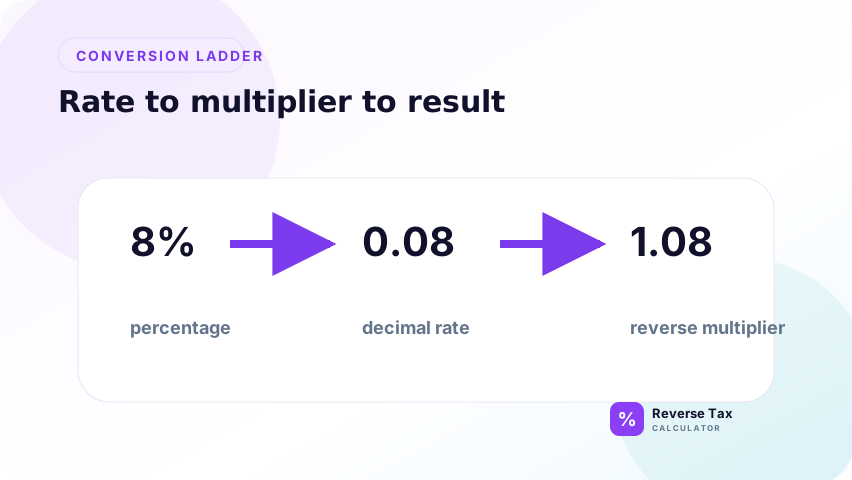
This makes it easy to compare how each rate changes the pre-tax price and included tax.
| Example input | Value |
|---|---|
| Tax-inclusive total | 100.00 |
| Method | Divide by tax multiplier |
| Output 1 | Pre-tax price |
| Output 2 | Included tax |
These are arithmetic examples. Real tax rates and taxability must be verified for the actual transaction.
What Is the Reverse Tax Formula by Rate?
The reverse tax formula changes only one input: the rate.
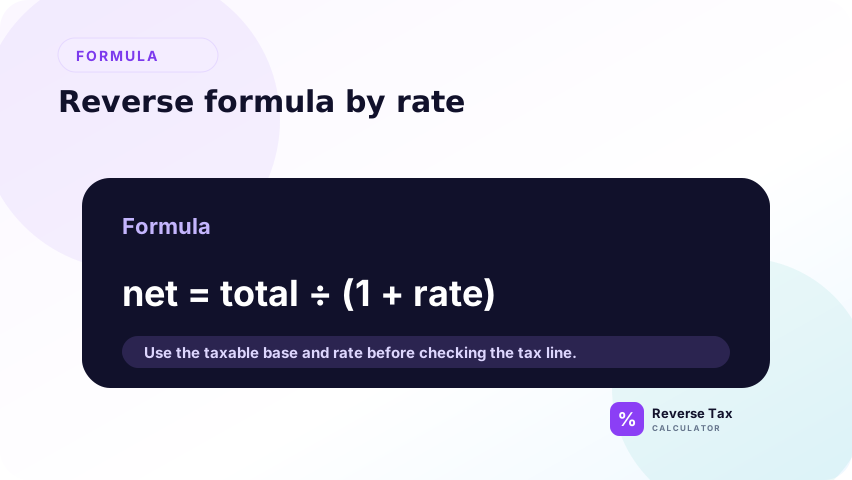
Pre-tax price = Tax-inclusive total / (1 + tax rate as decimal)
The included tax can then be calculated in either of two ways:
Included tax = Tax-inclusive total - pre-tax price
or:
Included tax = Pre-tax price x tax rate as decimal
The subtraction method is usually easier for receipts because it starts with the final total the customer actually paid.
Reverse Tax at 0 Percent
At 0%, there is no tax amount to remove. The tax-inclusive total and pre-tax amount are the same for arithmetic purposes. This example matters because zero-rated or exempt items should not be forced through a positive-rate formula. A 0% rate can still need classification, but the reverse tax split is zero tax.
At 0 percent, there is no tax to remove.
Pre-tax price:
100 / 1.00 = 100.00
Included tax:
100 - 100 = 0.00
This matters for zero-rated or non-taxed items. A reverse tax calculator can still return a result, but the result is the same as the original total.
Reverse Tax at 5 Percent
At 5 percent, the multiplier is 1.05.
Pre-tax price:
100 / 1.05 = 95.238095
Rounded:
95.24
Included tax:
100 - 95.24 = 4.76
| Component | Amount |
|---|---|
| Total | 100.00 |
| Rate | 5 percent |
| Pre-tax price | 95.24 |
| Included tax | 4.76 |
What Is the Tax Share of a 5 Percent Tax-Inclusive Total?
The tax share is:
4.76 / 100 = 4.76 percent
A 5 percent tax rate becomes about 4.76 percent of the final tax-inclusive total.
Reverse Tax at 7 Percent
At 7 percent, the multiplier is 1.07.
Pre-tax price:
100 / 1.07 = 93.457944
Rounded:
93.46
Included tax:
100 - 93.46 = 6.54
| Component | Amount |
|---|---|
| Total | 100.00 |
| Rate | 7 percent |
| Pre-tax price | 93.46 |
| Included tax | 6.54 |
Reverse Tax at 8 Percent
At 8 percent, the multiplier is 1.08.
Pre-tax price:
100 / 1.08 = 92.592593
Rounded:
92.59
Included tax:
100 - 92.59 = 7.41
| Component | Amount |
|---|---|
| Total | 100.00 |
| Rate | 8 percent |
| Pre-tax price | 92.59 |
| Included tax | 7.41 |
Reverse Tax at 10 Percent
At 10%, divide the tax-inclusive total by 1.10 to find the pre-tax amount. The tax portion inside the gross total is one eleventh, not 10% of the gross total. This rate is useful for Australian GST examples and any other clean 10% tax-inclusive calculation, but only after confirming the total is taxable at 10%.
At 10 percent, the multiplier is 1.10.
Pre-tax price:
100 / 1.10 = 90.909091
Rounded:
90.91
Included tax:
100 - 90.91 = 9.09
Why Is 10 Percent Included Tax Not 10.00?
Because 10 percent applies to 90.91, not to 100.00.
Forward check:
90.91 x 10 percent = 9.09
90.91 + 9.09 = 100.00
Reverse Tax at 13 Percent
At 13%, divide the tax-inclusive total by 1.13. This is common in some HST examples, but the rate should not be assumed for every Canadian receipt. The example teaches rate-specific multiplier logic: the formula structure stays the same, but the divisor changes with the actual rate.
At 13 percent, the multiplier is 1.13.
Pre-tax price:
100 / 1.13 = 88.495575
Rounded:
88.50
Included tax:
100 - 88.50 = 11.50
What Searchers Usually Mean by 13 Percent Reverse Tax
A 13 percent reverse tax query usually appears in GST, HST, VAT, or sales-tax contexts where a gross total is known. The arithmetic is the same if the full total is taxable at one 13 percent rate.
Reverse Tax at 20 Percent
GOV.UK lists the UK standard VAT rate as 20 percent.
At 20 percent, the multiplier is 1.20.
Pre-tax price:
100 / 1.20 = 83.333333
Rounded:
83.33
Included tax:
100 - 83.33 = 16.67
This is why a 20 percent VAT rate does not mean 20 percent of the tax-inclusive total is tax. The 20 percent applies to the pre-tax base.
What Is the VAT Fraction at 20 Percent?
At a 20 percent VAT rate, the VAT fraction is:
20 / 120 = 1 / 6
That means the VAT included in a tax-inclusive amount is one sixth of the total. For a 100.00 total:
100 x 1 / 6 = 16.67
This gives the same answer as dividing by 1.20 and subtracting.
Reverse GST and QST Example
Revenu Quebec states that GST is calculated at 5 percent on the selling price and QST is calculated at 9.975 percent on the selling price excluding GST.
For a tax-inclusive total of 114.975:
Combined additive rate:
5 + 9.975 = 14.975 percent
Multiplier:
1.14975
Pre-tax price:
114.975 / 1.14975 = 100
| Component | Amount |
|---|---|
| Selling price | 100.000 |
| GST at 5 percent | 5.000 |
| QST at 9.975 percent | 9.975 |
| Total before rounding | 114.975 |
Why This Example Uses 14.975 Percent
This example uses an additive combined rate because the cited Revenu Québec rule calculates QST on the selling price excluding GST. The total tax is therefore:
5 percent + 9.975 percent = 14.975 percent
Do not assume every multi-tax jurisdiction works this way. Some tax systems can be additive, some can be compounded, and some transactions can include exempt lines.
Rate Comparison Matrix
| Total | Rate | Multiplier | Pre-tax price | Included tax |
|---|---|---|---|---|
| 100.00 | 5 percent | 1.05 | 95.24 | 4.76 |
| 100.00 | 7 percent | 1.07 | 93.46 | 6.54 |
| 100.00 | 8 percent | 1.08 | 92.59 | 7.41 |
| 100.00 | 10 percent | 1.10 | 90.91 | 9.09 |
| 100.00 | 13 percent | 1.13 | 88.50 | 11.50 |
| 100.00 | 20 percent | 1.20 | 83.33 | 16.67 |
Tax Rate vs Tax Included in Total
The tax rate is not the same as the percentage of the final total that represents tax.
| Rate | Included tax from 100.00 | Tax share of total |
|---|---|---|
| 5 percent | 4.76 | 4.76 percent |
| 7 percent | 6.54 | 6.54 percent |
| 8 percent | 7.41 | 7.41 percent |
| 10 percent | 9.09 | 9.09 percent |
| 13 percent | 11.50 | 11.50 percent |
| 20 percent | 16.67 | 16.67 percent |
This table looks similar because the example total is 100.00. The important idea is that included tax is always less than the nominal tax rate percentage of the final total.
Why the Tax Share of Total Changes by Rate
The tax share of the total changes because tax is calculated on the pre-tax amount, while the total includes both pre-tax amount and tax. At 20%, tax is one sixth of the gross total. At 10%, tax is one eleventh. Higher rates create a larger tax share, but the share is still smaller than the rate itself.
The tax share of a total is not the same as the tax rate.
At 20 percent, the tax share of a 100.00 tax-inclusive total is 16.67. At 10 percent, the tax share is 9.09. The rate applies to the pre-tax price, not the final total.
How to Choose the Right Rate Example
Use the example that matches the rate applied to the transaction. If the transaction uses one taxable rate, the simple formula is enough. If the receipt or invoice contains multiple rates, use the page for multiple and stacked taxes instead.
| Situation | Use this page? | Better method |
|---|---|---|
| One total, one rate | Yes | Divide by one multiplier |
| One total, unknown rate | No | Find the rate first |
| Multiple taxable rates | Partly | Split by rate group |
| Taxed and exempt items | Partly | Separate taxable base |
| VAT-inclusive total at 20 percent | Yes | Divide by 1.20 or use VAT fraction |
| Québec GST and QST total | Yes for simple examples | Use 14.975 percent if rules match the transaction |
How Rounding Changes Rate Examples
Most consumer-facing examples round to two decimal places. The raw pre-tax result can have many decimal places, so rounding may move one cent between the base amount and tax amount.
Example at 8 percent:
100 / 1.08 = 92.592592...
Rounded pre-tax price:
92.59
Included tax:
100.00 - 92.59 = 7.41
If a seller calculates tax line by line, the result may differ from a total-level reverse calculation by a cent.
Common Mistakes
Common mistakes include applying the wrong rate example, multiplying the gross total by the rate, ignoring zero-rated items, using one rate for mixed receipts, and rounding too early. Examples by rate are useful only when the receipt structure matches the example's assumptions.
The safest way to use rate examples is to match the rate, tax label, and base. A 10% GST example should not be copied onto a 13% HST receipt. A 20% VAT example should not be copied onto a zero-rated item. If a receipt has multiple rates, use multiple examples or group the receipt before calculating.
Multiplying the Total by the Rate
Do not calculate included tax by multiplying the final total by the tax rate.
Using the Wrong Rate
The same total produces different results at different rates.
Ignoring Rounding
Rounded pre-tax price and rounded tax may differ by one cent from raw values.
Treating Official Rate Examples as Universal
Official rates depend on jurisdiction, item type, and date. Verify the applicable rate.
Mixing Rate Formats
Use 0.08 for 8 percent in decimal formulas. Do not use 8 as if it were the decimal rate.
> Accuracy note: examples are for calculation understanding. Verify current official rates and taxability before using a result for business or compliance purposes.
What This Page Does Not Cover
| Topic | Better page |
|---|---|
| Broad examples | Reverse Tax Calculation Worked Examples |
| Receipt example | Reverse Tax Example Using a Receipt |
| Multiple taxes | Reverse Formula for Multiple and Stacked Taxes |
| Rounding | How to Round Reverse Tax Calculations |
Frequently Asked Questions
What is the tax in 100.00 at 10 percent included?
The included tax is 9.09, and the pre-tax price is 90.91.
What is the tax in 100.00 at 20 percent included?
The included tax is 16.67, and the pre-tax price is 83.33.
Why is 20 percent tax not 20.00 from a 100.00 total?
Because the 20 percent rate applies to the pre-tax price, not the final total.
Can I use these examples for VAT, GST, or sales tax?
Yes, as arithmetic examples, if one percentage rate applies to the whole total.
What is the easiest rate to reverse?
A 10 percent rate is often easiest mentally because the multiplier is 1.10, but the correct method is the same for every rate.
What rate gives 16.67 tax from a 100.00 total?
A 20 percent tax rate gives 16.67 tax from a 100.00 tax-inclusive total after rounding.
Sources
The examples on this page come from the arithmetic relationship between tax-inclusive total, pre-tax amount, rate, and tax amount. Use official tax authority guidance for real rate selection and taxability. Use this page to compare how reverse tax outputs change as rates change.
- GOV.UK, VAT rates
- Revenu Quebec, Basic Rules for Applying the GST/HST and QST