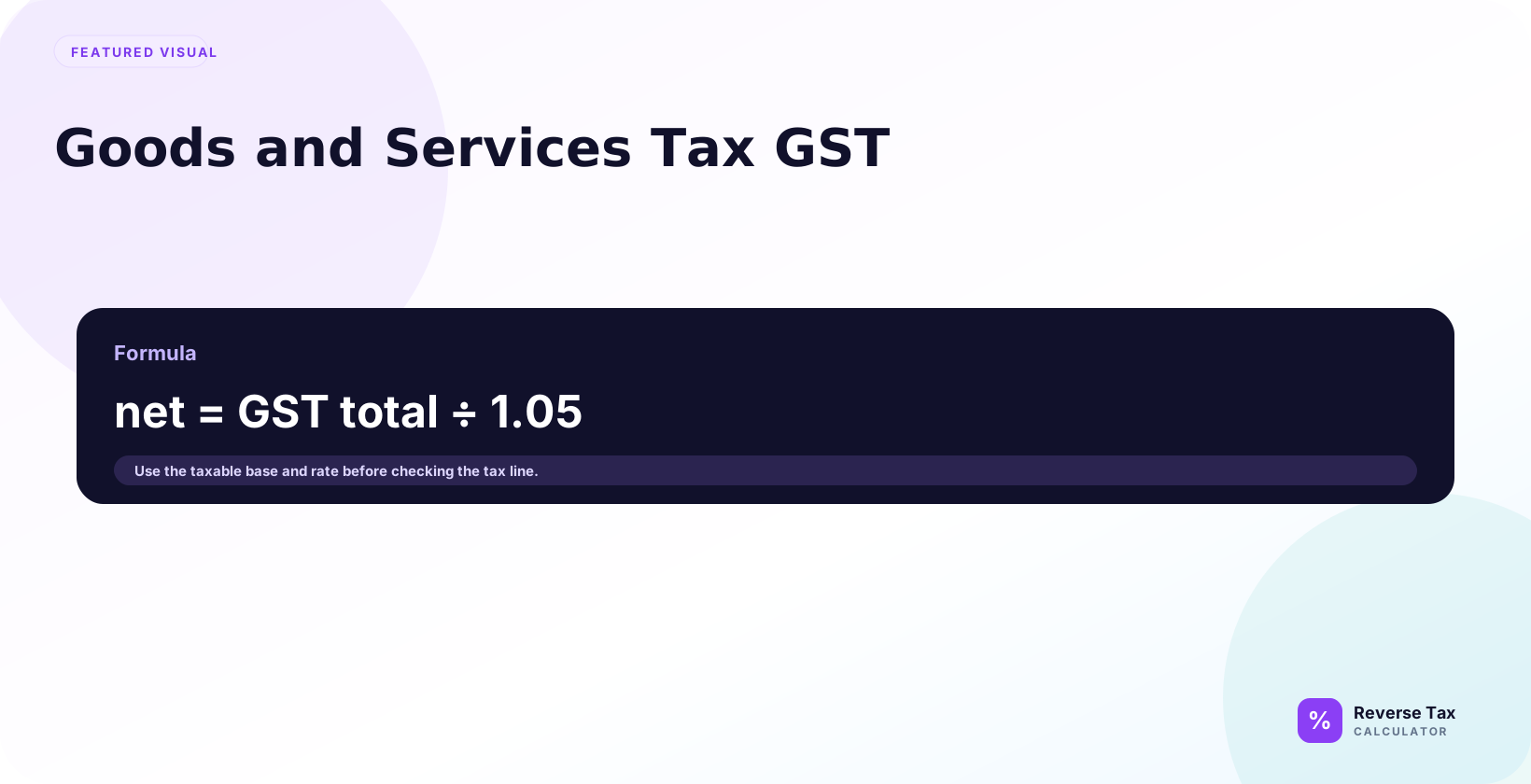
Goods and Services Tax is a consumption tax applied to taxable sales, and reverse GST removes the GST portion from a GST-inclusive total. The reverse formula divides the gross amount by 1 plus the GST rate as a decimal, then subtracts the net price from the gross total. GST calculations require the correct country or province rate, taxable base, invoice wording, zero-rated items, exemptions, and rounding treatment.
This page explains GST as a reverse tax entity, how the formula works, how GST differs from HST, PST, QST, and VAT, and why official tax authority sources must be used before relying on any rate or taxability decision.
What Is GST?
GST means Goods and Services Tax. It is a broad consumption tax charged on many goods and services in GST systems. The exact rate, exemptions, registration rules, and invoice requirements depend on the country or jurisdiction.
For reverse tax, GST is treated as an included tax when the displayed total already contains GST. The calculator task is arithmetic: separate the GST-inclusive total into the before-GST price and the GST amount.
How Do You Reverse GST?
Use this formula when the total already includes GST:
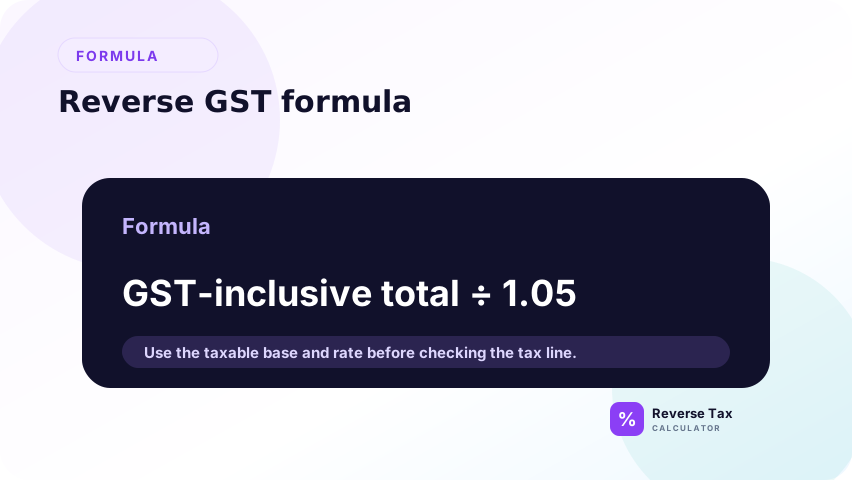
Before-GST price = GST-inclusive total / (1 + GST rate)
Then:
GST amount = GST-inclusive total - Before-GST price
If the total is $115.00 and GST is 15%, the before-GST price is $100.00 because $115.00 divided by 1.15 equals $100.00. The GST amount is $15.00.
The same structure works for any GST rate when the total is truly GST-inclusive. The rate must be entered as a decimal or percentage, and the source total must represent the taxable base plus GST. If the source total includes fees, refunds, tips, or non-taxable items, clean or split the amount before using the formula.
Why GST Uses the Same Reverse Tax Formula
GST uses the same reverse tax formula because it follows the same arithmetic relationship as other percentage-based consumption taxes. The total including GST equals the before-tax amount multiplied by 1 plus the GST rate.
The rate and legal treatment vary by country, but the basic math does not. The difficult part is usually not the formula. The difficult part is confirming the correct rate, taxable base, invoice structure, and whether the item is taxable, zero-rated, exempt, or outside the GST system.
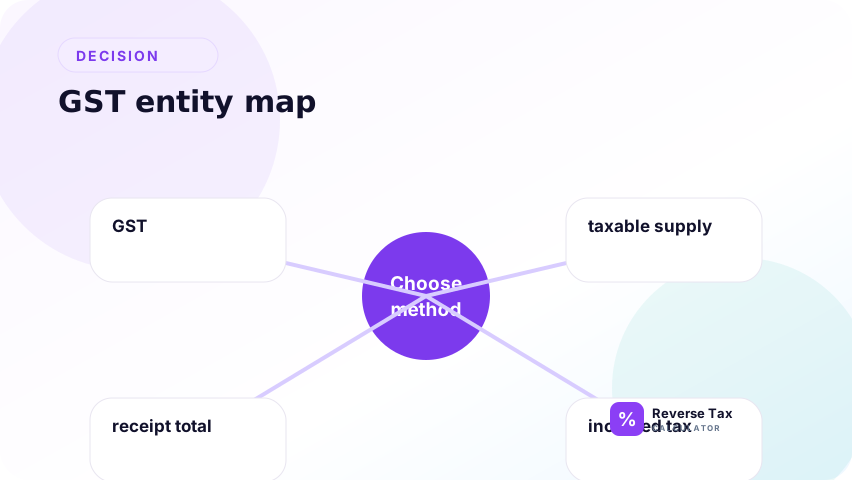
GST Entity Map
| Entity | Attribute | Reverse tax role |
|---|---|---|
| GST | Tax type | Consumption tax |
| GST-inclusive total | Input | Total that already includes GST |
| GST rate | Attribute | Rate used in the divisor |
| Before-GST price | Output | Price before GST |
| GST amount | Output | Included tax portion |
This entity map keeps the calculation elements close together, which helps both readers and reviewers understand what the formula is actually separating.
GST vs HST
GST is a federal goods and services tax in Canada. HST, or Harmonized Sales Tax, combines the federal GST with a provincial component in participating provinces.
Do not use the GST-only rate when the receipt shows HST. If a Canadian receipt shows HST, use the HST rate shown on the receipt or the official CRA rate guidance for the place of supply. The HST glossary explains that distinction in more detail.
GST vs PST
GST and PST can appear separately in some Canadian provinces. GST is federal, while PST is provincial. If both taxes apply additively to the same taxable base, their rates may be combined for a reverse calculation.
If GST and PST apply to different items or different bases, do not combine them. The PST glossary explains when a GST plus PST receipt needs separate handling.
GST vs QST
In Quebec, GST commonly appears with QST. For common basic calculations, GST is 5% and QST is 9.975%, creating a 14.975% working combined rate when both apply to the same selling price.
Use Revenu Quebec guidance for QST-sensitive decisions, because the formula cannot decide whether a supply is taxable, zero-rated, exempt, or subject to special rules.
The important distinction is that QST is not HST and should not be treated as one harmonized line. A Quebec receipt may show GST and QST separately, which helps you subtract known amounts or calculate each tax component from the same base. The reverse calculation should preserve that separation when records need both tax amounts.
GST vs VAT
GST and VAT are both consumption taxes, and the reverse formula is often the same when the price already includes tax. The difference is the tax system, legal terminology, invoice rules, and rate structure.
For example, a UK VAT-inclusive price and a New Zealand GST-inclusive price may both be reversed by dividing by 1 plus the applicable rate. The official tax authority still decides the rate and category, not the calculator.
Where GST Appears in Reverse Tax Work
GST appears in receipts, invoices, ecommerce prices, refunds, accounting exports, and tax-inclusive pricing systems. It is especially common in country-specific reverse tax pages such as Canada GST, Australia GST, and New Zealand GST.
If the receipt shows GST separately, use the shown GST amount first. If the receipt only gives a GST-inclusive total and the rate is known, use the reverse formula.
How to Use GST in Spreadsheets
Use columns that preserve the GST assumption:
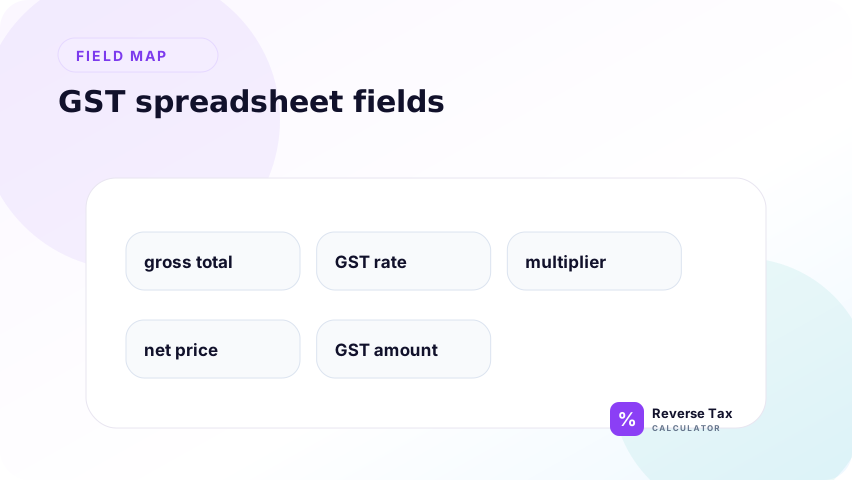
gst_inclusive_total, gst_rate, before_gst_price, gst_amount, and source_document.
If total is in A2 and GST rate is in B2:
=A2/(1+B2)
GST amount:
=A2-(A2/(1+B2))
The source_document column matters because a receipt, invoice, payout export, and refund export may not use the same taxable base.
For stronger quality control, add a rebuilt-total column. It should add the before-GST price and GST amount back together, then compare that rebuilt number with the original GST-inclusive total. Rows with unexplained differences should be reviewed before they are used for reports, refunds, or bookkeeping.
GST Decision Table
| Situation | Best action |
|---|---|
| GST amount is shown | Subtract shown GST from total |
| GST-inclusive total and rate are known | Divide by 1 plus GST rate |
| GST plus PST on same base | Use combined additive rate |
| GST plus QST in Quebec | Use GST plus QST method |
| HST appears instead of GST | Use HST method, not GST-only method |
| Mixed taxable and exempt items | Split item groups before calculating |
This table supports calculation choices. It does not classify the legal tax treatment of the transaction.
What Mistakes Happen with GST?
The common GST mistakes are using the wrong country rate, using a GST-only rate when HST applies, subtracting the GST percentage from the total, and applying one rate to a mixed receipt. Another mistake is treating a payout amount as a GST-inclusive sale total even though fees and refunds have already changed it.
The safest workflow is to identify the source document first, confirm whether GST is included, then choose the formula.
Trust Boundary
GST reverse calculation is arithmetic. It does not determine registration, input tax credits, taxability, exemption status, zero-rating, filing treatment, place of supply, or whether GST should have been charged.
Use the relevant official tax authority for compliance-sensitive decisions. For Canada, use CRA GST/HST guidance. For Australia, use the ATO. For New Zealand, use Inland Revenue.
This limitation is central to GST content because GST systems use legal categories that a formula cannot see. A total can be reversed accurately while the selected rate or tax category is wrong. Always separate the calculation result from decisions about whether GST applies, which rate applies, and how the transaction should be reported.
Frequently Asked Questions
What does GST mean?
GST means Goods and Services Tax. It is a consumption tax used in several countries. In reverse tax calculations, GST usually refers to the tax included inside a GST-inclusive total.
How do I remove GST from a total?
Divide the GST-inclusive total by 1 plus the GST rate. For example, at 15%, divide by 1.15. Then subtract the before-GST price from the total to find the GST amount.
Is GST the same as HST?
No. In Canada, GST is the federal tax, while HST combines GST with a provincial component in participating provinces. A receipt showing HST should not be reversed with a GST-only rate.
Sources and Notes
- CRA GST/HST rates and rules
- Australian Taxation Office GST guidance
- New Zealand Inland Revenue GST guidance
- Formula source: arithmetic relationship between GST-inclusive total, GST rate, before-GST price, and GST amount.