Provincial Sales Tax is a separate provincial consumption tax, and reverse PST removes the PST portion from a PST-inclusive taxable amount. The reverse formula divides the gross total by 1 plus the PST rate as a decimal, then subtracts the net amount from the total. PST results depend on province, product taxability, invoice label, GST/PST separation, exemptions, shipping treatment, and receipt rounding. A separate GST line needs its own calculation.
This page explains PST as a calculation entity, how to reverse PST-inclusive totals, when GST and PST rates can be combined, and why province-specific rules must be verified before treating the result as compliance-ready.
What Is PST?
PST means Provincial Sales Tax. It is a separate provincial tax used in some Canadian provinces rather than a harmonized HST system. PST can appear on receipts and invoices with GST as a separate tax line.
For reverse tax, PST matters because it may apply to the same base as GST, a different base, or only certain items. The label alone does not prove that one combined rate can be used.
How Do You Reverse PST?
If PST applies alone to a PST-inclusive total, use:
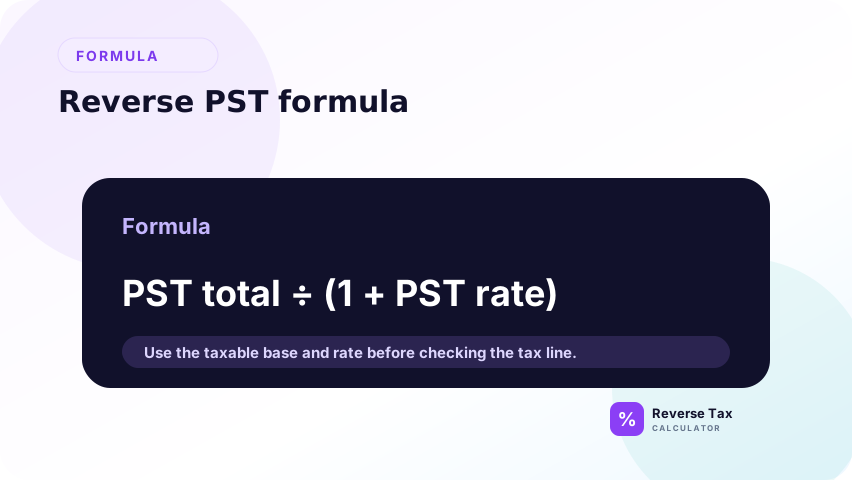
Before-PST price = PST-inclusive total / (1 + PST rate)
If GST and PST both apply additively to the same taxable base, use:
Before-tax price = Total / (1 + GST rate + PST rate)
Example: $112.00 including 5% GST and 7% PST reverses to $100.00 when both taxes apply to the same $100.00 base.
Why PST Needs Receipt-Level Evidence
PST rules vary by province and product type. A receipt may include taxable goods, exempt goods, shipping, deposits, environmental fees, or services. Some lines may be subject to GST but not PST, or the reverse.
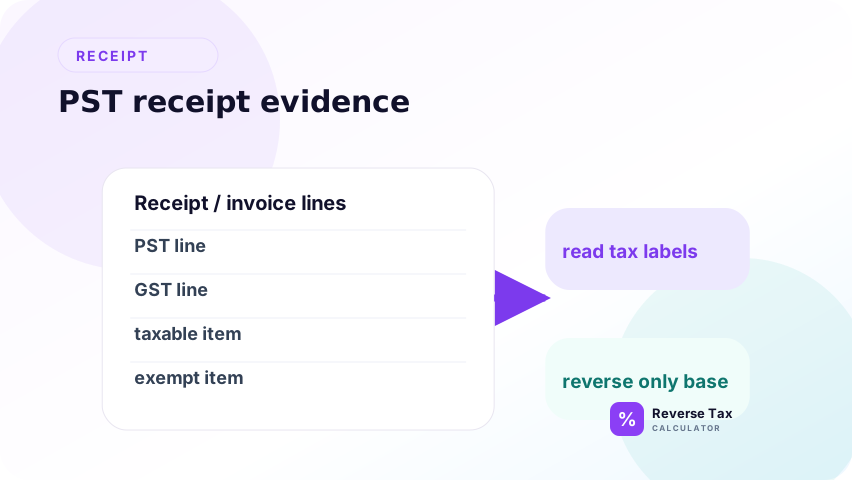
That is why the receipt is stronger evidence than a generic rate assumption. If the receipt shows GST and PST amounts separately, subtract the shown amounts first. Use a rate formula only when the tax amount is missing and the taxable base is clear.
PST vs GST
GST is federal. PST is provincial. They may appear as separate tax lines on the same receipt, but they are not the same tax and should not be merged blindly.
If both apply to the same taxable base, a combined additive formula can work. If they apply to different item groups, calculate each base separately. The GST glossary explains the federal component.
PST vs HST
HST is a harmonized tax. PST is separate from GST. In an HST province, the receipt usually shows one HST line rather than separate GST and PST lines.
Do not treat HST and GST plus PST as interchangeable. The calculation may look similar when rates add to the same total, but the tax labels, source evidence, and reporting categories are different.
PST vs QST
QST is Quebec Sales Tax, while PST usually refers to provincial sales tax systems outside Quebec. Quebec uses GST plus QST rather than HST.
For reverse tax, QST has its own common rate structure and rounding considerations. The QST glossary explains why Quebec receipts should not be treated as generic GST plus PST receipts.
This distinction matters in spreadsheets and content architecture. If a row comes from Quebec, label it as GST plus QST, not GST plus PST. That protects the rate assumption, the calculation note, and the internal link path toward the page that owns the Quebec-specific query.
When Can GST and PST Be Combined?
GST and PST can be combined only when both apply additively to the same taxable base. In that case, the combined rate is the GST rate plus the PST rate.
If GST applies to one set of items and PST applies to another, the combined-rate shortcut fails. Split the receipt into taxable groups and reverse each group separately.
The phrase “same taxable base” is the key test. It means both tax rates are calculated from the same before-tax amount. If GST is calculated on $100.00 but PST is calculated only on $80.00 of taxable goods, a single combined rate cannot describe the whole receipt.
PST Entity Map
| Entity | Attribute | Reverse tax role |
|---|---|---|
| PST | Tax type | Provincial sales tax |
| GST | Related tax | May appear beside PST |
| PST-inclusive total | Input | Total containing PST |
| PST rate | Attribute | Rate used in divisor |
| Taxable base | Required condition | Must be shared before combining rates |
This map makes the base requirement explicit, which is the most important PST calculation condition.
How to Use PST in Spreadsheets
Use separate columns for gst_rate, pst_rate, gst_amount, pst_amount, taxable_base, and source_document. Do not hide GST and PST inside one generic tax_rate field unless the file is only for a simple calculation.
If GST and PST share the same base:
=Total/(1+GST_Rate+PST_Rate)
If tax amounts are shown separately:
=Total-GST_Amount-PST_Amount
Add a tax_base_note column when the file has mixed items. A short note such as “GST and PST same base” or “PST applies to taxable goods only” helps prevent later users from copying the combined formula into rows where the tax bases differ.
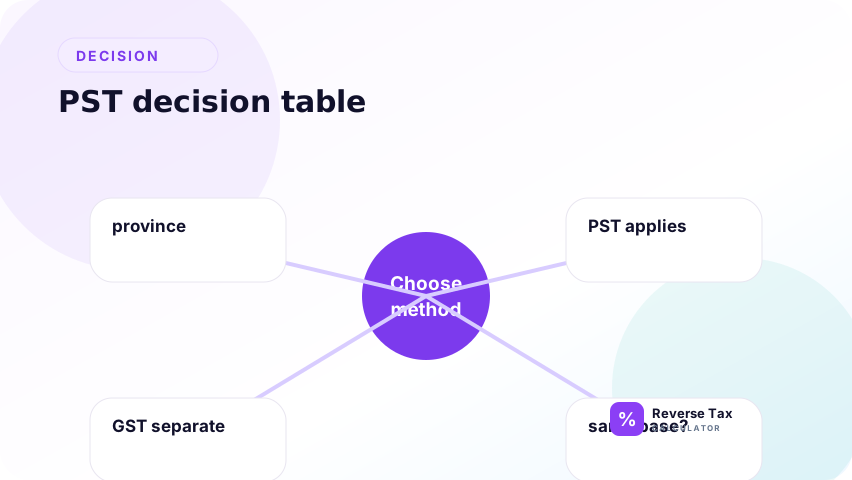
PST Decision Table
| Receipt shows | Best action |
|---|---|
| PST only | Reverse using PST rate |
| GST and PST on same base | Combine rates additively |
| GST and PST amounts shown | Subtract shown tax amounts |
| HST line | Use HST method |
| Mixed taxable items | Split item groups |
| Province-specific uncertainty | Verify provincial authority guidance |
This table helps choose a calculation path, not a legal classification.
What Mistakes Happen with PST?
The common PST mistakes are combining rates that do not apply to the same base, treating HST like GST plus PST, ignoring exempt items, and using a province rate without checking the transaction location and date.
Another common issue is rounding. If a receipt rounds GST and PST by line item, a spreadsheet that rounds only at the total level may differ by a cent.
How to Check a PST Calculation
After reversing the total, calculate GST and PST separately from the taxable base. Add the base plus GST plus PST and compare the rebuilt total with the receipt total.
If the rebuilt total fails, check whether both taxes applied to the same base, whether the receipt had mixed items, whether amounts were rounded by line item, and whether the province rate was correct.
Trust Boundary
PST reverse calculation is arithmetic. It does not determine product taxability, exemption status, provincial registration, filing treatment, refund treatment, or whether PST should have been charged.
Use the relevant provincial tax authority and the original receipt or invoice for compliance-sensitive decisions.
This matters because provincial rules can differ by product, service, date, and transaction type. A calculator can separate tax from a clean total, but it cannot decide whether PST applies to clothing, shipping, software, services, or a refund in a particular province.
Frequently Asked Questions
What does PST mean?
PST means Provincial Sales Tax. It is a provincial tax used in some Canadian provinces and may appear separately from GST on receipts and invoices.
Can I combine GST and PST?
Yes, but only when both taxes apply additively to the same taxable base. If they apply to different items or different bases, split the receipt and calculate each group separately.
Is PST the same as HST?
No. HST is a harmonized tax that combines federal and provincial components into one rate. PST is separate from GST and may need separate handling on receipts.
Sources and Notes
- CRA GST/HST rate context
- British Columbia PST guidance
- Formula source: arithmetic relationship between PST, GST, taxable base, and tax-inclusive total.