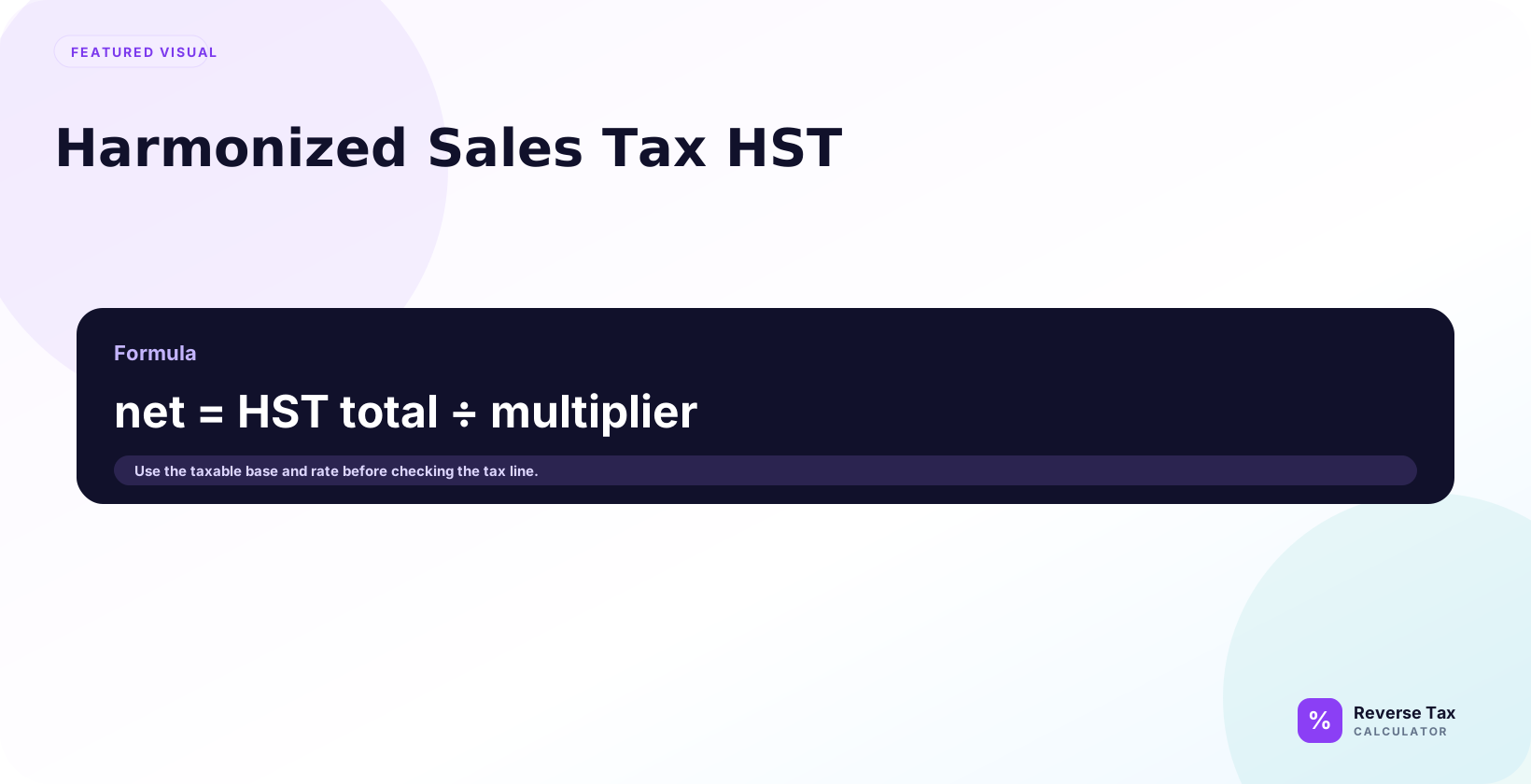
Harmonized Sales Tax combines federal GST with a participating province’s sales tax, so reverse HST removes one blended rate from an HST-inclusive total. The formula divides the gross amount by 1 plus the HST rate as a decimal, then subtracts the net price from the total. HST results depend on province, transaction date, taxable base, invoice label, exemptions, zero-rated items, and receipt rounding. Separate PST lines do not use HST math.
This page explains what HST means, how to reverse it, how it differs from GST, PST, and QST, and why the receipt location, place of supply, rate, and transaction date matter before a calculation is trusted.
What Is HST?
HST means Harmonized Sales Tax. It is used in participating Canadian provinces where the federal GST and a provincial component are harmonized into one tax rate.
For reverse tax, HST is treated as one combined tax line. If a total already includes HST, divide the HST-inclusive total by 1 plus the HST rate to calculate the before-tax amount.
The important entity relationship is that HST contains GST, but it is not the same as GST alone. A receipt showing HST usually gives one harmonized tax amount instead of separate GST and provincial tax lines. That is why the HST rate, not the GST-only rate, controls the reverse calculation.
How Do You Reverse HST?
Use this formula:
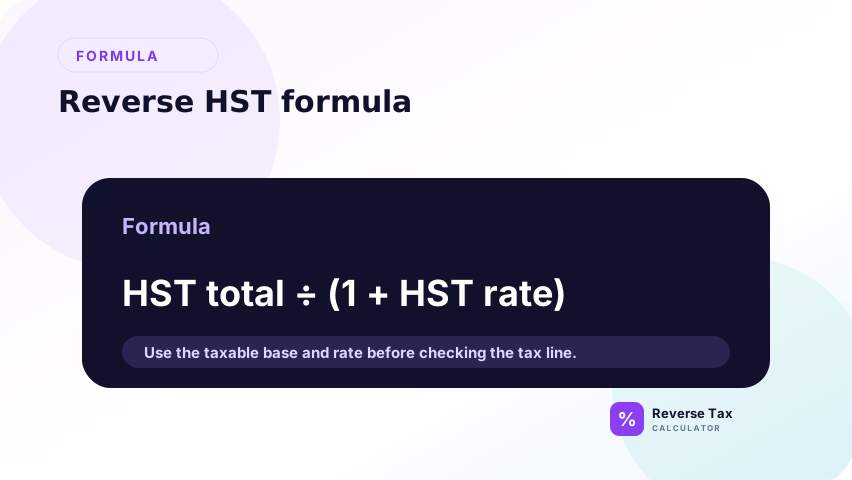
Before-HST price = HST-inclusive total / (1 + HST rate)
Then calculate the HST amount:
HST amount = HST-inclusive total - Before-HST price
Example: if the HST-inclusive total is $113.00 and the HST rate is 13%, the before-HST price is $100.00 and the HST amount is $13.00.
This example works only because the total is clean and the rate is known. If the receipt includes exempt items, tips, deposits, or multiple taxable groups, calculate only the HST-inclusive taxable group. If the receipt already shows the HST amount, subtract that amount from the total instead of reconstructing it from the rate.
Why HST Is Not the Same as GST Alone
GST is the federal goods and services tax. HST combines GST with a provincial component into one harmonized rate. That means an HST receipt should not be reversed with a GST-only rate.
If a Canadian receipt shows HST, use the HST rate shown on the receipt or verify the applicable rate through CRA guidance. The GST glossary explains the federal GST concept separately.
HST Entity Map
| Entity | Attribute | Reverse tax role |
|---|---|---|
| HST | Tax type | Harmonized Canadian tax |
| HST-inclusive total | Input | Total that already includes HST |
| HST rate | Attribute | Rate used in the divisor |
| Before-HST price | Output | Price before HST |
| HST amount | Output | Included HST portion |
This map helps prevent mixing HST with GST-only, PST, or QST calculations.
HST vs GST
GST is federal. HST is harmonized. The practical difference for reverse tax is the rate. A GST-only calculation may use a lower federal rate, while HST uses the harmonized rate that includes the provincial component.
Using GST-only on an HST receipt will usually overstate the before-tax price and understate the tax amount. That error can affect receipt checks, refunds, bookkeeping splits, and sales reports.
HST vs PST
PST is a separate provincial sales tax in some provinces. HST is one harmonized tax. If a receipt shows GST and PST separately, it is not an HST receipt and may need a combined additive calculation or separate tax-line handling.
The GST vs HST vs PST vs QST comparison explains how the Canadian sales tax labels differ.
This distinction matters because the receipt label tells you which calculation model to use. HST uses one harmonized rate. GST plus PST may require separate component rates or shown tax amounts. Treating those structures as interchangeable can produce the wrong before-tax amount and the wrong tax split.
HST vs QST
Quebec generally uses GST plus QST rather than HST. That means a Quebec receipt with GST and QST should not be reversed with an HST rate.
For common Quebec calculations, GST and QST may be combined into a 14.975% working rate when both apply to the same selling price. The QST glossary covers that method.
The semantic difference is jurisdictional and structural. HST belongs to participating harmonized provinces. QST belongs to Quebec and appears with GST as a separate tax. If the receipt says GST and QST, keep those entities separate for calculation notes and records.
Where HST Appears
HST appears on receipts, invoices, refunds, ecommerce orders, and accounting exports connected to participating Canadian provinces. A receipt may show the HST amount, the HST rate, or a statement that HST is included.
If the tax amount is shown separately, use it as direct evidence. If only the HST-inclusive total and rate are known, use the reverse formula.
Be careful with exports. A payment or marketplace payout may include sales, refunds, fees, adjustments, and tax collections in the same file. Before reversing HST, trace the amount back to a receipt, invoice, order line, or tax report that confirms it is actually HST-inclusive.
How to Choose HST Rate Evidence
Use the receipt first when it shows the HST rate or amount. Use CRA guidance next when the receipt only gives province, date, place of supply, and tax-inclusive total.
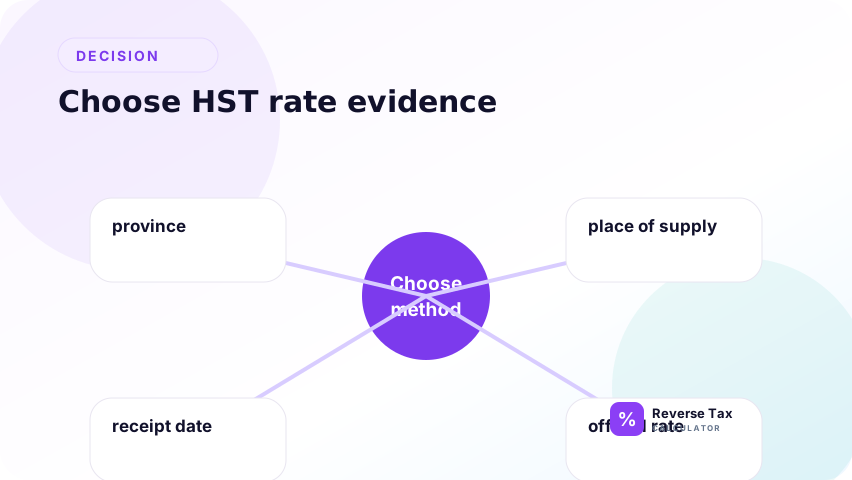
CRA explains that the GST/HST rate depends on the place of supply, and that invoices or receipts generally need to show GST/HST information clearly. A calculator cannot infer the correct place of supply from a total alone.
How to Use HST in Spreadsheets
Use explicit columns such as province, transaction_date, hst_rate, hst_inclusive_total, before_hst_price, and hst_amount.
If the total is in A2 and HST rate is in B2:
=A2/(1+B2)
HST amount:
=A2-(A2/(1+B2))
The province and date columns matter because HST assumptions can change by location and time.
Add a rebuilt-total column for QA. It should calculate before-HST price plus HST amount and compare the result with the original HST-inclusive total. If the row does not rebuild, review the rate, province, date, item grouping, and whether the source amount came from a clean receipt or a fee-adjusted export.
HST Decision Table
| Receipt shows | Best action |
|---|---|
| HST amount | Subtract shown HST from total |
| HST-inclusive total and rate | Divide by 1 plus HST rate |
| GST only | Use GST method |
| GST plus PST | Use GST plus PST method |
| GST plus QST | Use Quebec GST plus QST method |
| Mixed taxable items | Split item groups before calculating |
This table supports calculation choices, but it does not replace official tax guidance.
What Mistakes Happen with HST?
The most common mistake is using the GST-only rate on an HST receipt. Another mistake is assuming one HST rate applies to every province or every transaction date. A third mistake is reversing a total that includes exempt items, tips, deposits, or non-tax payment adjustments.
The best correction is to use receipt-level evidence, then official CRA guidance, then a rebuilt-total check after the calculation.
How to Check an HST Reverse Calculation
After calculating the before-HST price, multiply it by the HST rate to find the HST amount. Add the before-HST price and HST amount back together. The rebuilt total should match the original HST-inclusive total except for rounding.
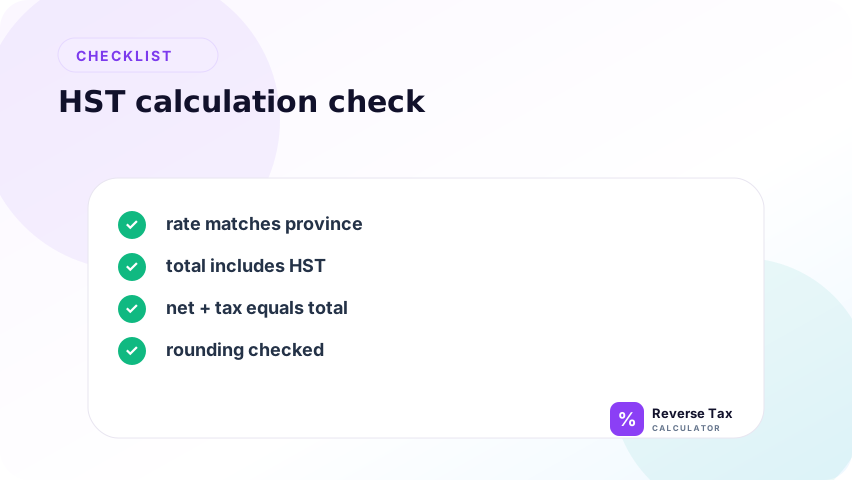
If it does not match, check the rate, source amount, province, date, taxability, and whether the receipt contains multiple item groups.
This check is the practical guardrail against false precision. A formula can return a number for any total and any rate, but the rebuilt-total test tells you whether the chosen inputs are consistent with the original document. Larger mismatches usually mean the wrong base or wrong rate was used.
Trust Boundary
HST reverse calculation is arithmetic. It does not determine taxability, place of supply, registration, filing treatment, input tax credits, zero-rating, exemptions, or whether HST should have been charged.
Use CRA guidance and the original receipt or invoice for compliance-sensitive decisions.
This boundary is important because HST depends on facts that are outside the calculator: province, place of supply, product or service type, registration status, invoice rules, and transaction date. The calculation can split an HST-inclusive number, but it cannot validate the legal treatment behind that number.
Frequently Asked Questions
What does HST mean?
HST means Harmonized Sales Tax. It combines federal GST with a provincial component in participating Canadian provinces. In reverse tax, HST is removed from an HST-inclusive total by dividing by 1 plus the HST rate.
Is HST the same as GST?
No. GST is the federal goods and services tax. HST is a harmonized rate that includes GST plus a provincial component. Do not use a GST-only rate when the receipt shows HST.
How do I reverse HST from a total?
Divide the HST-inclusive total by 1 plus the HST rate. Then subtract the before-HST price from the total to find the HST amount. If the receipt shows the HST amount separately, use the shown amount first.
Sources and Notes
- CRA GST/HST rates and rules
- Formula source: arithmetic relationship between HST-inclusive total, HST rate, before-HST price, and HST amount.