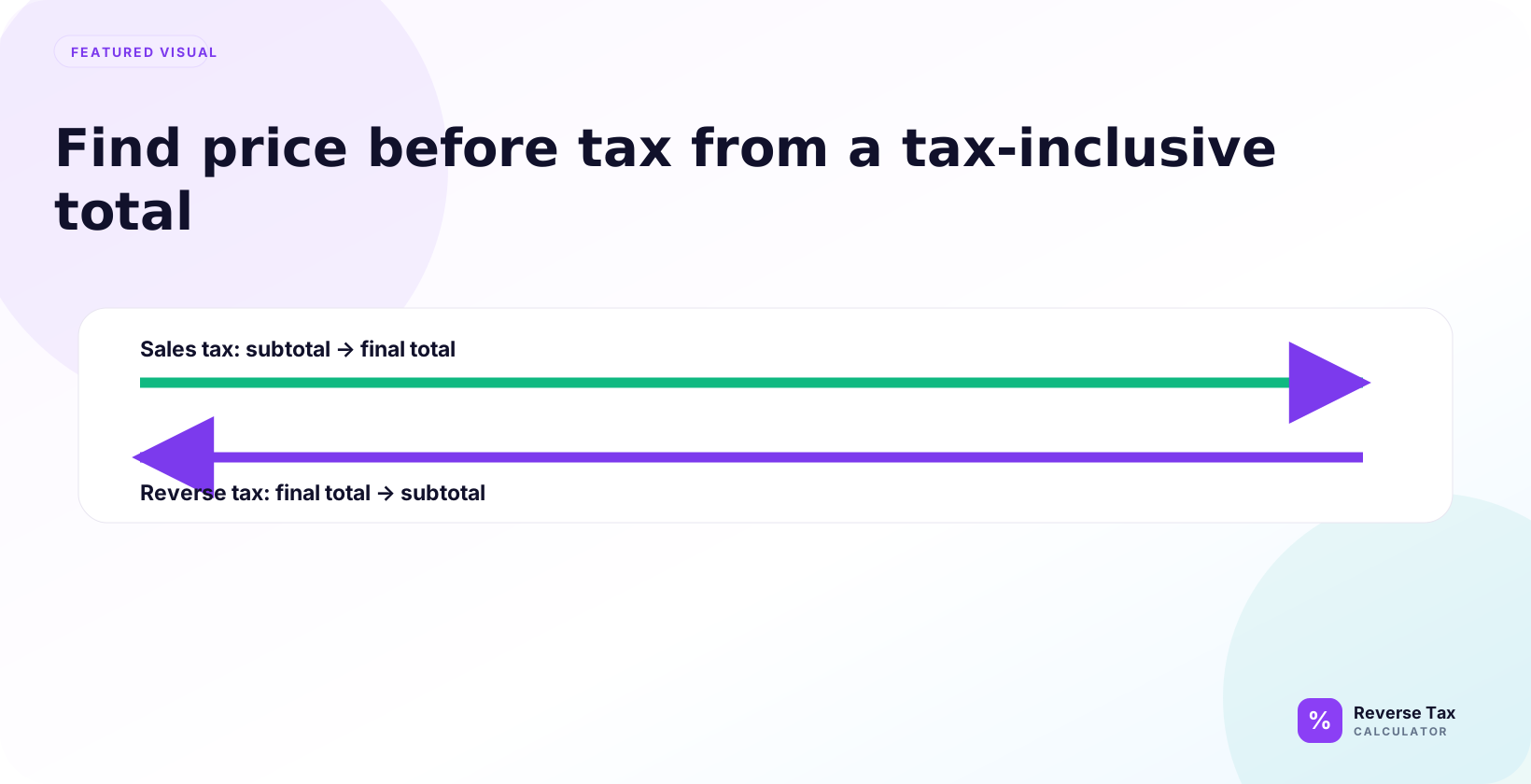
Price before tax is found by dividing the final tax-inclusive total by the tax multiplier. The multiplier equals 1 plus the tax rate divided by 100, so a $120 total at 20% tax becomes $100 before tax. The result depends on the correct rate and taxable base; exempt items, discounts, shipping, tips, multiple rates, and rounding alter the calculation. The included tax is the total minus the before-tax price.
For example, if the total is 120.00 and the tax rate is 20 percent, divide 120.00 by 1.20. The price before tax is 100.00.
What Does Price Before Tax Mean?
Price before tax means the taxable base before sales tax, VAT, GST, HST, or another transaction tax is added. It is also called pre-tax price, net price, or tax-exclusive price depending on context. In reverse tax, the goal is often to recover this amount from a total that already includes tax.
Price before tax means the amount before sales tax, VAT, GST, HST, PST, QST, or another percentage-based tax is added.
It is the base amount that the tax rate applies to.
Is Price Before Tax the Same as Pre-Tax Price?
Yes. Price before tax and pre-tax price usually mean the same thing.
They both describe the amount before tax is added.
Is Price Before Tax the Same as Subtotal?
Often, yes. On many receipts, subtotal is the price before tax.
But subtotal labels can vary, so check whether tax is added after the subtotal.
What Do You Need to Find the Price Before Tax?
You need the tax-inclusive total and the tax rate.
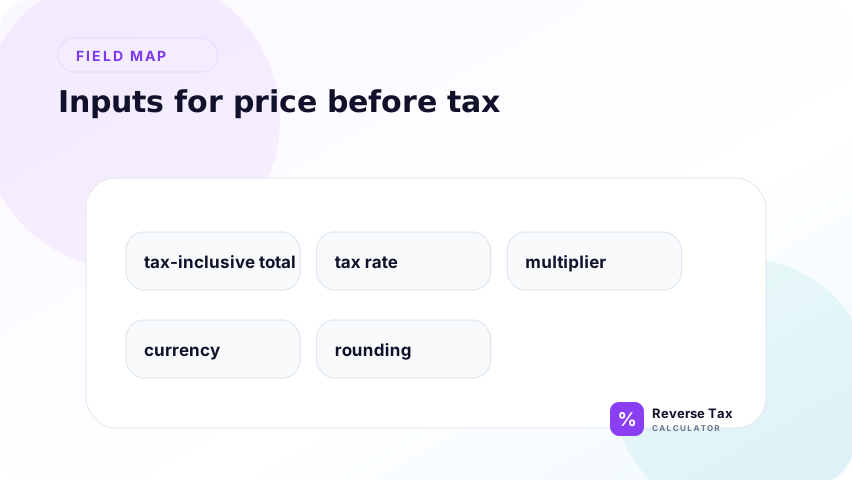
| Input | Meaning | Example |
|---|---|---|
| Tax-inclusive total | Final amount after tax | 120.00 |
| Tax rate | Percentage applied to pre-tax price | 20 percent |
If the total does not include tax, do not reverse it. If the rate is wrong, the price before tax will be wrong.
How to Find the Price Before Tax from a Total
To find price before tax from a tax-inclusive total, divide the total by 1 plus the tax rate. If the total is 108.00 and the rate is 8%, divide by 1.08 to get 100.00. This works when the total is a clean taxable amount at one rate. Mixed items need line-level separation first.
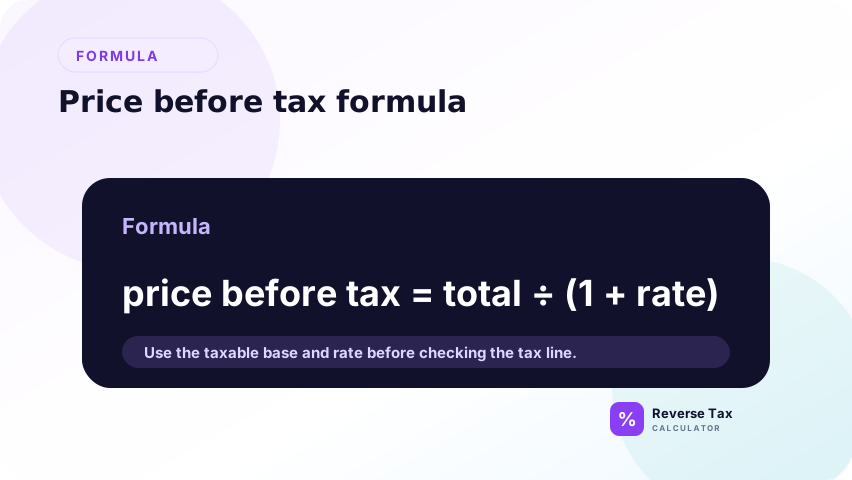
Use this formula:
Price before tax = Total / (1 + Rate / 100)
Step 1: Confirm the Total Includes Tax
Confirm that the total includes tax before using the reverse formula. If the price is already before tax, dividing by the multiplier will understate the price. Look for labels such as total including tax, VAT included, GST inclusive, or a receipt total that contains a tax line.
Use the final price, receipt total, invoice total, or tax-inclusive amount.
Do not use a subtotal that is already before tax.
Step 2: Convert the Tax Rate into a Multiplier
Convert the tax rate into a multiplier by adding 1 to the decimal rate. For example, 8 percent becomes 1.08 and 20 percent becomes 1.20. The multiplier represents the tax-inclusive total as a percentage of the pre-tax price.
Add the decimal tax rate to 1.
| Tax rate | Multiplier |
|---|---|
| 5 percent | 1.05 |
| 8 percent | 1.08 |
| 10 percent | 1.10 |
| 20 percent | 1.20 |
Step 3: Divide the Total by the Multiplier
Divide the tax-inclusive total by the multiplier to find the price before tax. This step removes the tax layer from the gross amount. If the receipt has mixed taxability, calculate by line group instead of dividing the whole total.
The result is the pre-tax price for the clean taxable amount. Use it as the base for checking tax amount, net price, or receipt subtotal.
Divide the total by the multiplier to find the price before tax.
Example:
120 / 1.20 = 100
The price before tax is 100.00.
How to Find Price Before Sales Tax
To find price before sales tax, use the same formula with the sales tax rate.
Price before sales tax = Total after sales tax / (1 + Sales tax rate / 100)
Example:
| Line | Amount |
|---|---|
| Total after sales tax | 108.00 |
| Sales tax rate | 8 percent |
| Multiplier | 1.08 |
| Price before sales tax | 100.00 |
This works when one sales tax rate applies to the full total.
How to Check the Result
Check the result by adding tax back to the price before tax.
If the price before tax is 100.00 and the rate is 20 percent, the tax is 20.00 and the total is 120.00.
| Check | Amount |
|---|---|
| Price before tax | 100.00 |
| Tax at 20 percent | 20.00 |
| Total | 120.00 |
If the check does not match, review the rate, total, and rounding.
How to Find Price Before Tax in Different Situations
The method changes based on what information you know. If you know total and rate, divide by 1 plus rate. If you know tax amount and rate, divide tax by rate to find the original price. If the receipt shows subtotal and tax separately, use the shown subtotal. If the rate is missing, calculate an implied rate only when the base is clear.
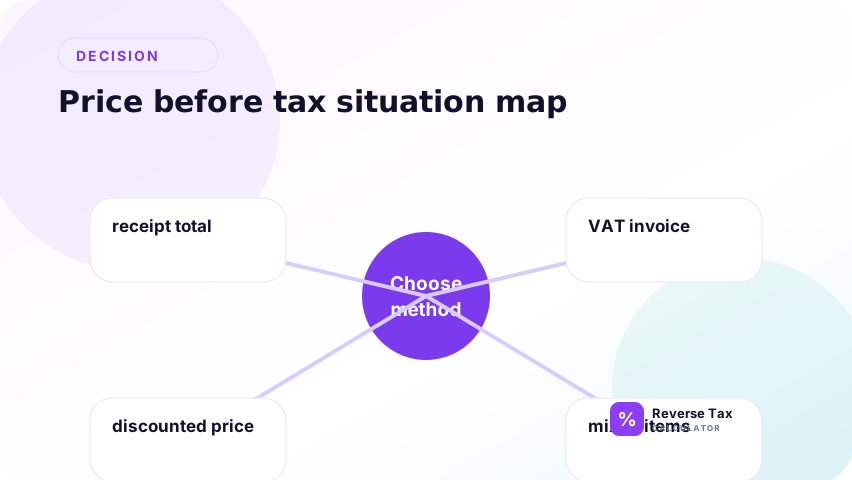
The same formula can appear in different user situations.
From a Receipt Total
Use the receipt total if it includes tax.
Do not use the subtotal if the subtotal already appears before the tax line.
From an Invoice Total
Use the invoice total only if it includes tax.
If the invoice separates net amount, tax, and gross amount, the net amount may already be the price before tax.
From a Tax-Inclusive Online Price
Use the displayed price if the site says tax is included.
If tax is added at checkout, the displayed price may be tax-exclusive and should not be reversed.
From a Refund Amount
Refunds may include item price and tax together.
If the refund total includes tax and the rate is known, reverse tax can estimate the refunded pre-tax amount and refunded tax.
Price Before Tax Operational Table
| Starting number | Is reverse tax needed? | Reason |
|---|---|---|
| Receipt total with tax | Yes | Total includes tax |
| Invoice gross amount | Yes, if tax-inclusive | Gross may include tax |
| Subtotal before tax | No | Already before tax |
| Item price excluding tax | No | Tax has not been added |
| Tax-inclusive VAT price | Yes | VAT is inside the total |
| Refund total including tax | Yes, with caution | Tax may be part of refund |
How Official Rate Figures Affect Price Before Tax
The rate strongly affects the price before tax.
Using official UK VAT rates as examples, GOV.UK lists a standard VAT rate of 20 percent, a reduced rate of 5 percent, and a zero rate of 0 percent. A 120.00 tax-inclusive price at 20 percent reverses to 100.00 before tax. At 5 percent, the same 120.00 total reverses to about 114.29 before tax.
This shows why the rate is not a small detail. The same total produces different pre-tax prices at different rates.
Rate Comparison Table
| Tax-inclusive total | Rate | Price before tax |
|---|---|---|
| 120.00 | 20 percent | 100.00 |
| 120.00 | 10 percent | 109.09 |
| 120.00 | 5 percent | 114.29 |
| 120.00 | 0 percent | 120.00 |
The table is illustrative arithmetic. The correct real-world rate depends on the tax system and transaction.
Why Subtracting Tax from Total Is Wrong
Subtracting the tax percentage from the total is wrong because the tax rate applies to the pre-tax price, not the tax-inclusive total. At 8%, a 108.00 total contains 8.00 tax, not 8.64. The correct method divides by 1.08 to recover the original 100.00 base, then subtracts that base from the total to find tax.
Do not find price before tax by subtracting the tax percentage from the total.
If the total is 120.00 and the tax rate is 20 percent, subtracting 20 percent from 120.00 gives 96.00. The correct price before tax is 100.00.
The reason is that 20 percent tax was applied to 100.00, not to 120.00.
Decision Matrix: Which Price-Before-Tax Method Should You Use?
| Situation | Method |
|---|---|
| Total and rate known | Divide by tax multiplier |
| Total known but rate unknown | Find or infer rate first |
| Tax amount and rate known | Use original price from tax amount |
| Receipt has multiple rates | Separate rates first |
| Total has exempt items | Separate taxable and exempt parts |
| Need many rows | Use spreadsheet formula |
Common Problems When Finding Price Before Tax
Common problems include using the wrong rate, using a total that contains exempt items, reversing a balance due instead of sale total, ignoring discounts, and rounding too early. The safest workflow is to identify the taxable base, tax label, rate, date, and document type before calculating price before tax.
Another common problem is treating every final number as a tax-inclusive total. A receipt total, invoice gross, balance due, card payment, and marketplace payout can all be different entities. The reverse formula should use the amount that actually contains tax for the taxable sale. If the source amount includes fees, tips, deposits, or payments, clean the base first.
You Used the Wrong Total
Use the final tax-inclusive total, not the subtotal before tax.
You Used the Wrong Rate
Use the rate that actually applied to the transaction.
You Ignored Multiple Taxes
If a total includes more than one tax, a single rate may not be enough.
You Ignored Rounding
Receipts may round tax at the line level or total level.
You Used a Tax-Exclusive Price
If the price says tax excluded or plus tax, it is already before tax. You do not need to reverse it.
You Used the Displayed Price Before Checkout
Some checkout systems add tax after address or shipping details are entered. The displayed product price may not include tax yet.
> Accuracy note: this page explains arithmetic. Tax rates and taxability must be verified separately. See the methodology for calculation standards.
What This Page Does Not Cover
| Topic | Better page |
|---|---|
| Full reverse tax formula | Reverse Tax Formula |
| Step-by-step backward tax | How to Calculate Tax Backwards |
| Tax amount from total | How to Find the Tax Amount from a Total |
| Original price from tax amount | How to Find the Original Price from the Tax Amount |
| Worked examples | Reverse Tax Calculation Worked Examples |
Frequently Asked Questions
How do I find the price before tax?
Divide the tax-inclusive total by 1 plus the tax rate divided by 100.
Is price before tax the same as pre-tax price?
Yes. Both mean the amount before tax is added.
Can I find price before tax without the rate?
Not with the basic reverse tax formula. You need the rate or another known value, such as the tax amount.
Why is my price before tax different from the receipt subtotal?
The difference may come from rounding, discounts, exempt items, multiple rates, or using the wrong tax rate.
Is price before tax lower than total?
Yes, when the total includes tax. The price before tax is lower because tax has not been included yet.
What is the price before tax if the tax rate is 0 percent?
If the tax rate is 0 percent, the price before tax and tax-inclusive total are the same in simple arithmetic.
Sources
The formulas on this page come from the arithmetic relationship between price before tax, tax rate, tax amount, and price after tax. Use official tax authority guidance for rate selection, taxability, exemptions, and filing-sensitive decisions. Use this page to calculate and verify the price-before-tax amount from source documents.
Sources matter because a formula can recover a price before tax only after the correct rate and taxable base are known. Official tax authorities determine rates, exemptions, zero-rating, and product taxability. This page explains the arithmetic, while source documents and official guidance should control compliance-sensitive interpretation.