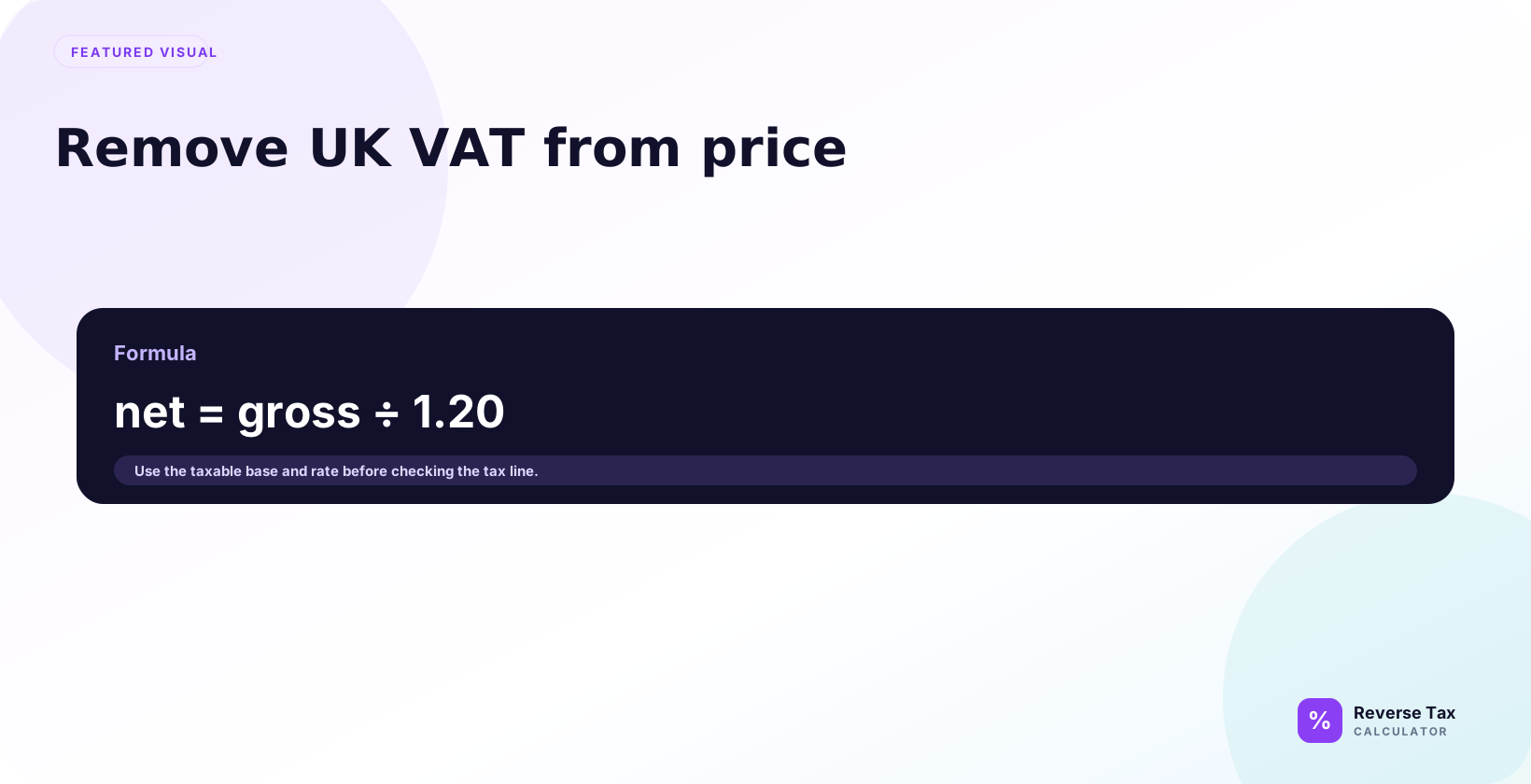
UK VAT removal separates VAT from a VAT-inclusive price by dividing the gross amount by 1 plus the VAT rate as a decimal. At 20% VAT, a £120 VAT-inclusive price becomes £100 net price and £20 VAT. The result depends on the correct UK VAT rate, invoice wording, taxable base, reduced-rate items, zero-rated items, exemptions, discounts, shipping, and rounding. VAT-exclusive prices require forward calculation instead.
Formula:
Net price = VAT-inclusive price / 1.20
Then:
VAT = VAT-inclusive price - net price
UK VAT Rates
GOV.UK lists:
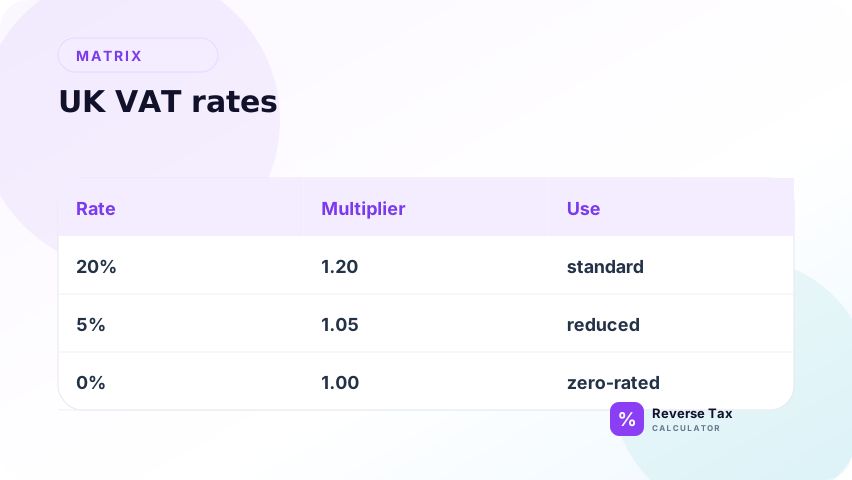
| UK VAT rate | Rate | Applies to |
|---|---|---|
| Standard rate | 20 percent | Most goods and services |
| Reduced rate | 5 percent | Some goods and services |
| Zero rate | 0 percent | Zero-rated goods and services |
GOV.UK also states that the standard VAT rate increased to 20 percent on 4 January 2011.
Formula to Remove UK VAT
The formula to remove UK VAT answers the query "how do I remove VAT from a UK gross price?" Divide the VAT-inclusive price by 1 plus the applicable VAT rate. For the standard 20% rate, divide by 1.20. Then subtract the net price from the gross price to find VAT. This works only when the price is VAT-inclusive and taxable at that rate.
For 20 percent VAT:
Net price = gross price / 1.20
VAT = gross price - net price
For 5 percent VAT:
Net price = gross price / 1.05
For 0 percent VAT:
Net price = gross price / 1.00
VAT Fraction at 20 Percent
At 20% VAT, the VAT amount inside a gross price is one sixth of the gross total. This is because the gross total is 120% of the net price, and the VAT portion is 20 out of 120. The fraction method is useful when you only need the VAT amount, while division by 1.20 is clearer when you need the net price.
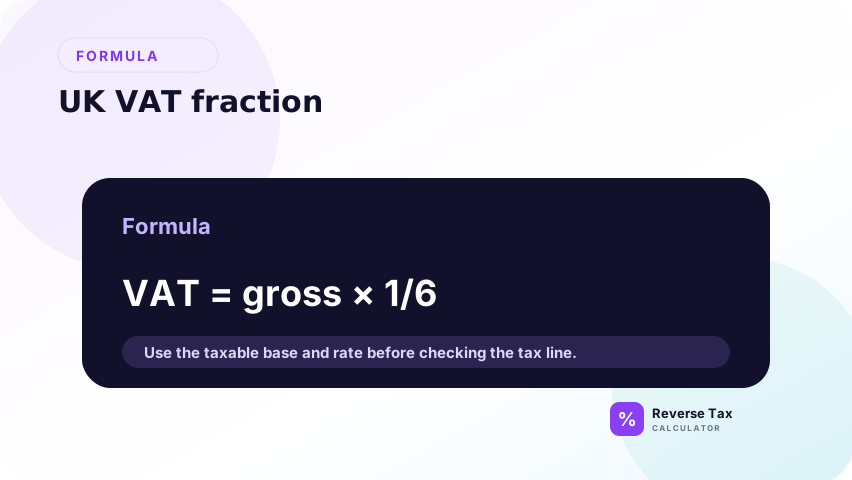
At 20 percent VAT, the VAT fraction is:
20 / 120 = 1 / 6
So VAT is one sixth of the VAT-inclusive price.
Example:
120.00 x 1 / 6 = 20.00
This is a shortcut for finding VAT, not the net price. To find the net price:
120.00 - 20.00 = 100.00
Worked Example: Remove 20 Percent UK VAT
Suppose the VAT-inclusive price is 240.00.
Net price:
240.00 / 1.20 = 200.00
VAT:
240.00 - 200.00 = 40.00
| Component | Amount |
|---|---|
| Gross price | 240.00 |
| VAT rate | 20 percent |
| Net price | 200.00 |
| VAT | 40.00 |
Worked Example: Remove 5 Percent UK VAT
This reduced-rate example is important because UK VAT is not always 20%. If a gross price includes VAT at 5%, divide by 1.05, not 1.20. Using the standard-rate divisor on reduced-rate items understates the net amount and overstates VAT. The rate should come from the invoice, receipt, category, and transaction date.
Suppose the VAT-inclusive price is 105.00.
105.00 / 1.05 = 100.00
105.00 - 100.00 = 5.00
The net price is 100.00 and VAT is 5.00.
Worked Example: Zero-Rated Item
A zero-rated item has no VAT amount to remove for reverse calculation. The gross price and net price are the same for the arithmetic split, even though zero-rated and exempt can differ for VAT reporting. This example prevents the mistake of applying the 20% formula to every UK price that appears on a receipt.
Suppose the price is 100.00 and the VAT rate is 0 percent.
100.00 / 1.00 = 100.00
VAT:
100.00 - 100.00 = 0.00
There is no VAT amount to remove.
UK VAT Quick Table
| Gross price | VAT rate | Divide by | Net price | VAT |
|---|---|---|---|---|
| 120.00 | 20 percent | 1.20 | 100.00 | 20.00 |
| 240.00 | 20 percent | 1.20 | 200.00 | 40.00 |
| 105.00 | 5 percent | 1.05 | 100.00 | 5.00 |
| 100.00 | 0 percent | 1.00 | 100.00 | 0.00 |
UK VAT on an Invoice
Suppose a UK invoice shows a gross total of 1,200.00 and says VAT is included at 20 percent.
Net price:
1,200.00 / 1.20 = 1,000.00
VAT:
1,200.00 - 1,000.00 = 200.00
| Invoice field | Amount |
|---|---|
| Gross invoice total | 1,200.00 |
| Net amount | 1,000.00 |
| VAT | 200.00 |
If the invoice shows several VAT rates, calculate each rate group separately.
UK VAT on a Receipt
A UK receipt may show gross total, VAT amount, VAT rate, net amount, or only a VAT-inclusive total. If the receipt already shows VAT, use the shown VAT line as evidence and reverse-calculate only as a check. If the receipt has mixed rates or zero-rated lines, calculate each group separately rather than applying one rate to the final total.
A receipt may show only a final price and VAT number. If the final price includes 20 percent VAT, the VAT portion is one sixth of the gross price.
Example:
60.00 x 1 / 6 = 10.00
Net:
60.00 - 10.00 = 50.00
This fraction shortcut is useful for standard-rate UK VAT.
UK VAT Refund Example
A UK VAT refund should use the original sale evidence and original VAT rate. A refund may include a taxable item, zero-rated item, delivery charge, discount adjustment, or goodwill credit. Reverse VAT only from the part of the refund that actually includes VAT, and keep the refund record with the original invoice when possible.
Suppose a customer receives a VAT-inclusive refund of 36.00 for a standard-rated item.
36.00 / 1.20 = 30.00
36.00 - 30.00 = 6.00
The refund reverses 30.00 of net value and 6.00 of VAT.
UK VAT with Multiple Rates
Suppose a UK invoice has:
| Line group | Gross amount | VAT rate |
|---|---|---|
| Standard-rated goods | 120.00 | 20 percent |
| Reduced-rated goods | 105.00 | 5 percent |
| Zero-rated goods | 40.00 | 0 percent |
Reverse each group separately:
120.00 / 1.20 = 100.00
105.00 / 1.05 = 100.00
40.00 / 1.00 = 40.00
Total net is 240.00. Total VAT is 25.00.
UK VAT with an Exempt Line
If an invoice has a VAT-inclusive standard-rated line and an exempt line, do not remove VAT from the exempt line.
| Line | Amount |
|---|---|
| Standard-rated gross price | 240.00 |
| Exempt amount | 100.00 |
| Total | 340.00 |
Reverse only 240.00:
240.00 / 1.20 = 200.00
240.00 - 200.00 = 40.00
The exempt amount stays 100.00.
UK Receipt and Invoice Clues
| Clue | Action |
|---|---|
| VAT included | Divide gross price by multiplier |
| VAT shown separately | Verify net plus VAT |
| Standard rate | Use 1.20 |
| Reduced rate | Use 1.05 |
| Zero-rated | Use 1.00 |
| Multiple VAT rates | Split by rate |
UK VAT Rate Selection
Use the VAT rate that matches the actual supply.
| Supply status | Reverse VAT action |
|---|---|
| Standard-rated | Divide by 1.20 |
| Reduced-rated | Divide by 1.05 |
| Zero-rated | Divide by 1.00 |
| Exempt | Do not remove VAT |
| Mixed invoice | Group by rate or status |
GOV.UK gives broad rate categories, but the correct treatment still depends on the specific goods or services.
UK VAT Operational Checklist
| Check | Why it matters |
|---|---|
| Price is VAT-inclusive | Confirms reverse VAT is needed |
| Correct UK VAT rate selected | Standard, reduced, or zero |
| Product category checked | Rates depend on goods or services |
| Multiple rates separated | Avoids blended calculation |
| Invoice date checked | Historical rates can differ |
| VAT line checked | Verifies arithmetic |
| Rounding reviewed | Explains small differences |
Common Mistakes
Common UK VAT mistakes come from subtracting 20% from the gross price, using the standard-rate formula on reduced-rate items, removing VAT from zero-rated items, ignoring mixed rates, and applying current rates to old transactions. The fix is to identify the VAT label, rate, date, and taxable base before calculating.
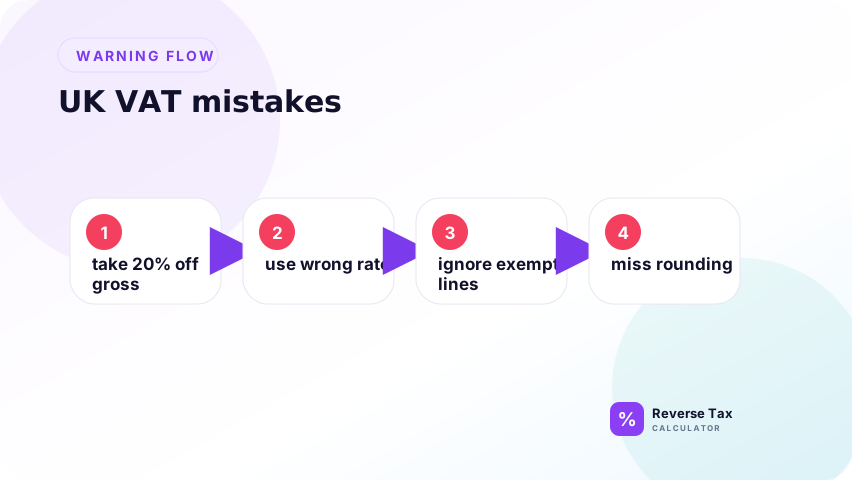
The safest way to avoid these mistakes is to classify the amount before applying a formula. Ask whether the price is VAT-inclusive, VAT-exclusive, standard-rated, reduced-rated, zero-rated, exempt, a refund, a discount, or a mixed invoice total. Then choose the formula. This entity-first process prevents a correct mathematical formula from producing a wrong tax answer.
Taking 20 Percent Off the Gross Price
Do not calculate VAT as 20 percent of 120.00. That gives 24.00, which is wrong. The VAT included is 20.00.
Using 1.20 for Reduced-Rate Items
Use 1.05 if the applicable VAT rate is 5 percent.
Removing VAT from Zero-Rated Items
Zero-rated items have 0 percent VAT.
Ignoring Mixed VAT Rates
Some invoices include standard-rated, reduced-rated, zero-rated, and exempt lines.
Using Current Rates for Old Prices
For historical invoices, check the VAT rate effective on the invoice date.
What UK Reverse VAT Can and Cannot Prove
| Can prove | Cannot prove |
|---|---|
| Net price from a VAT-inclusive price | Whether the item should be standard-rated |
| VAT included at 20 percent | Whether a seller applied VAT correctly |
| VAT fraction of a gross price | Whether exemption documentation is valid |
| Arithmetic consistency | Legal VAT treatment |
UK VAT Rounding
UK VAT rounding can create small differences when the invoice rounds by line, by VAT rate group, or by total. Reverse calculations may keep more precision than the displayed receipt. If the result differs by one penny, compare the invoice's rounding method before assuming the formula or rate is wrong.
A UK VAT calculation may not divide neatly to two decimal places.
Example:
19.99 / 1.20 = 16.6583...
The displayed net price may round to 16.66 and VAT to 3.33. If an invoice differs by one penny, check whether VAT was rounded by line or by total.
Information Gain: VAT Rate vs VAT Share
At 20 percent VAT, VAT is not 20 percent of the gross price. It is one sixth of the gross price.
| Gross price | VAT at one sixth | Net price |
|---|---|---|
| 60.00 | 10.00 | 50.00 |
| 120.00 | 20.00 | 100.00 |
| 240.00 | 40.00 | 200.00 |
This distinction is the main reason “take off 20 percent” gives the wrong answer.
Entity Map for UK Reverse VAT
| Entity | Meaning |
|---|---|
| Gross price | Price including UK VAT |
| Net price | Price before UK VAT |
| Standard rate | 20 percent VAT |
| Reduced rate | 5 percent VAT |
| Zero rate | 0 percent VAT |
| Exempt line | No VAT to remove |
| VAT fraction | Shortcut for VAT share of gross price |
This entity map helps separate the calculation from the legal classification. The formula removes VAT only after the correct VAT status is known.
Mini Audit Before Removing UK VAT
Before removing UK VAT, confirm that the price includes VAT, identify the applicable UK VAT rate, check whether any zero-rated or exempt lines are mixed in, and see whether the invoice already shows VAT separately. This mini audit protects the calculation from overconfidence and keeps the result tied to source evidence.
Before calculating, check:
- The price is gross and includes VAT.
- The line is standard-rated, reduced-rated, zero-rated, or exempt.
- The invoice does not mix several VAT rates into one total.
If the price combines several VAT treatments, split the lines first and calculate each group separately.
Decision Matrix
| Situation | Best action |
|---|---|
| Price includes 20 percent VAT | Divide by 1.20 |
| Price includes 5 percent VAT | Divide by 1.05 |
| Price is zero-rated | Use 0 percent |
| Invoice has multiple VAT rates | Split by rate |
| VAT line already shown | Verify by subtraction |
| Old invoice | Check historical rate |
What This Page Does Not Cover
| Topic | Better page |
|---|---|
| General VAT reverse formula | How to Reverse VAT from a Total |
| GST | How to Reverse GST from a Total |
| Canadian taxes | GST, HST, PST, and QST Explained |
| Rounding | How to Round Reverse Tax Calculations |
Frequently Asked Questions
How do I remove 20 percent VAT in the UK?
Divide the VAT-inclusive price by 1.20, then subtract the net price from the gross price.
What is VAT in 120.00 at 20 percent?
The net price is 100.00 and VAT is 20.00.
What fraction of a UK gross price is VAT at 20 percent?
VAT is one sixth of the gross price when the VAT rate is 20 percent.
How do I remove 5 percent VAT?
Divide the VAT-inclusive price by 1.05.
Do zero-rated items have VAT to remove?
No. The VAT rate is 0 percent, so the VAT amount is 0.00.
Sources
These sources support official UK VAT rate context. The formulas on this page come from the arithmetic relationship between net amount, VAT rate, gross amount, and VAT amount. Use GOV.UK for compliance-sensitive questions such as VAT registration, tax points, invoices, zero-rating, exemptions, and returns. Use this page for reverse calculation and receipt interpretation.
UK VAT treatment can depend on rate category, supply type, invoice date, place of supply, business status, and documentation. That means source-backed calculation should separate two questions: what does the arithmetic produce, and what rate or category legally applies? This page answers the arithmetic question, while GOV.UK and professional review should guide compliance-sensitive decisions.