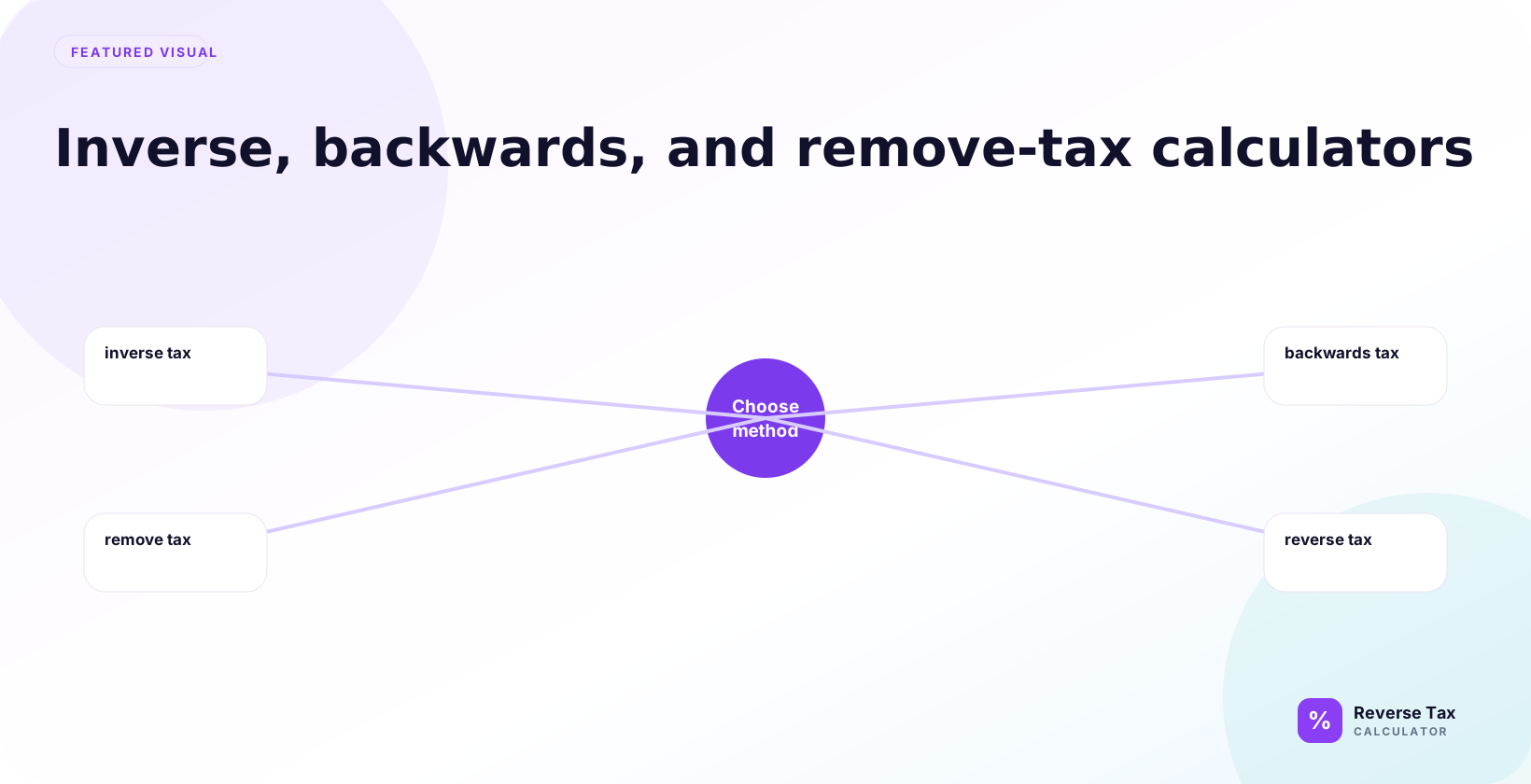
Inverse tax, backwards tax, and remove-tax calculators describe the same core action: extracting tax from a total that already includes tax. The calculation divides the tax-inclusive amount by the tax multiplier to recover the before-tax price, then subtracts that price from the total to show included tax. Different names match different searches, but the result depends on rate accuracy, taxable base, rounding, exemptions, and mixed tax lines.
The wording changes because users describe the problem in different ways. Some think of it as reversing tax. Some think of it as removing tax. Some think of it as calculating tax backwards. In most simple cases, they are looking for the same reverse tax calculation.
These Terms Usually Point to the Same Reverse Tax Task
Most inverse, backwards, and remove-tax calculator searches describe the same user journey.
The user has a final total. The total includes tax. The user wants to know what the amount was before tax or how much tax is inside the final number.
That is the core reverse tax task.
The main difference is language:
- Inverse tax calculator sounds mathematical.
- Backwards tax calculator sounds process-based.
- Remove-tax calculator sounds practical.
- Tax reverse calculator changes the word order.
- Reverse sales tax calculator narrows the idea to sales tax.
These are not always separate tools. In this project, the homepage reverse tax calculator owns the calculator intent for these terms.
What Is an Inverse Tax Calculator?
An inverse tax calculator is a calculator that reverses a tax calculation.
In normal tax calculation, tax is added to a pre-tax price. In inverse tax calculation, the final tax-inclusive total is already known, and the calculator works backward to find the pre-tax amount.
The word "inverse" means the opposite operation. If tax was added through a multiplier, the inverse calculation removes that multiplier.
When People Search for Inverse Tax Calculator
People often search for inverse tax calculator when they want a math-based way to undo tax.
The intent is usually transactional or tool-based. That means the user probably wants to enter numbers, not only read a definition.
For this reason, the calculator query should go to the main reverse tax calculator, while this page explains what the wording means.
What Is a Backwards Tax Calculator?
A backwards tax calculator calculates tax in reverse order.
Instead of starting with the pre-tax price and adding tax, it starts with the final total and works backward. This is why users also search for phrases such as calculate tax backwards, reverse calculate sales tax, or how to calculate sales tax backwards from total.
The phrase is informal, but the task is clear: the user wants the original amount before tax.
Backwards Tax Calculator vs Backward Tax Calculation
A backwards tax calculator is the tool. Backward tax calculation is the process.
| Phrase | Meaning | Best next page |
|---|---|---|
| Backwards tax calculator | Tool that calculates backward from total | Reverse tax calculator |
| Backward tax calculation | The method used by the tool | How to calculate tax backwards |
| Reverse tax formula | The equation behind the method | Reverse tax formula |
This distinction helps prevent cannibalization. Tool searches go to the calculator. Method searches go to formula and calculation guides.
What Is a Remove-Tax Calculator?
A remove-tax calculator removes the included tax portion from a final total.
This does not mean the tax disappears legally. It means the calculator separates the tax portion mathematically. The result shows the amount before tax and the amount of tax included in the total.
For example, if a tax-inclusive total includes VAT, GST, HST, PST, QST, or sales tax, a remove-tax calculator can help separate the included tax from the base amount when the correct rate is known.
Remove Tax from Total vs Remove Tax from Receipt
Remove tax from total is a broad calculation phrase.
Remove tax from receipt is a more specific workflow. A receipt may include multiple items, discounts, shipping, tips, exempt items, or rounding differences. That is why receipt-specific questions belong to how to remove tax from a receipt.
Tax Reverse Calculator vs Reverse Tax Calculator
Tax reverse calculator and reverse tax calculator usually mean the same thing in search behavior.
The words are reversed, but the task is still the same: calculate backward from a total that includes tax.
However, reverse tax calculator is the clearer phrase because it names the calculation direction first. Tax reverse calculator is a word-order variant that users may type when they know they need tax reversed but do not know the standard wording.
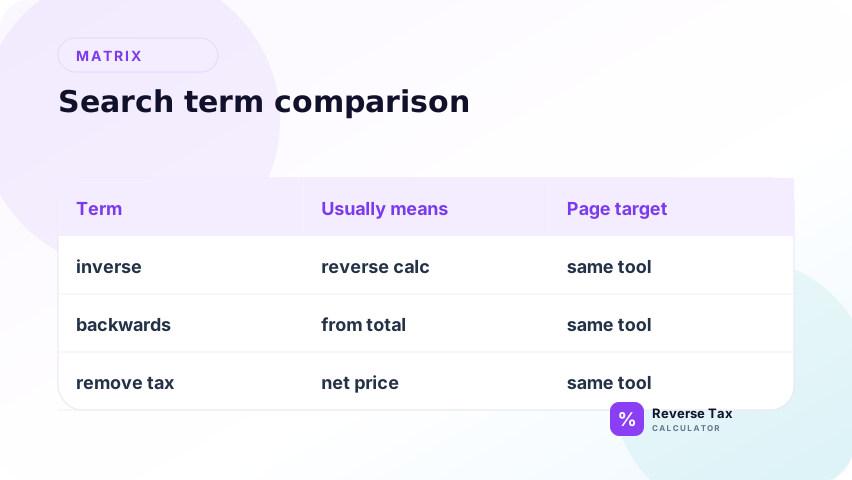
Search Term Comparison Table
Different search terms can point to the same calculator, but they carry slightly different language signals.
| Search term | User meaning | Best page type |
|---|---|---|
| reverse tax calculator | Main tool for backward tax calculation | Calculator |
| inverse tax calculator | Mathematical wording for the same task | Calculator plus explanation |
| backwards tax calculator | Informal wording for calculating tax backward | Calculator plus how-to guide |
| remove tax calculator | Practical wording for removing included tax | Calculator |
| tax reverse calculator | Word-order variant | Calculator |
| reverse sales tax calculator | Sales-tax-specific wording | Calculator |
| calculate tax backwards | Process wording | How-to guide |
| reverse tax formula | Equation wording | Formula guide |
This table is useful because not every search term should become a separate page. Many of them share the same underlying task and should be handled by one canonical calculator with supporting explanation pages.
What These Calculator Terms Can and Cannot Mean
These calculator terms usually mean reverse tax, but they can become confusing if taken too broadly.
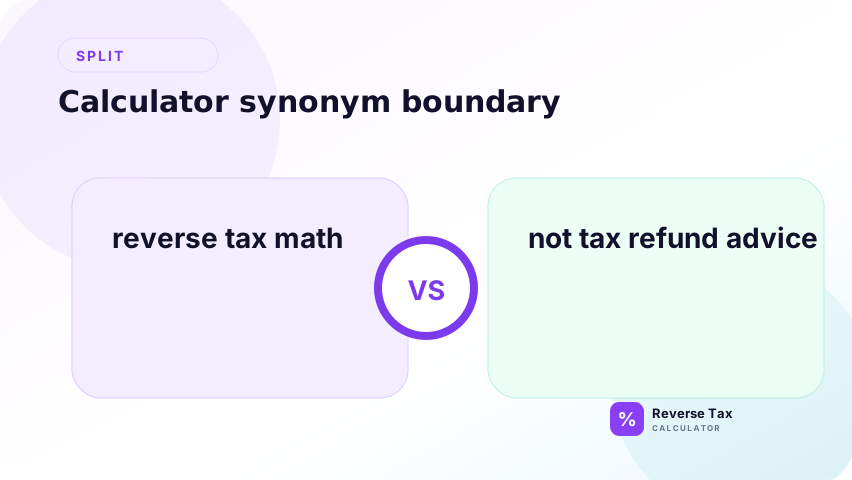
They can mean:
- Find the price before tax from a final total.
- Find the tax amount included in a total.
- Work backward from a tax-inclusive receipt or invoice.
- Remove sales tax, VAT, GST, HST, PST, or QST from a total when the correct rate is known.
They do not automatically mean:
- A legal tax refund.
- A tax exemption.
- A tax reversal entry in accounting.
- A reverse charge VAT or GST rule.
- A guarantee that the tax rate was correct.
For reverse charge confusion, see reverse charge vs reverse tax.
> Accuracy note: these terms describe calculator intent and arithmetic direction. Tax rates, exemptions, filing treatment, and jurisdiction rules must be verified separately. For calculation standards, see the methodology.
When to Use Each Term
Use the term that best matches your task.
| If you are thinking... | Best term | Best next step |
|---|---|---|
| I need the original amount before tax | Reverse tax calculator | Use the calculator |
| I need to undo a tax calculation | Inverse tax calculator | Use the calculator |
| I need to calculate tax backwards | Backwards tax calculator | Use calculator or how-to guide |
| I need to remove tax from a total | Remove-tax calculator | Use calculator |
| I need the equation | Reverse tax formula | Read the formula guide |
| I need to understand the concept | Reverse tax | Read the definition guide |
This keeps search language connected to the correct page type.
What This Page Does Not Calculate
This page explains the terms. It does not calculate results directly.
Use these pages when you need a specific task:
| Need | Go here |
|---|---|
| Calculate now | Reverse tax calculator |
| Understand the concept | What is reverse tax? |
| Learn the mechanism | How reverse tax works |
| Get the equation | Reverse tax formula |
| Follow steps | How to calculate tax backwards |
How Should These Calculator Terms Be Mapped to Search Intent?
These calculator terms should be mapped by the user's starting number and goal. If the user has a tax-inclusive total and wants the pre-tax amount, the intent is reverse tax. If the user says inverse tax, backwards tax, or remove-tax calculator, the likely task is still gross-to-net tax removal. If the user asks for income tax, payroll tax, or reverse charge VAT, the intent may be different and should be routed to a more specific guide.

Frequently Asked Questions
Is an inverse tax calculator the same as a reverse tax calculator?
In most simple tax-inclusive calculations, yes. Both phrases usually describe a tool that works backward from a final total to find the amount before tax and the included tax.
Is a backwards tax calculator accurate?
A backwards tax calculator can be mathematically accurate when the final total and tax rate are correct. It can still be wrong for a real transaction if the rate, taxability, exemption, or taxable base is wrong.
What does remove-tax calculator mean?
Remove-tax calculator means a tool that separates included tax from a total. It removes the tax portion mathematically, not legally.
Should inverse tax calculator have its own page?
For this site, no separate calculator page is needed because inverse tax calculator has the same core task as reverse tax calculator. The main calculator owns the tool intent, and this page explains the terminology.
Is reverse sales tax calculator different from reverse tax calculator?
Reverse sales tax calculator is usually a sales-tax-specific way to describe reverse tax. Reverse tax is broader because it can also describe VAT, GST, HST, PST, QST, and similar tax-inclusive calculations.
Related Guides
Related guides should be used as next-step context, not as a link dump. If a user needs the exact reverse tax formula, send them to the formula guide. If they need spreadsheet implementation, send them to the Excel or Google Sheets workflow. If they need receipt interpretation, send them to receipt-specific guidance. The anchor should match the user's next intent.
- Reverse tax calculator
- What is reverse tax?
- How reverse tax works
- Reverse tax formula
- How to calculate tax backwards